Category Archives: Philosophy

ALSO, rEMEMBERING 1990 IN mUSIC

I’m the new guy at Spirit of Cecilia. In my first post, I wrote about my conflicted relationship with Prog. If I’m not a Prog guy, I should explain what I am. I’m a Vulgar Boatmen guy. Brad’s post on 1990 reminded me that I discovered The Boatmen in 1990 also. Here’s how it happened.

My friend Marc’s freshman dorm room was a half a flight of stairs from the front door. If he was around, his door would be open and there would be music playing. You couldn’t come or go from our dorm without hearing what he was listening to.

During the first week of school, he was playing Robbie Robertson’s first solo album, so I stopped in, introduced myself, and we became friends for life. The other musically obsessed guys in the dorm did the same. We congregated in Marc’s room to listen to music because it was it was centrally located, and he had the best stereo system – a Denon receiver with Polk speakers. You could really hear if the snare was recorded properly.
It was there that I heard for the first time, The Blake Babies, The Connells, Dump Truck, The Pixies, The Waterboys, John Hiatt, pre-Money for Nothing Dire Straits, Husker Du, Johnny Clegg, Camper Van Beethoven, and Toad the Wet Sprocket. To name a few, and that was just the first semester.

I loved The Band and used the guest list at The Last Waltz as my music education syllabus. When my family went to the mall, they’d let me hang out in the book store where I’d look through the books and take notes. This was before the internet. Luckily in the late 1980s, albums were starting to be reissued on CD, so I was able to buy the albums that I was reading about.

The rest of our music obsessed group, Drew, Joe, and Tim, had a similar self-directed musical educations. We would listen and talk for hours about what was good and what didn’t make the grade. At the end of the first semester, we knew what was good.

Early in our second semester in 1990, the first New Route sampler came out. The first song was “I’m Over You” by The Silos. The second was “Nothing Compares to U” by Sinead O’Connor. We flipped out over both. O’Connor broke quickly and we were soon hearing her played over the intercom in the cafeteria…a very, very, bad sign. The Silos from the first snare hit of “I’m Over You” fulfilled all that we were longing for. And then Drew borrowed a copy of their album Cuba from our college’s radio station and it was even better! There was an early thaw in the Scranton winter and all was good.

Over spring break, Marc’s brother Bill gave him a tape of the album You and Your Sister by The Vulgar Boatmen. I remember he gathered us together with some urgency to hear this new band – another band that Walter Salas-Humara from The Silos was involved with. I was either late to the session or the first song “Mary Jane” didn’t grab me, but when I heard the second, “You and Your Sister,” that was it. I had to get a guitar, I had to learn to play it, and I had to form a band. It was not an option. I had listened to music my whole life to prepare me for that moment.

I remember the term we used to describe the sound was “basic.” Not a crowning vocabulary moment for a bunch of liberal arts students. I think what we recognized in our hours and hours and hours of listening is that The Boatmen had stripped away all the non-essentials, the posturing, the over production, the politics, everything that stood between the listener and the song. It was simply beautiful. Thirty years later, it still sounds beautiful.

Mark Sullivan is the guitarist in The Deep Roots.

Socrates on Doing Wrong

From The Crito:

Soc. Are we to say that we are never intentionally to do wrong, or that in one way we ought and in another way we ought not to do wrong, or is doing wrong always evil and dishonorable, as I was just now saying, and as has been already acknowledged by us? Are all our former admissions which were made within a few days to be thrown away? And have we, at our age, been earnestly discoursing with one another all our life long only to discover that we are no better than children? Or are we to rest assured, in spite of the opinion of the many, and in spite of consequences whether better or worse, of the truth of what was then said, that injustice is always an evil and dishonor to him who acts unjustly? Shall we affirm that?

Cr. Yes.

Soc. Then we must do no wrong?

Cr. Certainly not.

Soc. Nor when injured injure in return, as the many imagine; for we must injure no one at all?

Cr. Clearly not.

Soc. Again, Crito, may we do evil?

Cr. Surely not, Socrates.

Soc. And what of doing evil in return for evil, which is the morality of the many-is that just or not?

Cr. Not just.

Soc. For doing evil to another is the same as injuring him?

Cr. Very true.

MY FAVORITE 40 (20+20) ALBUMS OF 2020: Everything else!

Last week I put forth my favorite 20 jazz albums of 2020. Here are my favorite 20 albums of everything else: rock, country, prog, and, yes, sacred music.

• “Companion” by Sainte Olympia: I’m biased here, as the singer, pianist, and songwriter here is my younger sister. Regardless, this is the anti-2020 album: contemplative, deceptively simply, deep, and rich with lyrical and melodic mystery. I’m both proud and moved by this release.

• “The Nashville Songbook” by Mandy Barnett: Now in her forties, Barnett’s magical voice has become even more magnificent over time. This lush and often hair-raising record reveals that Barnett is also a top tier interpreter of classic songs. Magical!

• “No One Sings Like You Anymore” by Chris Cornell: This was actually recorded in 2016, not long before his death. Cornell was multi-talented; what comes through here is, of course, that voice–but also a unique approach to interpreting songs, as all ten cuts are covers. ELO’s “Showdown” is a favorite.

•  “Italian Ice” by Nicole Atkins: Speaking of voices, this New Jersey native has one of the finest pop/rock voices around and her music is always compelling. Ranging from atmospheric to anthemic, edgy to heart-breaking, this is perhaps Atkins’ best album, which is saying something.

• “Rise Radiant” by Caligula’s Horse: The talented Aussie prog-rockers never disappoint, as the Jim Grey (singer) and Sam Vallen (lead guitarist)-led unit is dynamic, soulful, restless, and intense. And, as always, featuring perfect production. Hard but melodic prog at its best.

• “La Vita Nuova” by Maria McKee: The former Lone Justice singer is now in her 50s and has made some major changes in her life, but the unreal voice and the stunning writing are still there. In fact, this is her best overall album since 1996’s “Life is Sweet”. Challenging and most rewarding. One of the very best of 2020.

• “The Women Who Raised Me” by Kandace Springs: The incredibly talented Nashville singer and keyboardist (she’s also a mechanic and visual artist) navigates the famous songs here with relaxed confidence and soulful, jazzy verve. Like fine wine. Impressive.

• “En Español” by The Mavericks: It’s entirely in Spanish, but the language barrier (for me, at least) disappears quickly as Raul Malo and Company bring an immediacy and intimacy that cannot be denied. The opening track “La Sitiera” grabs you from the first notes and the album never relents.

• “Nice ‘n’ Easy (2020 Mix)” by Frank Sinatra: Originally released in 1960, this #1 album captured Sinatra at the peak of his powers. The remaster brings a noticeable new clarity and definition, and highlights the many subtle aspects of a classic album. The 2020 release “Reprise Rarities” is also worth seeking out, although the material is not as consistently brilliant.

• “The Absence of Presence” by Kansas: My all-time favorite prog band does it again, following up 2016’s terrific “The Prelude Implicit” with another set of superbly crafted American prog. The longevity and quality of these Midwestern rockers continue to amaze.

• “Through Shaded Woods” by Lunatic Soul: A surprise for me, as the more electronica-oriented LS albums were enjoyable, but this driving, acoustic-based album is a revelation in urgency, mystery, and dusky beauty. Both lovely and a bit unsettling.

• “Color of Noize” by Derrick Hodge:  Pure aural jazz-soul-R&B-electronica candy–but with plenty of musical meat and potatoes. Incredible playing and superb production. This is why headphones were invented.

• “Keaggy, Blazier, & Lunn” (An American Garage Band)” by Phil Keaggy. This was recorded years ago by Keaggy and drummer Bobby Blazier in a jam session, with bass by Gary Lunn dubbed in later. Yet it sounds completely organic and warm, a sophisticated jam session by one of the most eclectic and tasteful guitarists of all time.

• “Monovision” by Ray Lamontagne: I do like some of Lamontagne’s more experimental albums (“Ouroboros”!), but this is the sweet spot for me: the gentle, backwoods vibe that marries Americana and folk with early 1970s Van Morrison. This is fine whisky in musical form.

• “Revisiting This Planet” by Kevin Max: I was never a big Larry Norman fan (his voice bugs me), but Max wins me over with this modern, punchy, and on-point rendering of several Norman songs. Max is true to the music, but also makes the songs his own. Great stuff.

• “Panther” by Pain of Salvation: Daniel Gildenlöw has gone through a lot in recent years (nearly dying in 2017) and so this is a welcome return to full-blown form for the Swedish musician and crew. This is a prog diamond: hard, clear, and multi-faceted, featuring one of the best rock singers out there.

• “Inescapable” by Godsticks: Previous albums were good, but a bit repetitious. Not so here. Vocalist and guitarist Darran Charles has expanded his range, the songwriting is equally expansive, and the band is tight. A deeply personal and powerful album.

• “Fireworker” by Gazpacho: Arguably the most remarkable prog album of year. Huge, intimate, byzantine, beautiful, and never predictable. Those who think prog is about long solos and wonkiness need to listen to this masterpiece. Spellbinding.

• “Terminal Velocity” by John Petrucci: Fantastic instrumental album from Dream Theater legend. Yes, he’s a technical wizard, but Petrucci’s mastery of mood and attitude is at the forefront here. And it’s fun without ever being silly or derivative.

• “Liturgy by Saint John Chrysostom” by Benedict Sheehan: Glorious, glorious, glorious. Enough said. Just listen.

Edmund Burke Against the Antagonist World

Liberty Fund Edition of Reflections.

[Originally published at The Imaginative Conservative]

Should one generation ever consider itself greater than any other generation, past or future, Edmund Burke warned in his magisterial Reflections on the Revolution in France, the entire fabric of a civilization might very well unravel and, ultimately, disintegrate.  Our modern ears have no right to discount Burke’s argument as simple hyperbole.  What takes centuries to build and hone, however, can take moments to undo.  We have witnessed numerous generations since Burke wrote this, and we have seen the arrogance of several, but most especially the Vatican II generation and the so-called “counter-culture” generation of the 1960s.  To this day, we suffer from the arrogance of each.  They each, in the name of toleration, progress, liberalism, and humanitarianism to submit to their teachings blindly.  As one great Canadian and Stoic man of letters argued in the early 1980s, “They shout about love, but when push comes to shove, they fight for things they’re afraid of.” 

Once a generation succeeds in separating itself from past and future, it harms not just civilization but the very dignity of man.  The individual man, unanchored, becomes, Burke noted darkly, “would become little better than the flies of summer.”

[Please scroll down a bit to go to page 2]

I Never Met Russell Kirk

[First published at The Imaginative Conservative}

At the beginning of his Histories, Herodotus notes that a normal person enjoys 26,250 days in his or her life, no day ever exactly like another.  I’m not quite sure I want to count how many days I have left, assuming I could even know such a thing. It’s certainly very wise of the Good Lord not to let us know such things.

Still, as I think about my own days, some wisely spent, others squandered, I have only a few serious regrets.

One of my two most important—at least as it hovers over my being—is that I never actually met Dr. Russell Amos Augustine Kirk in person.  I had the opportunity several times, but I never took advantage of these.  There are lots of reasons why this happened (or, as the case really was, failed to happen), but they really all came down to the same thing—I took too much for granted while in my 20s.  I seemed invulnerable as did those I loved and admired.  As one of my other heroes, Neil Peart, once wrote, “We’re only immortal for a very short time.”  My immortality seemed rather assured as did that of those whom I respected.  Strange considering my own father died when I was only two months old.  Yet, that happened before I was conscious of the world, and the whole story of his death had much more mythical significance than real influence.

Life has a funny way of teaching us each the lessons we so painfully need to learn, and I was rather shocked in the summer of 1994 when I heard that Russell Kirk had passed away.  I was only 26, but I knew I had missed my chance to meet the great man, a man I had studied intensely for about six years at that point. 

[Scroll down a bit to go to page 2]

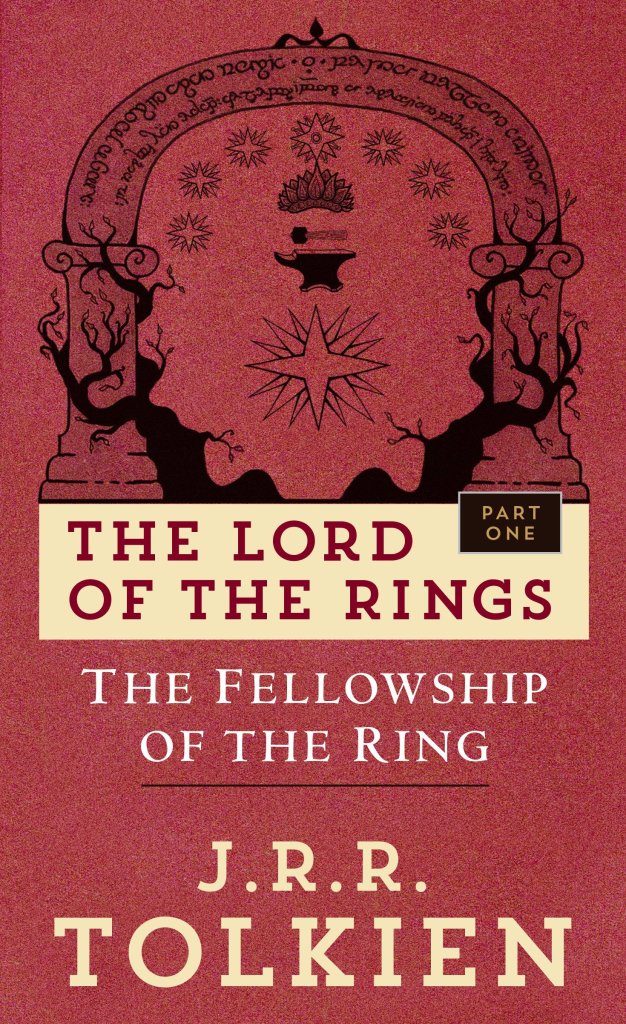
Approaching Weathertop: Anatomy of a Scene

In his personal recollections of his mentor, hero, and friend, George Sayer remembered that J.R.R. Tolkien possessed the uncanny ability to match his facial expressions and speech patterns to and with the prevailing mood of any given conversations.  “As I saw with him and the Lewis brothers in the pub, I remember being fascinated by the expressions on his face, the way they changed to suit what he was saying,” Sayers recollected. “Often he was smiling, genial, or wore a pixy look. A few seconds later he might burst into savage scathing criticism, looking fierce and menacing. Then he might soon again become genial.”[1] It was not affectation, but sincere intensity. The very same might (and should) be claimed of his writing ability. When the mood calls for levity, Tolkien writes with levity. When the mood calls for depth, Tolkien writes with depth. When the mood calls for contemplation, Tolkien writes contemplatively. As a twentieth-century author, he was an absolute master at this.

One can see Tolkien’s skill in the approach to Weathertop, chapter 11 of book one of The Fellowship of the Ring, “A Knife in the Dark.” Having slowly fled the social and near fatal disasters of Bree, September 30, the four hobbits, Bill the Pony, and Strider the Ranger make their way east of the village, en route to the Elvish safe haven of Rivendell. They won’t arrive in Rivendell until late on October 20, but they have no idea of just how long it will take. Dispirited, the party moves anxiously and uneasily, not sure who in the village had betrayed them to the demonic black riders. The same riders—at least four of them—attack Frodo and his party on the evening of October 6.

On October 4, after an agonizing journey through insect-ridden marshes, Frodo and his party spot Weathertop for the first time. Strider advises a roundabout route, thus approaching Weathertop from the north, a path better hidden from the spies of the enemies. On October 5, the hobbits feel refreshed after a good night’s sleep. “There was a frost in the air, and the sky was a pale clear blue,” Tolkien writes.[2] As the party nears Weathertop, they find themselves on “an undulating ridge, often rising almost to a thousand feet, and here and there falling again to low clefts or passes.” The last looks and leads into the east, seemingly endless in vista, and the party views “what looked to be the remains of green-grown walls and dikes, and in the clefts there stood the ruins of old works of stone.”

[Please scroll down a little bit to go to Page 2 of this post]

A Year of Prog: A Reflection on 2020

I’m typing this as my oldest daughter is driving the CRV across I80 in Illinois. Sadly, I must recognize as I fly at terrifyingly lovely speeds across the state, my title is more a wish than a fulfillment. Much of what follows is merely what is stuck in my brain, and I don’t have my CDs in front of me.

Though a vaccine is coming, COVID is still taking its toll on the world. Never before in peacetime have Americans so willingly complied with rules and regulations and group proddings and peer pressure. Perhaps all of the conformism was necessary for health reasons, but it was still conformism.

Despite all of this, though, and despite all the unrest and tragedies of 2020, progressive rock remained. It remained as a reminder of what is good, true, and beautiful in this world, and it remained as a reality of creativity and non-conformity. Granted, prog musicians couldn’t play live (not really), but they could develop, hone, make, assemble, and innovate. Innovate they did!

Because of the limitations of my situation, I might very well forget a CD, and the following order is as they come into my brain, not as they are ranked in my heart and soul. That is, unless I state something like “yeah, this was my favorite.”

First, Dave Bandanna, Robin Armstrong, a whole host of excellent musicians, and I released a cd under the band and title, The Bardic Depths, on Robin’s label, Gravity Dream. While I recognize it’s outrageously obnoxious for me to rank my own music, it would be equally disingenuous of me to ignore it. I had intimate knowledge on this one, and I’m incredibly proud of what we produced. While I won’t go so far as to rank my CD in actual ranking terms, I will state, I loved the whole process and the end result. Here’s hoping you did as well.

Leaving aside The Bardic Depths. . .

Lunatic Soul, THROUGH SHADED WOODS. Holy schnikees, what a great and compelling listen. While there’s a folky feel to the album, there’s something immediately and permanently captivating about the album as a whole. To get the album right, you just have to imagine mid-period Jethro Tull playing Riverside’s WASTELAND.

Grumblewood. Admittedly, as I sit here in the speeding car, I can’t for the life of me remember the title of the album. I can see it in my mind’s eye, though. Brown and woodsy looking! The album—which is also folk prog—sounds quite a bit like a relatively updated early-Jethro Tull and Blodwyn Pig. The textures of the music are simply gorgeous.

Big Big Train, EMPIRE. Come on, what would a year-end list look like without a BBT entry! Plus, throw in SUMMER’S LEASE as well as the music BBT has released through its Passenger’s Club, and it’s been a verifiable utopia for us music lovers throughout 2020. BBT seems incapable of a misstep, and has been on such a course since 2009. Even the diminishment of the band’s size only makes the future all the more intriguing. As I’ve written before, Ave, Spawton!

Gazpacho, FIREWORKER. Gnostic rock! Does any band come up with more intriguing gothic themes of mystery and universal mayhem than does Gazpacho? This album, especially, feels as though the band has tapped into a Lovecraftian mystery cult. The music, though, is fluid and lush.

Sanguine Hum, A TRACE OF MEMORY. This might very well be the band’s best album, and given their catalogue, this is no where near slight praise. From the opening to the final note, the listener is captivated and immersed in a melacholic, nuanced, and beautiful world.

Glass Hammer, DREAMING CITY. As with BBT above, what list could possibly exist without at least one GH entry! The band never ceases to grow, to develop, and, yes, to progress. While this album is quite a bit heavier than any previous release, the story is a driving one, and the music captures the lyrical themes rather perfectly. The band also just released A MATTER OF TIME—reworkings of older songs. I’ve not had a chance to immerse myself in this album, but I plan to do so when I take back over the wheel of the car.

I have more albums to list, and I will come back to these informal rankings shortly. For now, let me also write: 2020 would never have been as good without the beautiful writings of two of the best reviewers in the prog world: Stephen Humphries and Jerry Ewing. I thank the Good Lord for each of them.

Movement is Life

2020 was the year of social distancing. But a lot of that was on a motorcycle – we all try to make the best out of the situation. There is this 50-mile stretch west of Olympic Forest, which always eluded me, but I managed to explore it this year. In that process, I also experienced a sunset at Ruby Beach – one of those moments that gets engraved in the mind. Stayed at this rather rustic lodge after a six-hour ride through the peninsula. It was well-furnished, lacked WiFi, and had erratic cell coverage — but cheap wine, decent fish n chips, and silence were enough.

There is definitely something inexplicable about riding. There are actual full-length documentaries and books providing explanations, but most of it resembles romanticism. Reasons have to be simpler because it’s just one of those visceral impulses, and in that sense, quite similar to other recreational activities.

But more than the sights, with a motorcycle, we get to absorb the journey, not just the final destination. Such a journey often includes cold showers, gravel, dirt, unstable drivers, texting and driving, and anything else nature might decide to fling. The motivation for enduring all this is the same visceral impulse, to experience the delights and travails of a journey. It’s something our ancestors endured every day before the comforts of modern civilization, but now we get a glimpse of that from riding a well-engineered machine.

In general, there must be something innate that prompts us to journey – it’s likely that exploration aided survival in ancient primitive environments. A popular actor states in an apocalyptic movie — “People who moved survived… Movement is Life”. Needless to say, in the current world, we cannot take it literally. But, in general, movement can enable survival through adaptation. Whether it’s moving for work, learning a new skill, or reading a new theory to solve that problem. All qualify as movement, because they help us adapt in a changing world. Such an adaptation requires some planning, and that planning requires at least some stable factors. What differentiates modern civilization from the primitive past is simply the presence of some stable social factors in an otherwise unpredictable system.

A simple example would be contractual agreements. If you order groceries, there is a high probability that they will be delivered. On top of these simple and stable factors, we construct complex plans that enable adaptation to unexpected events. Essentially, that grocery might help us study for a test, run a marathon, or become a chef. In other words, the law and surrounding institutions provide stability in an unstable world. Not stability of outcomes — we actually don’t know whether we will pass the test, win the marathon, or become a great chef. But the law provides us with tools to pursue elaborate goals constructed on simple, reliable factors. When applied equally to all, along with guns, the law also deserves to be termed ‘the great equalizer’. Equality before law enables the best of the plans, best of the minds, and in that process, the most complex of civilizations to emerge.

“Of all multi-purpose instruments it is probably the one after language which assists the greatest variety of human purposes. It certainly has not been made for any one known purpose but rather has developed because it made people who operated under it more effective in the pursuit of their purposes.”— Friedrich Hayek

In essence, that orderly framework of laws and norms enables an increasingly sophisticated order, where solving problems tests our higher levels of cognition. Here, survival typically does not demand that we embark on a primitive journey or exploration. Instead, our movements are largely metaphorical. Yet it also provides stable, well-engineered machines and recreational tools to relive a glimpse of that primitive past. Like toys fulfilling our last remaining primitive instincts. For all practical purposes, irrelevant and yet adding value to our existence. In a larger sense, the law is integral to life’s events and for realizing our overall vision.

Republished at ridermodel.com

COVID, Woke Science—and Death – American Greatness

More ominously, we still have no idea whether far more have died due to the lockdowns than to the virus itself—given the quarantines have caused greater familial, spousal, and substance abuse, suicides, impoverishment, missed surgeries and medical procedures, educational deprivation, and long-term psychological damage. Amid this void of knowledge, state and local officials have often claimed expertise and implemented Draconian measures that may well have made things far worse.
— Read on amgreatness.com/2020/12/20/covid-woke-science-and-death/

COVID, Woke Science—and Death – American Greatness

More ominously, we still have no idea whether far more have died due to the lockdowns than to the virus itself—given the quarantines have caused greater familial, spousal, and substance abuse, suicides, impoverishment, missed surgeries and medical procedures, educational deprivation, and long-term psychological damage. Amid this void of knowledge, state and local officials have often claimed expertise and implemented Draconian measures that may well have made things far worse.
— Read on amgreatness.com/2020/12/20/covid-woke-science-and-death/