Andrew Klavan is one of my favorite writers and thinkers. He has written many mysteries, thrillers, and some very good nonfiction, as well as producing a weekly podcast on politics and culture. A Woman Underground is the fourth book in his Cameron Winter series, which just gets better and better with each installment.
Winter is a wonderfully deep and complex character – a professor of Romantic literature at a small midwestern college, he was an especially deadly counterintelligence assassin for some very dark and secret missions earlier in his life. Every novel in the series has flashbacks to Winter’s career as a deadly assassin, as he relates them to his therapist – a kindly, older woman who is very much attracted to him. Winter is incapable of maintaining any kind of relationship, because his parents, wealthy New Yorkers, had neither the time nor the inclination to care for him.
His nanny was a refugee from East Germany, and he never got over his childhood crush of her niece, Charlotte Shaefer. His unrequited love has served as an excuse to avoid any intimacy in his adult life. He is a deeply troubled man with a code of honor he tries to live by, even though he is not at all religious. Think of a Raymond Chandler character dropped into the 21st century.
A Woman Underground begins with Part 1: The Scent of Something Gone, Winter realizes that Charlotte may be trying to get in touch with him. One evening he comes home to his apartment and smells the lingering scent of her perfume in the hall. The next morning, he studies the building’s security video, and he sees a bundled up woman carrying a book. The book turns out to be a novel that is popular with right-wing extremists, and it features a heroine who is too similar to Charlotte to be a coincidence. Winter quickly tracks down the author. To avoid any spoilers, I won’t reveal any more details!
Klavan does a masterful job of balancing four(!) separate stories while keeping the reader glued to the page. First, there is the main plotline of Winter tracking down Charlotte. Then, there is a plotline involving an old mission Winter was assigned to bring back an agent who had disappeared in Turkey. When Winter is in therapy, he keeps returning to this story, even though his therapist knows he’s doing it to avoid facing what’s really causing his psychological distress. Third, there’s the plotline of the novel Charlotte was carrying when she tried to see Winter. In it, a small group of right-wingers try to decide what to do during the riots that caused so unrest and destruction in the summer of 2020. Cameron is reading this novel to try to pick up clues as to where Charlotte might be. The fourth subplot is some sexual shenanigans Winter’s colleague at the college gets himself into. Believe it or not, all four of these stories slowly come together into one.
A Woman Underground is a pivotal chapter in Cameron Winter’s development. Several things that had stunted his emotional and psychological maturity are dealt with and resolved. The path to that resolution, however, is a harrowing one. As Klavan describes him, he spends most of the book on the verge of a nervous breakdown. It is only through his therapist’s insightful and compassionate work that he is able to come out whole. By the end, it’s clear that Winter has emerged battered, but stronger and more resilient. I can’t wait to see what Andrew Klavan has in store for him. Bubbling under the surface of the various subplots is a potential global conspiracy that involves extremely powerful Americans who have been compromised. It’s enough to turn the most level-headed person into a paranoid lunatic, and the people Winter can completely trust are down to very few. Things are getting very interesting in Cameron Winter’s life!
So, I was at a Liberty Fund conference this past weekend in Philadelphia. It was directed by the rather awesome Hollywood screenwriter, Adam Simon. I’ve been at a number of conferences with Adam before, and he likes to refer to me as “his brother from a different mother.” Adam’s Jewish and from the left, and I’m Catholic and from the right. But, we really (as in really, really) like each other. Truly, we’re brothers from a different mother. I love the guy.
If you don’t know, Liberty Fund, which has been around since 1960, long before I was born, the institute hosts week-end conferences with, roughly, fifteen participants. This past conference, in Philly, was me and fourteen participants and two observers. We were talking about screwball comedies from the 1930s and 1940s–It Happened One Night, Philadelphia Story, the Awful Truth, Bringing Up Baby, etc–along with philosophy from Hannah Arendt and Stanley Cavell. We were trying to figure out if we could find anything deep and philosophical about the nature of rights and our right to pursue happiness in Hollywood films.
I loved all 14 of the participants, but I was especially taken with the humor and wit of Wesley. That’s all I knew about him–he was Wesley. I was told by the other participants that he had written four novel and was also big in music.
On the final night–after at least one Aviation cocktail (my favorite)–I asked Wes about his music tastes. It turned out that we both love progressive rock, and he’s even a huge fan of Jerry Ewing and PROG magazine.
I then asked him his stage name. And, much to my surprise, he told me that he was John Wesley Harding. Holy Moses, a total favorite! I was stunned and thrilled.
Here he is, way back in the early 1990s on MTV, with Adam Simon directing:
SCOTT PRESLER IS a name that will be in my humble opinion historically important. Most of the below are verified FACTS. Some of course are just reports from people I know and news reports.
Of course, NOT ALL CAN BE KNOWN.
But here are some names and facts. Most people have never heard of this. But it is on the basis of reports from the field as well as polls that we can make some judgment as to the state of the race between Harris and Trump in Pennsylvania a key swing state that Trump won in 2016 and lost in 2020.
THE NAME IS SCOTT PRESLER and he has been going up and down the state of Pennsylvania registering and getting people to send out mail-in or what was formerly known as absentee ballots. In Pennsylvania, you have 7 days left to register to vote. Deadline: October 21st. So we are coming down to the wire.
You don’t have to wait for Election Day to cast your ballot in Pennsylvania. Pennsylvania has a form of early voting.
According to the Pennsylvania Department of State, every county in the commonwealth will be offering “over-the-counter” voting, the state’s closest thing to early voting, in the 2024 general election. This process is called mail ballot voting “on demand.” The party that banks as many votes as possible has an advantage. But still much voting will be in person on the day of the election.
STEPS:
#1 a voter requests a mail-in ballot IN PERSON at a county elections office.
#2 the voter completes it and signs it onsite
#3 the voter returns the ballot to a drop box all on the same trip (or mails it later).
What motives Scott Presler?
Presler is motivated by patriotism He is the son of a distinguished US Navy Captain. Harris has lots of money but PRESLER and his people have smarts, youth and enthusiasm. HE IS BIG ON X and his memes are going everywhere.
In 2024 he is concentrating in PENNSYLVANIA. He has crisscrossed . the state. It is fertile ground because
1) Fracking is very important in PENNSYLVANIA people don’t trust Harris will let Fracking or Natural Gas alone.
2) strong religious communities
3) people are spooked by massive dropping off of quasi-legal Haitian immigrants (like in Springfield OHIO). Local schools and hospitals are being overwhelmed. People are worried about uncontrolled unvetted illegal immigration seemingly without any controls or legal limits.
4) many people are hunters and have traditional values The idea of men participating in women’s sports and going into girl’s bathrooms is horrifying to many. The concept of transgender surgery for prisoners or for MINORS without parental consent is alarming to many. This is a sleeper issue but many parents I have talked to are disturbed by the idea of biological males participating in Girl’s and Women’s sports. Many ordinary citizens are disturbed by the notion of biological males going into the private spaces of girls and women.
5) People see crime and homelessness spreading. I heard a speech by a lifelong Democrat a Hispanic woman who was terrified by Venezuelan gangs and forced to abandon her apartment and many of her personal possessions in the dead of the night. The police did not respond. A few neighbors helped her find her way out with a few things. She was terrified and feared for her life. She was adamant that the only hope was VOTE FOR TRUMP. The mainstream media downplayed the incident as insignificant.
The top issues are the ECONOMY, CRIME, IMMIGRATION and to a much lesser extent ABORTION. In the Senate race Casey has shifted his position on abortion. He once described himself as a “pro-life Democrat,” and voted in 2018 to ban abortion after 20 weeks.But Casey criticized the overturning of Roe v. Wade for putting women’s lives at risk. And he’s since supported codifying abortion rights.
Meanwhile, his GOP opponent McCormick calls himself “pro-life,” BUT has said said he supports exceptions for rape, incest and when the mother’s life is in danger. The bottom line is abortion is legal in Pennsylvania Pregnancies can be ended in the commonwealth up to 24 weeks gestation, a deadline tied to the concept of viability that was introduced in 1973’s Roe v. Wade. Abortions can be performed after that cutoff if a pregnant person’s life or health is in danger.
Some of Pennsylvania’s abortion restrictions stem from Planned Parenthood v. Casey, a landmark U.S. Supreme Court decision related to a law Pennsylvania passed in 1982.
The law imposed the parental consent requirement for minors to get abortions, the 24-hour waiting period, and a requirement that people seeking abortions get parental consent. After the law was challenged on the basis that it ran afoul of Roe, the parental consent provision was overturned. I could be wrong but I don’t think abortion is a top issue in Pennsylvania.
Trump himself has moderated his views on abortion and his wife Melania has called herself pro-choice in a recent memoir.
Some people probably remember Florida flipped from Blue to deep Red in 2020 and a lot of that is due to SCOTT PRESLER and his band. In 2022 Pressler helped flip NY State congressional districts to the GOP (which gave them a narrow majority in the House.)
PRESLER’S group is targeting people who have NEVER REGISTERED TO VOTE (such as rural hunters, the AMISH, young students.) Some people are switching to GOP from democrat, but many are registering for the first times. 30% of all hunters in Pennsylvania were never registered. He went to a gun show with his people and registered 500 new voters a day. He is going to Amish communities and has almost 100% support for Trump. Most have never voted before.
FACT: there are 80,000 Amish in Pennsylvania, about 80,000 in Ohio , about 60,000 in Indiana and about 40,000 in Wisconsin. Most are related in some way.
In many counties in Pennsylvania the number or registered republicans has now surpassed the number or registered Democrats. In 2016 there were almost 900,000 more registered Democrats in the state than Republicans. Now the advantage or registered voters is down to 300,000 (and reportedly dropping weekly).
The enthusiasm for Trump in Pennsylvania is amazing. At Butler (where there was the first assassination attempt people came from all over the state. Reports were that there were between 50,000 and 100,000 people in attendance. Elon Musk was there and was encouraging people to register to vote vote and reportedly PRESLER and his people got many never before registered people to pledge for Trump many were young, many were Hispanic many were over 65! (and had never voted).
Of course, there are many hardcore TRUMP haters. There are the Never Trumpers.
Polls however show Trump is doing well with HISPANIC MALES and WHITE MALES but less well with WOMEN and young people. In states with large Hispanic working-class populations ARIZONA and NEVADA Trump seems to be leading but they are virtually tied, such as NORTH CAROLINIA, MICHIGAN, and WISCONSIN.
But I think Pennsylvania will go for Trump.
Scott Presler has made the difference in many counties in Florida.
It is hard to believe in 2000 the Democrats had a 1 million advantage over the GOP and this state went for Bush by 537 votes Essentially the military vote made the different then. But now the GOP has over 1 million advantage in Florida and is a solid GOP state. (it helped that DeSantis is very competent Governor)
There are so many unknowns in politics. Surprises and big events could occur. We are getting down to the end.
I know many friends and family members are pressing me to vote for Harris. I just couldn’t do it.
I couldn’t get myself to vote for Trump either to tell the truth but in California, it doesn’t matter. I don’t know, honestly, what I would do if I were living in a swing state.
The GREEN PARTY is on the ballot in all 50 States (RFK jr has withdrawn in most places). Some disillusioned independents who would have voted for RFK jr. probably will vote for the Green Party.
We will watch if that makes a difference. THEY SAY IT MADE A DIFFERENCE in 2000 and 2016. There are rumors that Arab Americans are going to vote green in Michigan to protest “Genocide” Joe and Harris. Harris had a private meeting with Arab leaders. She is trying to keep her Pro-Palestinian Arab base and the Jewish vote. I think that is an impossible challenge. But who knows?
I do know this, however.
IF Harris loses Pennsylvania ARIZONA, GEORGIA NEVADA she will be in bad shape.
OF course the election is also about GOP majority in Senate and House also. If Harris wins but DEMS lost in House and Senate she will be checkmated.
It will all come down to TURNOUT and enthusiasm. Not all can be known and in a few weeks, these lines will be just an historical document of an opinion made on October 15, 2024. But I do believe that the efforts of Scott Presler and his band will make a difference. It will either be razor-thin or a solid victory for the GOP.
The 80s are my favorite decade for music, when it seemed like all kinds of new styles were being created. In 1983, you could turn on the radio and hear hard rock, roots rock, soul, melodic pop, and electronic music all mixed together. My favorite genre from that era was (and is) synthpop, as epitomized by artists such as Depeche Mode, Gary Numan, Orchestral Maneuvers in the Dark, and Ultravox. Richard Evans has documented the birth and rise of electronic music from 1978 through 1983 in his massive tome (528 pages!), Listening to the Music the Machines Make. It’s a fascinating history of this primarily British musical movement.
Instead of relying exclusively on contemporary interviews of the artists, Evans went back to articles, reviews, and interviews that were published in the music press at the time the music was being released. He does have some recent interviews to support what his research uncovers, but for the most part he unearths reactions and thoughts of the artists when the music was fresh and new. This makes for an honest account that doesn’t rely on the memories of people who were creating this music more than 40 years ago.
Evans begins with describing the effect David Bowie had on British popular music when he unveiled his Ziggy Stardust persona on the BBC television show, Top of the Pops. Bowie’s innovation was to seem to look forward into the future to explain his music. This perspective, along with the availability of inexpensive synthesizers, opened the floodgates for a new wave of music. The short-lived punk movement added its manic energy and DIY aesthetic. All of these elements combined to create the perfect atmosphere in which to create music that was experimental, yet accessible.
Like Evans, I date “The 80s” from about 1977 to 1987. In 1977, I bought the Ramones’ Leave Home album, Talking Heads ’77, The Cars’ debut, Wire’s Pink Flag, as well as many other new wave albums. It was clear to my adolescent ears that drastic changes were happening in music – changes that would challenge the laid-back music of artists like The Eagles or the arena rock of Journey and Foreigner for popularity. Very quickly, the old guard of pop/rock were being supplanted by a host of new, innovative artists.
For me, things didn’t really get interesting until 1980/81. The electronic music produced before then (with the exception of Gary Numan, who, unsurprisingly, was the first big selling synthpop artist) was very experimental and often crude. Cabaret Voltaire, Fad Gadget, and early Ultravox just weren’t very tuneful. However, beginning in 1981, this musical movement began to really shake up the British pop charts. Once Midge Ure joined Ultravox, they became a formidable hit machine. 1981 is also the year Spandau Ballet, Duran Duran, and Depeche Mode released early hits.
Evans obviously did exhaustive research to write this book; it is divided into three main sections: Revolution (1978 & 1979), Transition (1980 & 1981), and Mainstream (1982 & 1983). He also includes a couple of shorter bookend chapters: Inspiration 1977 and Reaction 1984 – 1993. He must have read every issue of New Musical Express, Smash Hits, Record Mirror, Flexidisc, Melody Maker, and ZigZag from 1977 through 1983! I, personally, would have gotten depressed, because one thing that comes across loud and clear from Evans’ comprehensive and meticulous research is the sheer pettiness and shallowness of the British music press. I could cite hundreds of examples, but here are two:
‘Landscape make my flesh crawl, put snakes in my stomach and make my bowels twitch’, wrote Sounds’ Mick Middles. (page 248)
‘The only recognisable feature of Duran Duran is the singer’s voice, otherwise they have no personality, no individuality, no quirks of style. I think this is what is known in some quarters as “good pop”.’ (page 257)
If there’s one common characteristic of practically every reviewer, it’s resentment. As soon as an artist gains popularity, the music media turn on them and try their best to tear them down. Poor Gary Numan, who was the first electronic artist to break big, comes in for a savaging the rest of his career whenever he released a new album. When Blancmange had some chart success, Ian Pye in Melody Maker wrote,
“The K-Tel answer to Simple Minds, the revolting Blancmange have found themselves a mould and of course a shape follows. Pink, soft, and powdery to taste, this will remind you of school dinners and other things too unpleasant to mention here.” (page 361)
Time and time again, the reviewers neglect to actually describe and critique the music, instead going for a clever putdown.
That said, it is entertaining to read what the contemporaneous reactions were to albums that are today considered classics. Duran Duran’s Rio is now counted as one of the essential albums of the 80s, but it was pretty much dismissed in 1981. Ultravox’s Rage In Eden garnered a little more respect, but not much. One group that the consensus seemed to get right was Depeche Mode. Their first album with Vince Clarke, Speak and Spell, was well-crafted but disposable pop, and their album after Clarke left, A Broken Frame, was fairly lightweight. However, by the time Alan Wilder was integrated into the group and they released Construction Time Again, they were recognized as a significant force to be reckoned with.
Even though I am a big fan of this era and style of music, I still learned many new facts about the various artists: for example, the history of The Human League/Heaven 17 personnel, and their beginnings before the Dare and Penthouse and Pavement albums. I also learned that Peter Saville used a color code to include messages on New Order’s Blue Monday‘s and Power, Corruption, and Lies‘ cover art. Fascinating stuff for music nerds like myself!
Evans is a very good writer; he takes what could have been a boring recitation of musical history and turns it into a very entertaining account of some interesting personalities. If you ever wondered what the backstory was to huge hits like The Human League’s Don’t You Want Me or Gary Numan’s Cars, then Listening to the Music the Machines Make is the perfect resource. Evans has spent untold hours revisiting decades-old British music publications and organized the material into an essential reference. This is a book I’ll be returning to often, and I appreciate all of the work he put into it.
If you are interested in actually listening to the music Evans documents in his book, there is a Spotify playlist for each of the book’s main sections. (Hey, this is the 21st century, right?) They contain practically every song mentioned. I had a blast listening to the songs while reading about them. You can access the playlists here.
Frost* is set to release their fifth studio album on October 18, Life In The Wires, which follows the excellent Day and Age of 2021. Once again, Jem Godfrey is the prime mover, this time handling all of the lead vocals in addition to keyboards and songwriting. John Mitchell returns on guitars, with Nathan King on bass and Craig Blundell on drums. There are nearly ninety(!) minutes of music here, and it is all terrific. Not a single moment is filler.
As Godfrey explains,
“It’s actually a sort of continuation from Day and Age. The first track on the new album starts with the end of the last track from that album “Repeat to Fade,” where the static comes up and a voice says “Can you hear me?” I remember putting that in when we did Day and Age as a possible little hook for the future; a character somewhere out there in Day and Age land trying to be heard. What does he want to say? Can anybody hear him? Day and Age kind of sets up the world that this character lives in and Life in the Wires tells his story”.
The album chronicles the adventures of a young man, Naio, who lives in the near future, in a world dominated by AI. One night, he hears a voice coming out of the static on an old AM radio asking, “Can you hear me?” From that initial contact, Naio goes on a quest to find out who is the person behind the Livewire radio broadcasts. Meanwhile, the AI that runs the world, “The All-Seeing Eye”, is on Naio’s trail, trying to prevent him from connecting with the mysterious man on the radio:
You wanna take me down for hearing voices on my radio
But I have seen your way of life and, thank you, I don’t want to know
You feed the people food and fear to keep them all compliant
But I won’t play your game so now you’ll fight to keep me silent
Interspersed between tracks are nuggets of speech from Livewire Radio broadcaster: “Hey, this is Livewire, voice of the free. And tonight we’re taking calls. Heh! I’m just kidding… Hahahaha!”
That’s the storyline, so what about the music? I have to say, I haven’t been this blown away by an album in years. Day and Age was my favorite album of 2021, and Life In The Wires is even better. Jem Godfrey is the master of crafting attractive and heartfelt songs, and every song on Life In The Wires delivers. Every style is visited here: ballads, straightforward rock, very heavy rock, and, of course, prog. I have listened to the entire album at least two dozen times, and I keep finding new things to delight in.
The boys of Frost* are a mean biker gang in their off-hours. Frost Band photo by Will Ireland
“Evaporator” is an extended, upbeat, almost funky tune with a nice 80s vibe. “Absent Friends” is a gorgeous and delicate piano-based ballad that reminds me of classic Aqualung (the group, not the Tull album). “School (Introducing the All Seeing Eye)” is a blistering instrumental where Mitchell shows off his chops.
Everything reaches a climax with the final three tracks, “Moral and Consequence”, “Life In The Wires (Part 2)”, and “Starting Fires”. “Moral and Consequence” has one of the most irresistible hooks I’ve ever heard. At the end of its more than 8 minutes, I was still begging for more, until the opening chords of “Life In The Wires (Part 2)”. This track is almost 16 minutes of near-perfect prog perfection. It calls to mind the best of Abacab – era Genesis, but, to my ears, it is better produced than that classic album. The closer, “Starting Fires” is simply beautiful – a somber and sweet melody sung to some spare musical backing. It seems as if Naio has connected with Livewire, and they are going to start a resistance to the Eye:
We’re making waves
We’re starting fires
We can’t go back
to Paradise
2024 is coming to close, and so far, Life In The Wires is the Album of the Year for me. We’ve been blessed with some great music this year, in particular The Bardic Depths album, What We Really Like In Stories, but my gosh, Frost* has put together an album for the ages.
Here is the official video for “Moral and Consequence”:
Continuing my exploration of classic Russian literature (you can read my review of Tolstoy’s War and Peacehere), I decided to check out Ivan Turgenenv’s Fathers and Children (also known as Fathers and Sons). A couple of years ago, I read Joseph Frank’s biography of my favorite Russian author, Fyodor Dostoyevsky, and, according to Frank, Dostoyevsky was friends with Turgenev and had spoken well of Fathers and Sons.
The novel opens with middle-aged widower Nikoloai Petrovitch Kirsanov anxiously awaiting the arrival of his son, Arkady, who has graduated from the university in Petersburg. When Arkady finally arrives at the depot, he introduces a new friend of his, Yevgeny Vassilyitch Bazarov, whom he has invited to stay at their estate.
As their carriages arrive at the Kirsanov estate, it’s clear things are not doing well. Turgenev paints a picture of poverty and decay – emaciated cows, serfs driving pell-mell to gin bars, decrepit and dilapidated buildings. At the house, they are greeted by Nikolai’s brother, Pavel Petrovitch, who is a bit of an aristocratic dandy. He is glad to see Arkady, but Bazarov immediately rubs him the wrong way. The next morning, Pavel Petrovitch is not pleased to learn that Bazarov is a “nihilist”.
I’m a big fan of classic British mysteries. I have read quite a few Agatha Christie novels and all of Dorothy Sayers’, but until now I had not read anything by Ngaio Marsh. I remember my Mom reading her books way back when, so I decided to start at the beginning and read her first mystery, A Man Lay Dead. I am so glad I did!
First, this book did not strike me as a tentative first effort by an inexperienced author, the way the John Bude’s The Cornish Coast Murder did. All of the characters are real and have multifaceted personalities. The murder itself is very difficult to figure out how it could have been carried out, let alone by whom. And, there is a fun side-trip into a weird conspiracy of Russian assassins!
One of my all-time favorite authors is Ray Bradbury. Beginning with The Martian Chronicles, which I read when I was in junior high, I fell in love with his imaginative writings. Wildside Press has collected 15 science fiction tales that Bradbury wrote early in his career for pulp magazines, circa 1944 – 1951. While the first few stories aren’t the greatest things he’s written, for $0.99 the collection is still a great bargain.
Included is a stone-cold Bradbury classic, The Creatures That Time Forgot, the story of a group of humans and their descendants who are stranded on a planet with properties that cause them to live their entire lives in the span of eight days. Born one day, reaching adulthood by the third day, they die of old age on the eighth. Even though it sounds implausible, even for science fiction, Bradbury makes it entirely believable and paints a realistic picture of the struggles a community would undergo to survive under such conditions.
Simon Fairfax’s 1415 is the sixth and final book in his A Knight and a Spy series. I have thoroughly enjoyed immersing myself in the medieval world of Sir James de Grispere and his comrades Mark and Cristo. All of the events of the previous five novels come to a head in this thrilling conclusion.
1415 begins where 1414 ended: Jamie is is recovering from the near-fatal poisoning he suffered at the Council of Constance, Germany. As soon as he is able to return to England, he is tasked with infiltrating a possible plot to overthrow King Henry V. Henry would like to wage war in France and reestablish English rule there, but he is threatened with possible rebellion at home. Jamie and Mark travel across the channel to acquire ships for Henry’s planned invasion, and they foil a plot to destroy the fleet.
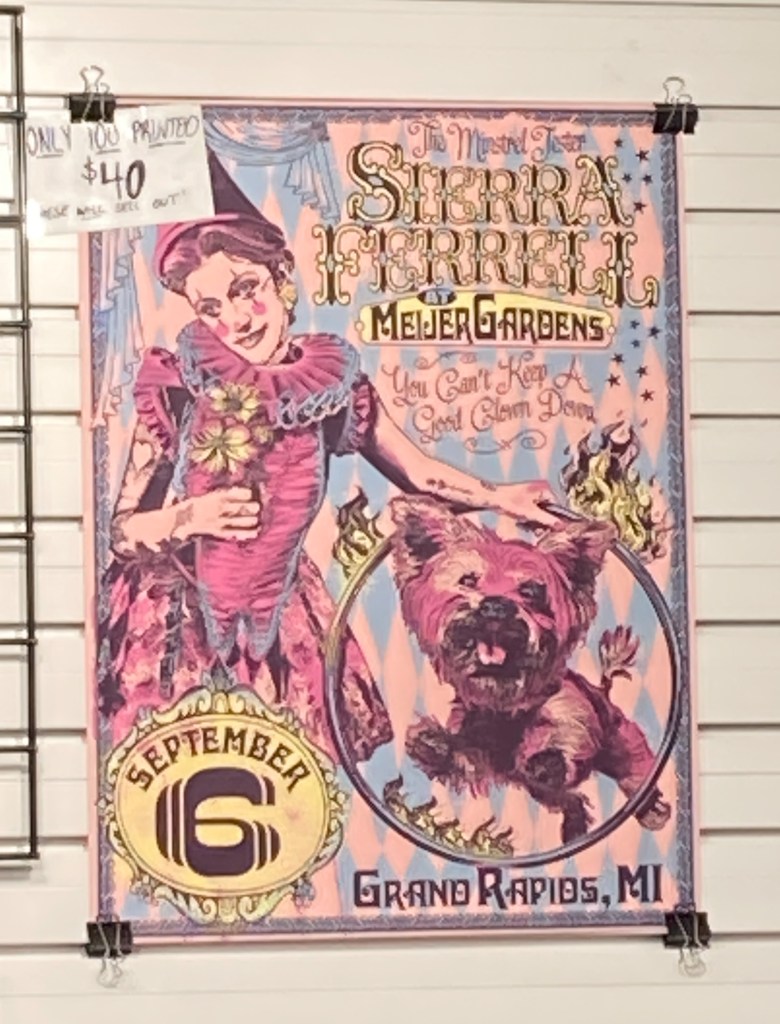
Sierra Ferrell, Meijer Gardens Amphitheatre, Grand Rapids Michigan, September 6, 2024.
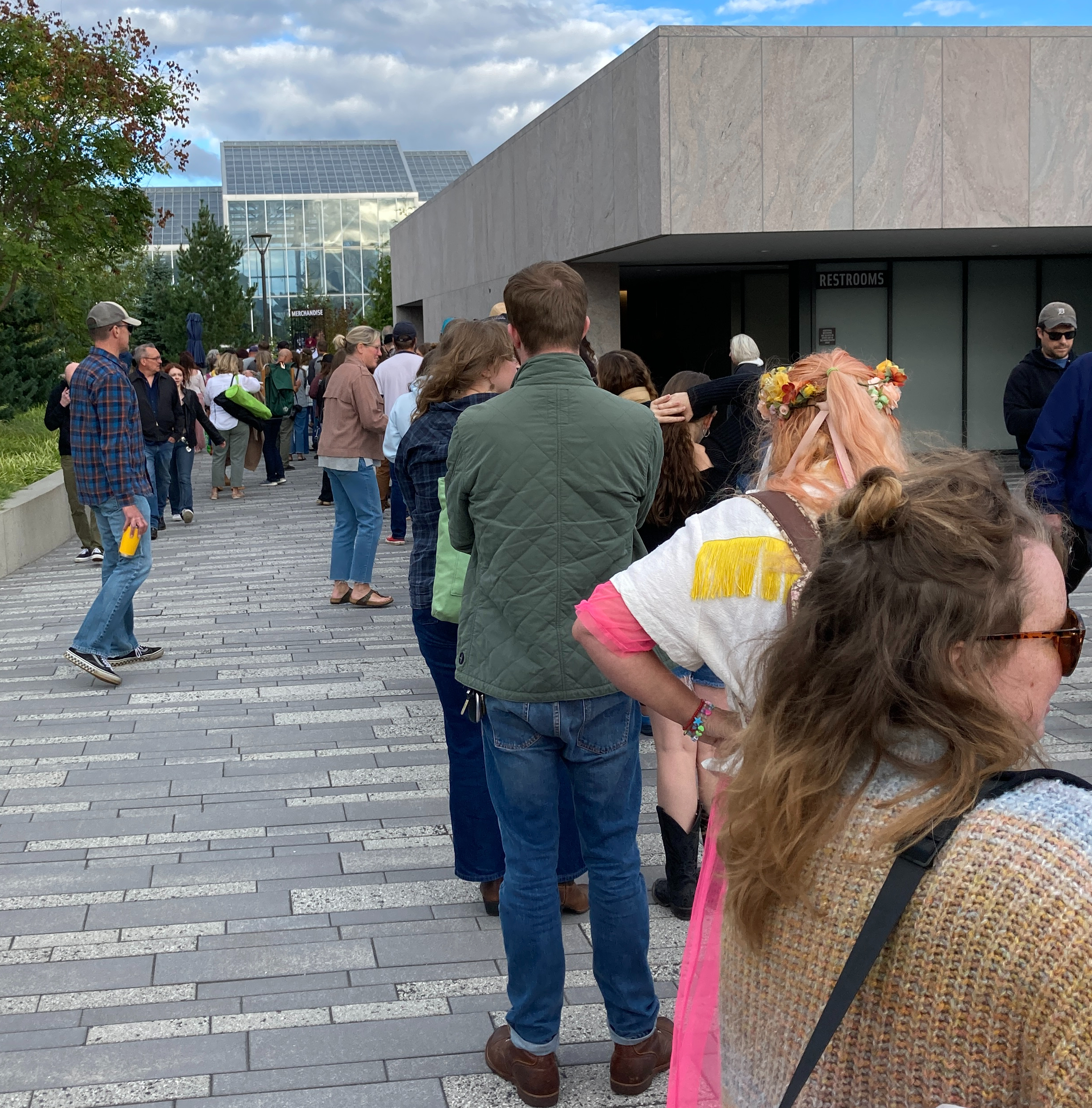
Even in the face of a predicted temperature plunge, the atmosphere at Meijer Gardens heated up as another sell-out crowd filed in for an evening with Americana siren Sierra Ferrell. You could sense the anticipation in an audience skewing considerably younger than the venue’s usual demographic — guys decked out in Deadhead or jam band shirts (with Michigan’s Billy Strings well represented) and the occasional Nudie suit, women clad in hoop skirts and adorned with flower crowns and facial glitter, cowboy boots all around — forming the longest merch line I’ve seen in these parts for many a moon.
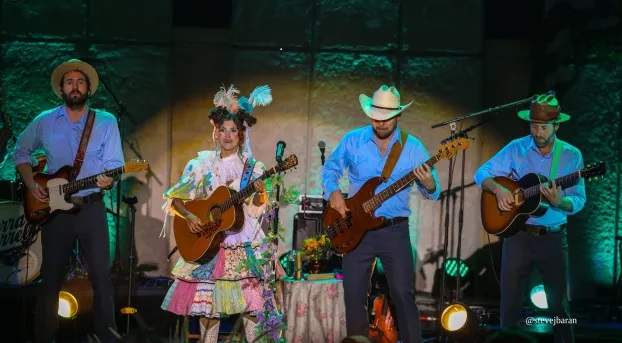
And once opener Meredith Axelrod had reeled us in with a giggly, appealingly skewed acoustic set, Ferrell wasted no time fulfilling her fans’ wildest dreams. Planted center stage at a flower-draped mike stand, resplendent in patchwork fringe dress, pancake make-up and feathers in her hair, she laid out her credentials with opener “I Could Drive You Crazy” — an unstoppably catchy, flirtatious chant, simple as a playground taunt, that morphs from Appalachian fiddle drone to “We Will Rock You” stadium stomp in less than four minutes. At which point the crowd — already on its feet and packed close to the stage — followed suit and went understandably nuts.
As she dove into a generous sampling from her two Rounder albums Long Time Coming and the new Trail of Flowers, it quickly became obvious that Ferrell is that rare real thing – a consummate performer who’s a genuine triple threat. As a singer, she’s got a powerhouse voice and the expressiveness and sensitivity that only come with experience and maturity. Her songs ring true no matter how old-timey her inspiration, packed with appealing melodies and clever, thoughtful lyrics, spanning country music’s historic shifts from cowboy songs and Western swing to bar-room weepers and Bakersfield honky-tonk. And her stage presence – whew! Giddy, yearning, heartbroken and vengeful by turns, Ferrell is all the way into her onstage role, her oversize persona more than a match for her outlandish outfit, a vaudeville turn that doesn’t hide a strong yet vulnerable heart.
Her broadest performance came on the solo murder ballad “Rosemary”, strategically placed mid-set, but Ferrell’s bluegrass-inflected backing band raised the show to an even more impressive level. On fiddle and Fender Telecaster, Oliver Bates Craven was the perfect soloist, peeling off one winning lick after another; mandolist/acoustic guitarist (and Michigan native) Joshua Rilko kept every tune gliding forward or jingle-jangling around as required; Geoff Saunders laid down a nimble, satisfying groove on electric and stand-up basses; and drummer Matty Meyer displayed a great feel for dynamics and drive, matching Ferrell mood for mood. And when the band gathered around one mike and chimed in on rich vocal harmonies for Tim O’Brien’s “The Garden”, the Osborne Brothers’ “Lonesome Feeling” and Ferrell’s open-hearted gospel throwdown “Lighthouse” — well, you could feel the sigh of delight from the 2,000 souls listening in.
But then, the whole night seemed like a non-stop highlight reel: the homespun household wisdom of “Give It Time” setting up the compulsive Spanish tinge of “Why’d Ya Do It”; an intense cover of “Me and Bobby McGee” that just kept building as Ferrell channeled Dolly Parton’s tenderness, then Janis Joplin’s fire. Then there was the closing run that showed off Ferrell’s versatility with Trail of Flowers‘ opening hat trick: “American Dreaming” (lovelorn, resigned road anthem); “Dollar Bill Bar” (femme fatale Ferrell turns the tables on the latest pick-up artist to cross her path); and “Fox Hunt” (stark string-band music that catches both the thrill of the chase and the desperation of a starving mountain man). Put simply, this was a great show; beneath the flamboyant trappings, there’s an elemental presence about Sierra Ferrell and her music that, on this night, proved outright irresistible. If you’re looking for downhome music with a sense of the past that cuts to the bone and revs up a rousing good time, don’t hesitate to check out her albums and see her live!






You must be logged in to post a comment.