
Yet, there are many problems with this. Aside from the critical fact that half of the states, prior to the Civil War, didn’t have slavery, and free labor radically outproduced slave labor (thus, leading to the conclusion that America and capitalism were really built on free labor, not on slave labor), perhaps the biggest problem resides in our very Founding and the documents that define it. In particular, it is worth considering the Declaration of Independence, passed on July 4, 1776, and signed on August 2, 1776. In it, Jefferson first defines the nature of the universe and man’s role within it. That is, “when in the course of human events….” In the following paragraph, though, Jefferson made a statement that astounded the world. But, to Jefferson and Congress, they were merely stating the obvious: “We hold these truths to be self-evident, that all men are created equal, that they are endowed by their Creator with certain unalienable Rights, that among these are Life, Liberty and the pursuit of Happiness.” To be sure, this has to be one of the most powerful sentences in the history of the world, especially in its non-religious history. Critically, the statement claims that “all men”—not some men, not non-Catholics (see, for example, the 1689 English Bill of Rights), or not non-whites—are created equal. The founders could have easily tempered this statement, but they didn’t. Indeed, it exists in a world of glory, and it became, as Martin Luther King, Jr., so profoundly understood it, a promissory note. Just because Americans did not live up fully to the statement in 1776 did not mean that they never would.
— Read on theimaginativeconservative.org/2022/07/americas-anti-slavery-legacy-bradley-birzer.html
On tour with Bent Knee: Inside the modern economics of a rock band – CSMonitor.com
What does it take to make a living as a musician in the modern economy? Our reporter goes on the road with genre-bending rock band Bent Knee.
— Read on www.csmonitor.com/The-Culture/Music/2022/0722/Almost-famous-With-merch-tours-and-hope-this-band-rocks-on
The Bardic Depths’ “Promises of Hope” Is a Triumph

The Bardic Depths, a musical project begun by musician Dave Bandana and lyricist Brad Birzer (who also founded this blog!) have just released their second album, Promises of Hope.
Rock artists fear succumbing to the dreaded “sophomore slump”, but Bandana et al. need have no worries on that front. Promises of Hope shows tremendous growth from their eponymous debut album, which was an all-around delight itself. (Reviewed on Spirit of Cecilia here.) There is now a stable core of musicians involved: Bandana on vocals, guitars, keyboards; Gareth Cole on guitars, Peter Jones on vocals, sax, penny whistle, and Tim Gehrt on drums.
Like their debut, Promises of Hope is a concept album, this time relating a tale of divine intervention in an attempted suicide in a fantasy realm. Sounds heavy, I know, but this is some of the most life-affirming music I’ve ever heard. The opening song, And She Appeared, is roaring rocker that is reminiscent of classic ’70s Rush. Cole’s lead guitar trades wonderful solos with Richard Krueger’s galloping organ. It’s an exhilarating way to begin an album. Lyrically, it introduces the main character, a woman who is
“Halo’d wrapped in white
Radiant wrapped in white
Innocence made real
Beauty made manifest”
However, there is something tragic in the offing, because she brings “promises of hope, but never of victory.”
Regal Pride, the next song, features lead vocals by Peter Jones, as well as his excellent saxophone flourishes. Our heroine has been betrayed by a man of mystery, and the melody is suitably somber.
Track three, Consumed, is the best of the album. It features a stunning classical guitar intro by Kevin McCormick, and soon shifts into a beautiful British-folk melody that sounds timeless. Jones’ penny whistle and Donny O”Connell’s spritely violin add Celtic atmosphere while Cole pulls off two more excellent electric guitar solos. The heroine has lost hope, and she is consumed by a fire.
Next up is The Burning Flame, which has a very spacey intro that calls to mind Wish You Were Here-era Pink Floyd. McCormick contributes another excellent guitar solo, this time on electric, while Paolo Limoli provides wonderful piano and Fender Rhodes accompaniment. Jones takes lead vocals here, and they have a definite bluesy edge. This entire track is a gorgeous, slow burn (pun intended!) of song that I wish lasted far longer than six minutes. Fortunately, it segues into the extended instrumental, Colours and Shapes, where Jones’ sax continues the spacey blues mood.
In Why Are You Here? our heroine is confronted in the afterlife:
Why are you here?
Did you not respect?
Did you not cherish it?
Could you not love life?
This is another somewhat slow song, but one that is enlivened by Limoli’s tasteful piano fills and Cole’s terrific guitar solos.
Things pick up with Returned, where the protagonist’s suicide is rejected by her Creator:
“You must return
You will make good
Rewrite this wrong
You must Love”
These lyrics are accompanied by a triumphant melody that is bursting with energy. The album’s co-producer, Robin Armstrong really shines here, lending his talents on keyboards, vocals, bass, and lead guitar.
With our heroine given a new lease on life, The Essence explodes out of the speakers with an insistent beat and infectious melody that is truly exhilarating.
“Reconciling hope, reconciling all.
Reconciling everything.
It is the universe made real.”
Bandana’s vocals and synths are outstanding here; they convey the pure joy of the lyrics.
The final track, Imagine, is a coda addressed to all of us and the choices we must make:
“Imagine a world in which we are judged by
Our most insufferable, our sorriest…
A horror beyond time…
Imagine a world in which we are judged by
Our best and our glory, our gift and our love…
There is a word and it needs to be heard.
It is hope. It is what you promised to me.
Rise up and see, it is our victory.”
Krueger’s church organ is appropriately employed here, because this last song is a hymn to hope. As the song unfolds, the tempo increases inexorably, and I’m reminded of the final scene in C. S. Lewis’ Narnia book, The Last Battle, where the protagonists reach paradise. As they realize where they are, they cry out, “Further up and farther in!”
Some final thoughts on this special album:
Dave Bandana has said that Robin Armstrong really pushed him to do his best, and it shows. His vocals and keyboards are terrific throughout. Peter Jones is the secret weapon of The Bardic Depths – his singing and sax work are some of the best elements in the mix. Gareth Cole’s lead guitar is AMAZING!
Promises of Hope is an outstanding album with an inspiring concept. The melodies complement the lyrics perfectly. As good as their debut was, this is even better. The core group of Bandana, Cole, Jones, and Gehrt have gelled into a formidable ensemble, and I hope they plan to tour.
Promises of Hope is on Gravity Dream Music. Here is the official lyric video for The Essence
THE POWER TO TAX IS THE POWER TO DESTROY
by Richard K. Munro
The art of taxation consists in so plucking the goose as to get the most feathers with the least hissing. ~ Jean-Baptiste Colbert
https://hwbrands.substack.com/p/taxes-taxes-taxes
The power to tax is the power to destroy. We left NY and NJ because the real estate taxes were exhorbitant. I now have no close relatives there. Everyone moved to Nevada, Arizona, North Carolina and Florida. We live in California where the tax situation is not ideal but thanks to Prop 13 our real estate tax is reasonable and under control which is important now that we are retired. Still gradually our real estate taxes, trash and insurance go up every year. We should be OK but If Prop 13 were rescinded we would sell and take all our savings and property out of state.
I knew a semi-retired doctor in NYC who owned his home free and clear and owed almost $50,000 in real estate tax. He sold his house invested in CD’s and moved away. He was cashing in $20,000 a year in CD’s just to pay his taxes. He said if he stayed in New York five more years he would be flat broke. That is wrong. Now he lives out of state in an apartment and pays zero real estate tax. Previously he paid NEW JERSEY STATE INCOME TAX, NEW YORK CITY INCOME TAX and NEW YORK STATE INCOME TAX as well as FEDERAL INCOME TAX. And he was a man who saved his money his whole life, paid off his home and made a very good salary at his medical profession. But he could not afford to be retired in NYC. Public housing is now the largest single landlord in NYC (about 8%). NYC is becoming a city of the few who are ultra rich and the poor. But taxes and crime are also driving younger New Yorkers and retired New Yorkers out of the region. A recent poll stated : “My family would have a better future if we left New York City permanently.”
The poll found 59% of respondents strongly or somewhat agreed with the statement, while 41% somewhat or strongly disagreed.
https://nypost.com/2022/04/06/why-majority-of-new-yorkers-would-rather-be-anywhere-else-poll/
Chicago and New York are losing so many people and businesses due to oppressive almost confiscatory taxes AND declining public safety and services. I haven’t been back to either city since the 1990s and I have no intention of living there or even visiting there again. Almost everyone I knew in school has moved out of state.
So back to my first point. The power to tax is a necessary power of the state, city and federal government. But when the state confiscates the savings and property of the retired middle class it is going too far and people will vote with their feet and pocketbooks.
Spirit of Cecilia Progcast 3
A special (MEGA!) progcast, featuring Tad Wert, Kevin McCormick, Dave Bandana, and Brad Birzer. Nearly 3 1/2 hours long, we play Tin Spirits, SAND, NAO, Oak, Nosound, No-man, Memories of Machines, Sanguine Hum, The Tangent, Big Big Train, The Flower Kings, and The Bardic Depths. All of the music was chosen to impress Kevin, and we find out his reactions to it all. Additional bonus feature: Dave talks a lot about the making of the most recent The Bardic Depths album, Promises of Hope.
Should we be Pessimists or Optimists?
by RICHARD K. MUNRO
“Troubles indeed abound, but troubles have always abounded. We humans have always got past them, albeit not always quickly or easily.” (HW BRANDS) Yes I too have confidence in the ability of mankind to respond to new challenges with new inventions and life-saving medicines and technologies. I believe we must have hope and optimism about the future. I believe Good will triumph ultimately over evil.
Humans are rational and have God-given power to search for the truth and to behave in accordance with Right and Wrong. As we seek knowledge we must be grateful but also humble.
As we seek knowledge we should have awe for the mystery of our existence, for the world itself for day and for night and the cosmos above.
I know my life has not many days or years left but I am satisfied as I have children and grandchildren and I derive much joy and hope from them. My greatest wish is that they are able to live happy, productive and secure lives.
It seems reasonable that they will have a good chance for such a life
But I know all cannnot be known so I do what I can and for the rest I have the last weapon of the weak and the old: prayer.
The Old Book teaches us that life is a continuous struggle for doing what is right and understanding what is right. But only God can accomplish the greatest things.
“Except for the Lord the watchman waketh in vain.” History and life is ever new. We can move ahead. We can pray. We can grow better or worse. Certainly we can learn from history and life. And I think history gives up hope.
COSMOGRAF – ANNOUNCE NEW ALBUM – HEROIC MATERIALS

We are really pleased to announce that Cosmograf returns with their ninth new studio album, Heroic Materials to be released on 9th September 2022.
William ‘Billy’ May looks back on his life at the age of 99 and realises the world has completely changed since he was a young man put into an impossible scenario, defending his country from the air. He no longer recognises much of the modern world but understands that the human race must live in a different way in the future.
“This album is really about change, our refusal to accept it, but also recognising that it’s essential to our survival”, says Cosmograf’s Robin Armstrong. “The story centres on a WWII Spitfire pilot who laments a lost golden era, but reflects that the human race must change its ways in order to preserve our existence on the earth.”
Robin is joined once again by drummer, Kyle Fenton, and there is a special guest appearance from ex-Big Big Train keyboard player Danny Manners, who plays piano on the 13 min title track, set in three parts.
The lead track from the album, British Made is released on our Bandcamp page today, and the video for the track is available to view on YouTube now.
“British Made is really a nostalgic throw back to a golden era of motoring where design and craftsmanship was more important than carbon footprints. I think it’s incredibly sad that we are coming to the end of this present journey with the motor car, as we reject fossil fuels for electric power, even if it’s for good reasons” says Robin.
The album sees the character wrestling with his memories of the war, and harbouring nostalgia for a past era but he realises that change is essential if we are to avoid climate catastrophe.
Heroic Materials will be available in CD, Deluxe Media book edition, Vinyl and Digital formats and pre-ordering is now live on the Gravity Dream Music website.
Heroic Materials Pre-order link: https://bit.ly/2YObrzH

The new single ‘British Made’ on YouTube: https://youtu.be/Lqj40KJLrtA
Two Rush Works Out Today

Neil Peart: Cultural Repercussions REVISED AND EXPANDED

Thanks to Kevin J. Anderson and Wordfire Press, I had the opportunity to revise and expand my intellectual biography, Neil Peart: Cultural Repercussions, originally published in 2015.
On June 14, Wordfire will release an ecopy as well as a trade paperback. To preorder the ecopy, go here: https://books2read.com/b/3LwEA1.
I’ve had the chance to write about many of my heroes during my professional career, including J.R.R. Tolkien, Christopher Dawson, Charles Carroll of Carrollton, and Russell Kirk. Peart, though, remains at the top of the list. The man combined integrity, intelligence, and action. It was such an honor to write about him and spend time in is mind and in his soul.
His words meant a great deal to me at 13, and they remain a great deal to me at 54. Peart has been, I believe, one of the most influential figures of the last half century–shaping the lives of many non-conformists, and unleashing the power of the individual spirit and mind.
Booker T. Washington , Dubois and Wotan’s Farewell.
Wagner-Die Walkure-“Leb wohl,du kunhes, herrliches Kind!”
I have studied Booker T. Washington and Dubois. Both had a case but it all depends on where you are in your life and who you are. I think Dubois is a rather tragic figure. Let us not forget he left the USA to live in Africa and became a Communist by the end of life. By many measures, Booker T. Washington was a happier and more successul figure in America as an American. Washington adapted to the world in which he lived; I think he accepted the fact that progress in racial relations would take generations. But in the mean time, Washington thought, African Americans have to take personal responsiblity for their education and training and their habits and be economically stable and successful. With economic success other opportunties would come.

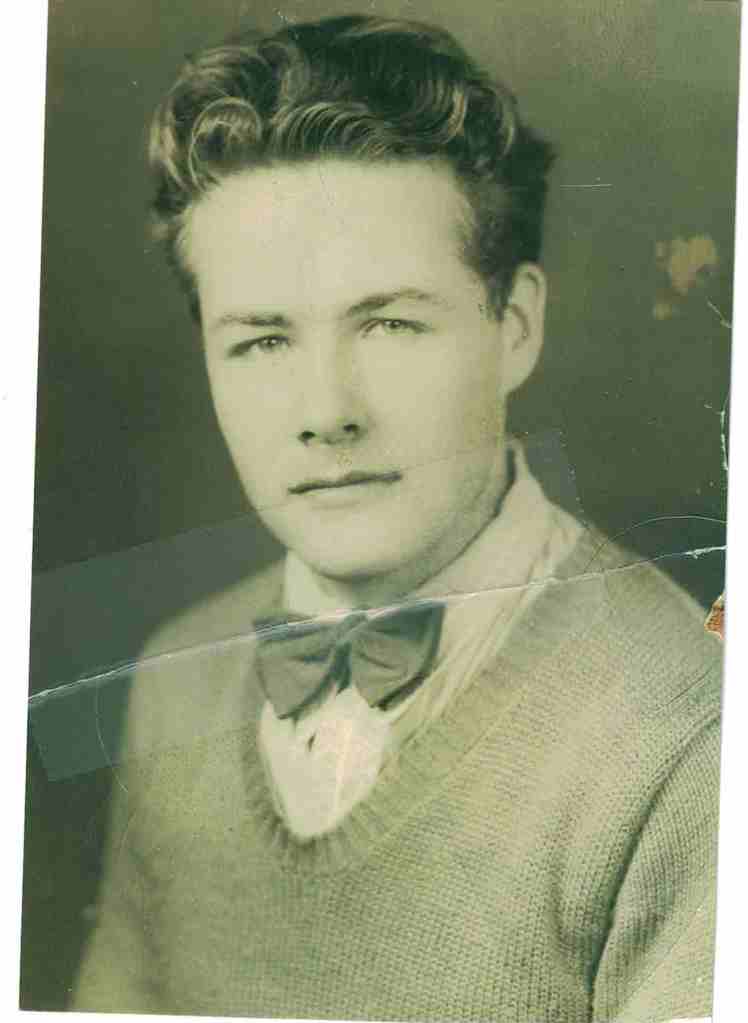
My father worked in a slaughter house at night when he was in high school. To do so he had to sacrifice any social life or any sports (even though he had been a soccer star in his native land). This experience had a strong influence on his entire life. He learned to be almost completely self-sufficient and I would say socially isolated.
For example, he chose to have no friendships or social relationships with the workers at the slaughter house with the exception of some older workers who befriended him and looked after him while he slept returning home on the Manhattan to Brooklyn subway at 3AM. He was lucky in that his mother and sister fed him, shopped for any sundries he needed and washed and ironed his clothes. My father turned over HIS ENTIRE paycheck to his mother. She would give him $1.50 so he could see movies and have a small snack.
My father’s chief relaxations were reading, Saturday movies and Sunday baseball games with his father. He usually went alone to the movies. I don’t remember him ever saying he went to baseball games with his friends or alone. He had a few American acquaintences but really he had no intimate friends. This was big change from his early life when he was a popular athlete and had many many close friends. Sadly, he was separated by emigration from most of his close friends and many were killed in WW2. My father’s early life from age 12 was focused almost completely on working to support his family as his father had lost his job in 1932 and did not go back to work until 1937. My father continued his industriousness after high school and studied at Brooklyn College where he graduated in 1937. Soon the war came and but my father continued in his pattern of perseverence. He began miltary service as a E-1 private and worked his way up to corporal and finally an NCO in the MPs. From there he went to OCS and became a 2nd Lt. He went overseas in 1943-46 and rose in rank to 1st Lt. After the war he went to NYU on the GI bill and had a career in business in which he was reasonably successful in achievement a stable career. I think he could have advanced economically much more if he had sacrificed his family life and intellectual life. But he chose to focus on his private family life and his private intellectual life. Others would bar hop or play golf on business trips. My father would read Homer in the original Greek in his hotel rooms in Atlanta. His chief hobbies were opera (listening and collected historial recordings), literature, languages, classic movies, plays and baseball. I think my father was somewhat lonely except for the close friendship with my mother and her friends. In someways he lived the solitary isolated life of a prisoner but he was never bored and I think he was happiest when he escaped into his music and books. We are shaped by our environment and its challenges but we also are shaped by individual choices in how we respond to those challenges. I never once saw my father inebriated. He drank beer and wine but not spirits. He believed in moderation. He smoked cigarettes for about 25 years but quit in his 40s and smoked only cigars. He loved smoking cigars. But on the advice of his doctor he quit cigars also in his 50s. He lived a reasonably long life and a very healthy one until he was 87 when he fell and broke his hip. Thereafter he declined physically but remained mentally sharp until the very end. His very last words were “I think this is the best breakfast I have ever had.” He suffered a stroke and lingered a few days in the hospital. He was listening to Wotan’s farewell (Lieb wohl) in the hospital. I was not present but my sister said he reacted and there were tears falling from his eyes. My father’s last lesson to me is that there is such a thing a a Good Death. If one can say goodbye to one’s loved ones and die without pain and suffering in bed surrounded by loved ones and beautiful music then one can say one has experieced a Good Death.
“Perhaps Washington and DuBois were both right — whether someone chooses education or commerce, the important thing is that there is opportunity in both for anyone willing to put in the hard work to find it.” It all depends on the situation one finds oneself in. As a man who was in his youth a soldier and construction worker paid by the piece and later as a teacher. I found necessity meant I had to get a reasonably paying job immediately. So there are times you have to cast the bucket down where you are. Once I had some savings and had established my credit and had a free and clear car I felt the confidence to make gradual career changes. I took a pay cut to work at a bank. I remember I earned only $7.23 an hour! But the bank meant REGULAR HOURS and FLEX TIME and was across the street from a university. I then spent five years at the bank and had as a goal going back to school for an advanced degree. At first I thought I would get an MBA but then I realized I would prefer something where I could use my love of languages, literature and history. So I got a 5th Year Certification as a k-12 teacher. I was certified in English, Spanish and Social Studies. I thought my multiple certificaiton would make my job transition easier but in fact I had almost no job offers. So I considered job offers ANYWHERE -Alaska, Texas, California and even Australia. And by being open to emigration to a new location I was able to get a steady job. It is all about CHALLENGES and RESPONSE. I could not have made the change WITHOUT having sacrificed and made an investment in my PAPER CREDENTIALS. Of course I could have expanded my paper credentials even more but I had to consider the economic return on investment.


You must be logged in to post a comment.