Tag Archives: Rush

U2: Earnest or Ironic?

Dear Spirit of Cecilia Readers, two close friends—Kevin McCormick and Ivan Pongracic—and I recently had a lengthy email discussion about the virtues of U2.  You all know Kevin as he’s a regular here and one of the SOC editors.  Ivan, though, might not be as familiar.  He’s a fantastic guy and friend.  He’s a professor of economics at Hillsdale College, and he’s the lead guitarist of several surf bands, including Lords of Atlantis and The Madeira.  As you’ll see, he’s also the most passionate about U2.  Kevin and I tend to like the earlier albums.  Here’s a slightly (only slightly) abbreviated version of our conversation.  Yours, Brad

Version 1.0.0

Brad: Dear Ivan, since we talked a week or so ago, I’ve been listening to lots of U2.  My favorite album is definitely October.  Hope you’re doing well!  

Ivan: Excellent! But you remain your own man, a true individual – I think almost everybody thinks of October as a bit of a backward step between Boy and War, suffering from the dreaded “sophomore jinx” syndrome! So, the fact you’d consider it your favorite, well, you’re definitely unique! 🤣 (The same goes for “Zooropa”!). Have you, BTW, checked out “No Line on the Horizon”? 

Brad: Ivan, thanks for the note!  I’m glad to know I’m my own man!  Ha.  I’m including my great friend, Kevin McCormick, on this email—just to get his input on the best U2 album.

Version 1.0.0

Ivan: Hi Kevin!  Here’s my (three-tier) ranking:

Top tier: The Unforgettable Fire, The Joshua Tree, Achtung Baby, All That You Can’t Leave Behind, How To Dismantle an Atomic Bomb

Middle Tier: Boy, War, No Line on the Horizon

Bottom Tier: October, Rattle and Hum, Zooropa, Pop, and Songs of Innocence/Experience

(I should point out that there are tracks on October, R&H and Zooropa that I really love, I just find them overall a disappointment – but Gloria is amazing, and All I Want Is You is almost certainly my all-time favorite U2 song. The title track of Zooropa is killer, and there’s some good stuff on Pop, too. I can’t say the same about the last two albums, which have zero redeeming qualities, as far as I’m concerned.)

Brad: Thanks, Ivan.  For me, top tier would be October, Under a Blood Red Sky, The Joshua Tree.

Mid-tier would be War, Boy, Unforgettable Fire. Rattle and Hum (I love Desire)

Ivan: I’m telling you, my friend, you’ve really GOTTA do a deeper dive into their post-’90 catalog, especially Achtung Baby, All That You Can’t Leave Behind, and How To Dismantle an Atomic Bomb. Those are just amazing albums! 

Version 1.0.0

Brad: I also think that U2’s b-sides from 1980-1990 are stunning.  Love them.  Not as much as I love Cure b-sides, but close.

Kevin: Okay, here goes:

Top Tier: October, War, Unforgettable Fire,

Middle Tier: Boy, The Joshua Tree, Achtung Baby

I’m with Brad on the b-sides!!

Ivan: Kevin, et tu on nothing after ’91? 😁

Kevin: (I forgot to include Under a Blood Red Sky–top tier!). Here’s my honest response to the later albums. If they were made by any other band, I’d probably be more impressed. But there was such a shift toward the “rock star” thing, beginning with The Joshua Tree that it was a personal disappointment for a band that held great promise for something beyond a rock band. I don’t hold it against them anymore. That’s a tough road to travel. But it was a pretty personal thing at the time.  No doubt there were many influences that shaded my reception of those albums.  And you (Brad) and I have discussed it a lot. The Joshua Tree concert that I saw was really what changed things for me. To me, October has the real songs of innocence and that’s why I love it so much. Despite the rushed songwriting and lousy production, the album just shines with sincerity. And after reading Bono’s autobiography, I would say it’s much harder to keep that up once it has become your job and the salaries of other people depend on your success.

Version 1.0.0

Ivan: Quite funny how different our preferences are – even only on the ’80s albums!  I’m personally just blown away that Achtung Baby would do nothing for you, Brad. Well, de gustibus non disputandum est! (dammit! 😁)  And Kevin, I think I understand where you’re coming from. But I also followed them on that journey they took in the ’90s, which is that they were starting to realize that they had turned into a total caricature by the end of the ’80s, and the only way forward was to go in the opposite direction. I also remember Bono saying, who really wants a super-successful, rich and famous rock star that’s always miserable and hates his success? So, they embraced all the cliches, but in a mostly ironic way – most importantly embracing FUN along the way, which I thought was pretty brilliant. The Zoo TV tour was mind-blowingly innovative, too, really setting the stage for so much of what was to come with stadium tours over the past three decades, they did it first, going from very barebones stages and concerts to the most high-tech things available at the time. I think they absolutely had to do all that to avoid becoming even more of a joke than they were by the end of the ’80s, that super-earnest, save-the-world stuff had really worn thin. They thought that, and I think they were right.  That’s my take on it, anyway. 🙂 The bottom line is I think they continued to make some amazing music, even though it was quite different from their ’80s stuff. A feature, not a bug.

Kevin: Well said Ivan.  Yes, I think that Bono himself (and my brother, Colin😄) would agree with you. There’s no doubt that as an ensemble they learned to make really great music and hold themselves to a high standard. And they definitely invested a fortune on making great albums and producing incredible live shows. But that wasn’t what was so interesting about them to me. The same was true for me with R.E.M. I love the early stuff and dislike most of the later music. Not because I don’t hear some quality music in the later records, but because it lacks the charm of the earlier recordings. Not their fault. Just my preference. That early music is connected to much more than just my ears.

Ivan: Fair enough. I definitely appreciate the (potential) genius of innocence – but also the (potential) genius of experience, knowledge, and skill. They can both be wonderful. But the bottom line: the music either connects with you or it doesn’t, and nothing else matters. Obviously something that cannot be forced.   I think most of Bono’s lyrics in the ’80s are very naive, very black and white, and with Achtung Baby there’s a newfound depth. He’s now truly an adult, addressing adult themes and issues, and writing from the perspective of a great deal of shades of gray and ambivalence and complexity. And that’s a pretty remarkable thing, I think. (And all this is coming from a guy that almost never cares AT ALL about lyrics with any band! 🤣)   BTW, there are definitely similarities in the lyrics of AB to Rush’s Counterparts album, I think. 

Brad: Ivan, you’ve inspired me to re-listen to things.  Achtung, Zooropa, and Pop.  Here’s what I like:

On Achtung:

I really, really like: Until the End of the World (especially the bass), Who’s Going to Ride Your Wild Horses, Ultraviolet (my favorite), and Love is Blindness

On Zooropa:

I really like: Zooropa, Some Days Are Better Than Others (again, great bass), Dirty Day (the buildup is phenomenal), and The Wanderer

On Pop:

I absolutely love Please (but nothing else on the album)

Ivan: You’ve told me that Ultraviolet is your favorite Achtung Baby track by far. And it’s funny since to me that track is the most conventionally U2 track on that album, and it seems like a betrayal of the innovative, bold, groundbreaking spirit of that album, it seems like a retreat. To use another Rush analogy, Alex has often talked about how disappointed he was that they didn’t stick to the Spirit of Radio/Free Will format of short, to-the-point songs with the rest of Permanent Waves, that he felt it was a copout and disappointment that they did Natural Science and Jacob’s Ladder, which could have nicely fit on Hemispheres or A Farewell to the Kings, and he thought they made a decision to be done with that. Anyway, that’s how I see Ultraviolet, FWIW.

Version 1.0.0

Kevin: Okay Ivan, gotta reply to your last comment on Rush. Whatever Alex thinks in hindsight, I would argue that “Natural Science” is the best song Rush ever did, by far: conceptually, lyrically, musically, compositionally.  It is the summation of who Rush was/is. It doesn’t matter where they were “going” or where they wanted to be. Even “Moving Pictures” had “The Camera Eye” and “YYZ” is total prog. “Natural Science” captures it all in 9 1/2 minutes. Pure gold!

Ivan: Well, Kevin, I think you’re the first person I’ve met that feels that passionately about Natural Science! Wow. Alas, I can’t say I share your feelings about that track, though it’s fine, I don’t mind it – but on that album I much prefer the two big ones and Jacob’s Ladder, FWIW. (That may be a function of my relative “youth” 😁, as Brad mentioned, as my favorite Rush is ’80-’88, that’s the stuff I grew up with, and all the serious proggy stuff, 2112, AFTK, Hemispheres, was before my time, and still in general doesn’t do all that much for me (with a few notable exceptions.)  Anyway, I think your point certainly stands that the artists themselves may be biased about particular tracks in a way that the fans are not, and their own perceptions are not ultimately really relevant. But I do feel that way about Ultraviolet. I’ve never heard any of the U2 guys talk about that track in such a way, so this is just my personal perception, and I thought that Alex Lifeson tidbit was relevant, but I could be way off! 

Kevin: Ivan and Brad, I’ve enjoyed hearing our different perspectives (our “different strings” perhaps?🙃). I would never claim an objective take on any of the music I like: I’m totally partisan to what I connected with at a particular time.  And Ivan I agree–I think the Alex reference is very relevant to the discussion. Your observation is quite true: the creators of the art don’t often have an objective understanding of what they’ve created for most listeners. It’s too close for them to see it.  But it’s fun to talk with two people who actually know a lot about both Rush and U2 enough to discuss them in depth. I don’t suspect that there are a huge number of people who match that venn diagram.

Ivan: Thanks for the lovely email, Kevin, and I couldn’t agree more, much fun to talk about all this stuff with other knowledgeable individuals!  I was thinking a bit more about this whole conversation and reflecting on my own musical background. The Beatles were my formative musical love, the band that made me develop a passion for music – and their first two albums I was exposed to were Help (’65) and The White Album (’68). Well, those two are about as far apart as two albums of music can possibly be – and I loved them both equally. So, from the beginning I loved when bands dramatically changed their sounds, evolved and grew. I’ve always tried to give maximum grace to bands I loved that engaged in such things and tried to not get stuck in the past. It obviously doesn’t always work, but I’ve discovered that stuff that the fans sometimes react badly to may actually have a lot more merit than apparent at first, if I can just open my mind and my heart to it. That’s what I’ve tried to do with U2, and I was able to hang in there with them until this most recent period, where they finally lost me. And I think it’s definitely paid off with Rush in the past, too – even if they did some albums that I don’t love, they also eventually produced stuff like Counterparts and Clockwork Angels, which I think are really excellent.   Anyway, there you go! Maybe persuade you at least a bit to give some of the post-’91 U2 more of a chance (which Brad has already done – kudos to you, my friend!).

Wind-Blown Notes: Rush’s Grace Under Pressure

My favorite Rush album has been, at least going back to April 1984, Grace Under Pressure.  I realize that among Rush fans and among prog fans, this might serve as a contentious choice.  My praise of GUP is not in any way meant to denigrate any other Rush albums.  Frankly, I love them all.  Rush has offered us an outrageous wealth of blessings, and I won’t even pretend objectivity.

I love Rush.  I love Grace Under Pressure.

extrait_rush-grace-under-pressure-tour-1984_0

I still remember opening Grace Under Pressure for the first time.  Gently knifing the cellophane so as not to crease the cardboard, slowly pulling out the vinyl wrapped in a paper sleeve, the hues of gray, pink, blue, and granite and that egg caught in a vicegrip, the distinctive smell of a brand new album. . . . the crackle as the needle hit . . . .

I was sixteen.

From the opening wind-blown notes, sound effects, and men, I was hooked, completely.  I had loved Moving Pictures and Signals–each giving me great comfort personally, perhaps even saving my life during some pretty horrific junior high and early high school moments.

But this Grace Under Pressure.  This was something else.

If Moving Pictures and Signals taught me to be myself and pursue excellence, Grace Under Pressure taught me that once I knew myself, I had the high duty to go into the world and fight for what’s good and right, no matter the cost.  At sixteen, I desperately needed to believe that, and I thank God that Peart provided that lesson.  There are so many other lessons a young energetic boy could have picked up from the rather fragile culture of the time and the incredibly dysfunctional home in which I was raised.  With Grace Under Pressure, though, I was certainly ready to follow Peart into Hell and back for the right cause.  Peart certainly became one of the most foundational influences on my life, along with other authors I was reading at the time, such as Orwell and Bradbury.

Though I’m sure that Peart did not intend for the album to have any kind of overriding story such as the first sides of  2112 or Hemispheres had told, GUP holds together as a concept album brilliantly.

The opening calls to us: beware!  Wake up!  Shake off your slumbers!  The world is near its doom.

Or so it seems.

Geddy’s voice, strong with anxiety, begins: “An ill wind comes arising. . .”  In the pressures of chaos, Pearts suggests, we so easily see the world fall apart, ourselves not only caught in the maelstrom, but possibly aggravating it.  “Red Alert” ends with possibly the most desperate cry of the Old Testament: “Absalom, Absalom!”  Certainly, there is no hope merely in the self.  Again, so it seems.

The second song, gut wrenching to the extreme, deals with the loss of a person, his imprint is all that remains after bodily removed from this existence.  Yet, despite the topic, there is more hope in this song than in the first.  Despite loss, memory allows life to continue, to “feel the way you would.”  I had recently lost my maternal grandfather–the finest man  I ever knew–before first hearing this album.  His image will always be my “Afterimage.”

It seems, though, that more than one have died.  The third song takes us to the inside of a prison camp.  Whether a Holocaust camp or a Gulag, it’s unclear.  Frankly, it’s probably not important if the owners of the camp are Communists or Fascists.  Either way, those inside are most likely doomed.  Not only had I been reading lots of dystopian literature in 1984 (appropriate, I suppose, given the date), but I was reading everything I could find by and about Solzhenitzyn.  This made the Gulag even more real and more terrifying.

Just when the brooding might become unbearable, the three men of Rush seem to offer a Gothic, not quite hellish, smile as the fourth song, “The Enemy Within” begins.  Part One of “Fear,” the fourth track offers a psychological insight into the paranoia of a person.  Perhaps we should first look at our own problems before we place them whole cloth upon the world.

Pick needle up, turn album over, clean with dust sponge, and drop needle. . . .

Funk.  Sci-fi funk emerges after the needle has crackled and founds its groove.  A robot has escaped, perhaps yearning for or even having attained sentience.  I could never count how many hours of conversation these lyrics prompted, as Kevin McCormick and I discussed the nature of free will.  It’s the stuff of Philip K. Dick, the liberal arts, and the best of theology.

More bass funk for track six and a return to psychological introspection, “Kid Gloves.”  But, we move out quickly into the larger world again with the seventh track, “Red Lenses,” taking the listener back to the themes of paranoia.  When the man emerges for action, will he do so in reaction to the personal pain he has experienced, or will he do so with an objective truth set to enliven the common good?

grace_under_pressure_0

In the end, this is the choice for those who do not lose themselves to the cathode rays.  Is man fighting for what should be or he is reacting merely to what has happened, “to live between a rock and a hardplace.”

Unlike the previous albums which end with narrative certainty, Grace Under Pressure leaves the listener with more questions than it does answers, though tellingly it harkens to Hemingway and to T.S. Eliot.

Given the album as a whole, one might take this as Stoic resignation–merely accepting the flaws of the world.  “Can you spare another war?  Another waste land?”

Wheels can take you around

Wheels can cut you down. . . .

We’ve all got to try and fill the void.

But, this doesn’t fit Peart.  We all know whatever blows life dealt Peart, he stood back up, practiced twenty times harder, and read 20 more books.  That man did not go down for long.  And, neither should we.

In the spring of 1987, much to my surprise, one of my humanities professors allowed me to write on the ideas of Peart.  I can no longer find that essay (swallowed up and now painfully lonely on some primitive MacPlus harddrive or 3.5 floppy disk most likely rotting in a landfill in central Kansas), but it was the kind of writing and thinking that opened up whole new worlds to me.  My only quotes were from “Grace Under Pressure,” drawing a distinction between nature of the liberal arts and the loss of humanity through the mechanizing of the human person.  It dealt, understandably, with environmental and cultural degradation, the dangers of conformist thinking, and the brutal inhumanity of ideologies.  It was probably the smartest thing I’d written up to that point in my life, and even my professor liked it.

Of course, the ideas were all Peart’s, and I once again fondly imagined him as that really great older brother–the one who knows what an annoying pain I am, but who sees promise in me anyway, giving me just enough space to find my own way.

I’m fifty seven, and I still want Neil to have been my older brother.

And, if you want more on Rush, here’s my book on Neil Peart at amazon.com.

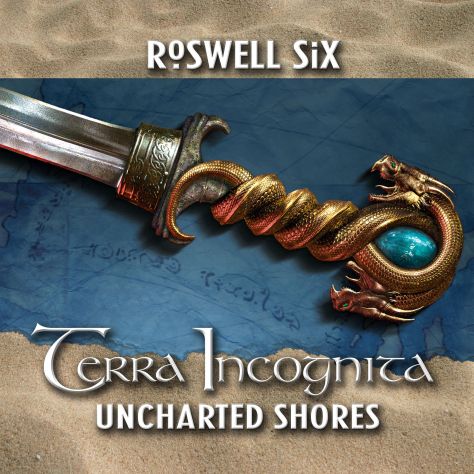
The Fantastical Prog of Terra Incognita (Uncharted Shores)

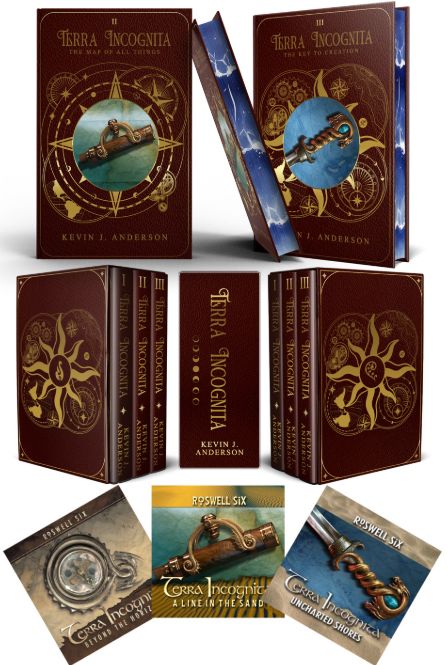
Hello, Spirit of Cecilia readers! Kevin J. Anderson has a Kickstarter campaign up and running for a gorgeous reissue of his Terra Incognita trilogy of fantasy novels and accompanying music that includes a new album from Roswell Six – Terra Incognita: Uncharted Shores.  Brad Birzer, Rick Krueger, and Tad Wert share their thoughts on it.

Tad: Brad and Rick, I understand this is the third Terra Incognita album, but they haven’t been on my radar. What’s the story behind this group, and how are they connected to author Kevin Anderson?

Rick: Tad and Brad, it’s great to join you two for a roundtable at long last!  I’m sure Brad knows a lot more about this project than I do.  But I first came across Kevin Anderson when he and Neil Peart wrote a novel based on the Rush album Clockwork Angels.  That one led to two more novels in the CA universe over the years, Clockwork Lives and Clockwork Destiny; all three of them were delightfully true to Peart’s concepts, with lots of clever Easter eggs from the Rush canon and enjoyable plot twists.  The only other novel of Anderson’s I previously read is The Dark Between the Stars, the first part of a science fiction trilogy that was nominated for a Hugo award back in 2015 – solid, sprawling space opera fun.   I’ve just downloaded his latest, Nether Station and am racing through it; he’s got that ever so slightly pulpy, lickety-split writing style down.  it’s about a deep space expedition that, little by little, gets kinda eldritch . . .

But that really just scratches the surface of what Anderson has done.  He’s most famous for continuing Frank Herbert’s Dune saga with Herbert’s son Brian; he’s also produced tie-in novels in the Star Wars, X-Files and DC universes; he’s an extremely prolific writer overall, whether it’s sci-fi, fantasy, horror or any combination of those genres – by his count, about 180 novels to date.  On top of all that, he and his wife Rebecca Moeste run their own publishing company, WordFire Press.

Through Brad’s connections with Anderson, I’m on WordFire’s mailing list, so I’ve noticed that he’s run a few Kickstarter campaigns over the years.  His latest campaign is a reissue of Terra Incognita, a fantasy trilogy originally published in 2009-2011. The thing that’s different about these books, though, is that the first two had soundtracks; apparently, Anderson has had a lot of contact with the music world over the years.  And maybe that’s where I should let Brad take over.

Brad: My dear friends, Tad and Rick, so great to do this with you guys!  And, to talk about one of my all-time favorite human beings, Kevin J. Anderson.  I’ve been reading Kevin’s works for years, but I only got to know him for the first time about 11 years ago.  I had a one-year position at the University of Colorado-Boulder (2014-2015 academic year), and that position came with some funding to bring speakers in.  As soon as I arrived in Longmont (where we lived for the year), I contacted Kevin (whom I had never met) and Dan Simmons.  I never heard back from Simmons, but Kevin immediately agreed to come speak for me.  He and his lovely (and equally talented) wife, Rebecca, came to Boulder, and Kevin gave an excellent speech on the art of writing fiction.  He called it his “pop-corn theory,” explaining that ideas happen all over the place.  I loved the speech.

And, I also loved Kevin and Rebecca.  We hit it off at dinner at an Indian restaurant right before Kevin’s talk.  He then invited us to his famous New Year’s Eve party for 2015.  Dedra and I happily drove to Monument to see Kevin’s impressive and rather Arthurian house!  Crazily enough, my car slid down his steep driveway and almost crushed the natural gas vein!  Thank the good Lord that disaster was averted and New Year’s Eve was a different kind of blast.  One of the great things about Kevin is he knows how to form communities.  He’s a natural leader.

We also really bonded over his friendship with Neil Peart.  In fact, it was Kevin who suggested I write the book about Peart’s lyrics, Cultural Repercussions, for his WordFire Press.  I was deeply honored to do so not just because of my love of Rush, but also because of my respect for Kevin.

And, Kevin has deep roots in the prog rock community.  Indeed, I can’t imagine a current writer who has greater or more legitimate ties to prog than does Kevin.  Rush’s Grace Under Pressure inspired Kevin’s first novel, Resurrection, Inc., and Kevin’s never been shy about his inspirations: Rush, Kansas, Styx . . . .

Rick, you brought up Clockwork Angels and its surrounding universe.  Admittedly, I love the Clockwork trilogy–the novels, the audiobooks, the graphic novels–and I think that Kevin really offered new insights into Rush and, frankly, into music.  To me, Clockwork Angels is Chestertonian, and I don’t understand why it’s not been made a Netflix series!

When I first encountered Kevin’s music project, Roswell Six, I was understandably impressed by the scope as well as the execution of the vast project.  Kevin has a great entrepreneurial spirit, but always with the artistic soul.  Roswell Six perfectly blends Kevin’s many loves and expertises.  I’ve been proudly listening to the first two CDs since they were first released, and I happily include them among my all-time favorite albums.  I’m especially taken with the first CD, 2009’s Beyond the Horizon.

When Kevin first announced this Kickstarter project–hardback editions of Terra Incognita as well as a re-release of the first two Roswell Six CDs, AND a brand-new third CD, I was absolutely thrilled.  I pledged during the second hour of the campaign.  And, that campaign has done exceedingly well.  Initially hoping to hit the $10,000 mark, the Kickstarter project, as of this writing, is at the $51,000 mark with 399 backers!  Incredible.  And, so well deserved.

So, what do you guys think of the music?

Tad: Okay, both of you have much more experience with Anderson’s work than I. When I saw that there was a companion novel to Rush’s Clockwork Angels, I immediately read it and enjoyed it very much. The Roswell Six albums slipped under my radar, though.

That said, I really like this third album, Terra Incognita (Uncharted Shores). To my ears, it’s pretty much straightforward, classic progrock. Fans of Kansas, Styx, Spock’s Beard, Threshold, Arena, et al. will love it. The fact that there are so many different vocalists brings to mind an Arjen Lucassen project – especially when the beautiful voice of Anneke van Geirsbergen appears in track 3, “A Sense of Wonder”. 

I like the acoustic, Celtic sounding “Haunted and Hunted” a lot. “Lighthouse” is another highlight for me, with its chugging rock riffing and excellent guitar soloing. “The Ballet of the Storm” is an instrumental that has a very nice intro played on violin that transforms into a warm piano/electric guitar duet underpinned by some excellent bass. 

“The Key to Creation” features the return of Anneke, and it has a fun 80s vibe to it – it’s got a relentless beat with a wall of synthesized sound. As a matter of fact, I think this is my favorite track on the album. It has a nice hook in the chorus that sticks in my ear. 

“Unexpected” keeps the musical quality high with, I believe, Dan Reed handling the vocals. I feel like these songs will take on more meaning when I have the chance to read the accompanying novels. They obviously follow a storyline. In many of the tracks, I can hear sounds of the sea, which makes sense, given the Uncharted Shores title!

Rick: Brad, what you said about Anderson’s connections in the music world helped me get my bearings for listening to Uncharted Shores; it definitely has that American heartland prog vibe with some nifty touches of funk (but also touches of European theatricality, as Tad pointed out).  KJA gave an interview this week with Michael Citro of Michael’s Record Collection where they go into the background behind the music; the basic tracks are written and performed by Bob Madsen (bass), Billy Connolly (guitar), Jerry Merrill (keys) and Gregg Bissonette (drums) – all artists working under the umbrella of The Highlander Company Records.  (Madsen’s band The Grafenberg Disciples announced themselves to the world a few years back with a tribute to Peart, “No Words”, that caught Anderson’s attention.)  And all that excellent violin work is by Jonathan Dinklage – he led the Clockwork Angels string section on those 2012 & 2013 tours.  Rush connections aplenty!

The guest vocalists take the whole thing up a notch as well.  Michael Sadler from Saga sings on the title song. “Hunted and Haunted” and “Lighthouse”; he’s played one of the “lead roles” for all three albums. Like you said, Tad, Ted Leonard and Anneke give it their all on their feature tracks.  But the big surprise for me was Dan Reed, who takes the villain role on “Mortal Enemies” and “Unexpected”; for a minute, I thought Steve Walsh had emerged from retirement!  Reed has this grizzled timbre, but a real purity of tone and expression underneath, and he absolutely sells the part.  And The Grafenberg Disciples vocalist Hans Eberbach brings it all home on “Not In My Name” –  gutsy and soulful by turns, and consistently dramatic (with Tull’s Doane Perry contributing a spoken-word cameo as a capper)!  I think that’s the track that’s my favorite so far.

But there isn’t a duff song on the new album, and it definitely grew on me the second time through.  I agree with you, Tad, that knowing the Terra Incognita storyline better will probably help, but the core emotions and throughline of the story come across loud and clear.  According to the Anderson/Citro interview, all the albums are being released through Sony (on InsideOut?) in the fall, but I decided not to wait; I’ve pledged for the ebooks and the digital albums, so my summer reading and listening are already lined up.  And when the CDs go to broad release – who knows?  It’d be far from the first time I’ve bought music twice!

Brad: Tad and Rick, so well stated!  And, yes, I pledged to buy all three albums as well, even though I already own the first two.  If you’ve not listened yet, I especially recommend the first track on Beyond the Horizon: Ishalem.  Incredible prog metal.  Very much in line with Ayreon or Dream Theater.

For those out there not totally familiar with Kevin, he has, as noted above, written extensively in the Star Wars, Dune, and X-Files franchises.  My favorite of his own books (that is, those not set in another mega genre/universe) are Nether Station (a sequel to H.P. Lovecraft’s Mountains of Madness) and Stake (a completely original novel questioning the existence of the supernatural).

Again, all praise to Kevin for bringing together so many beloved things: fantasy, science fiction, and prog rock!

Tad: Kevin Anderson’s Kickstarter link is here, for those interested!

Rush: The Way the Wind Blows

Now it’s come to this
It’s like we’re back in the Dark Ages
From the Middle East to the Middle West
It’s a world of superstition

Now it’s come to this
Wide-eyed armies of the faithful
From the Middle East to the Middle West
Pray, and pass the ammunition

So many people think that way
You gotta watch what you say
Oh, to them and them and others too
Who don’t seem to see things the way you do

We can only grow the way the wind blows
On a bare and weathered shore
We can only bow to the here and now
In our elemental war

We can only go the way the wind blows
We can only bow to the here and now
Or be broken down blow by blow

Now it’s come to this
Hollow speeches of mass deception
From the Middle East to the Middle West
Like crusaders in unholy alliance

Now it’s come to this
Like we’re back in the Dark Ages
From the Middle East to the Middle West
It’s a plague that resists our science

It seems to leave them partly blind
And they leave no child behind
While evil spirits haunt their sleep
While shepherds bless and count their sheep

We can only grow the way the wind blows
On a bare and weathered shore
We can only bow to the here and now
In our elemental war

We can only grow the way the wind blows
We can only bow to the here and now
Or be broken down blow by blow

We can only grow the way the wind blows
We can only bow to the here and now
Or be broken down blow by blow

We can only grow the way the wind blows
We can only bow to the here and now
Or be broken down blow by blow

Like a solitary pine
On a bare, wind blasted shore
We can only grow the way the wind blows
In our elemental war

We can only grow the way the wind blows
We can only bow to the here and now
Or be broken down blow by blow

Source: LyricFind

Songwriters: Alex Lifeson / Geddy Lee / Neil Peart

The Way the Wind Blows lyrics © Anthem Entertainment

Rush: Between the Wheels

To live between a rock and a hard place
In between time
Cruising in primetime
Soaking up the cathode rays
To live between the wars in our time
Living in real time
Holding the good time
Holding on to yesterdays

You know how that rabbit feels
Going under your speeding wheels
Bright images flashing by
Like windshields towards a fly
Frozen in the fatal climb
But the wheels of time
Just pass you by

Wheels can take you around
Wheels can cut you down
We can go from boom to bust
From dreams to a bowl of dust
We can fall from rockets’ red glare
Down to “Brother, can you spare…”
Another war, another wasteland
And another lost generation

It slips between your hands like water
This living in real time
A dizzying lifetime
Reeling by on celluloid
Struck between the eyes by the big-time world
Walking uneasy street
Hiding beneath the sheets, got to try and fill the void

You know how that rabbit feels
Going under your speeding wheels
Bright images flashing by
Like windshields towards a fly
Frozen in that fatal climb
But the wheels of time
Just pass you by

We can go from boom to bust
From dreams to a bowl of dust
We can fall from rockets’ red glare
Down to “Brother, can you spare…”
Another war, another wasteland
And another lost generation

Wheels can take you around
Wheels can cut you down
Fall from rockets’ red glare
Down to “Brother, can you spare…”
Another war, another wasteland
Another lost generation

Source: Musixmatch

Songwriters: Geddy Lee / Alex Lifeson / Neil Peart

Between the Wheels lyrics © Ole Core Music Publishing, Anthem Core Music Publishing

Rush’s Permanent Waves and Exit…Stage Left – An Appreciation

PW_Exit

Greetings, SoC readers! In our latest symposium, Brad, Erik, Kevin, and Tad discuss a true prog classic: Rush’s 1980 album, Permanent Waves, with a side trip to their live album, Exit…Stage Left.

Tad: Gentlemen, let me state right off the bat that Permanent Waves is my favorite Rush album. I know it’s not their “best”, but it is the one I listen to most often. I love the way it bridges earlier albums like A Farewell To Kings and Hemispheres to future masterpieces like Moving Pictures and Power Windows. Also, it’s the first album where Geddy tones down his banshee wail a bit, paving the way for mass acceptance.

Erik: Tad – while Moving Pictures is my favorite Rush album, I certainly think a good case can be made for Permanent Waves.  And to give it due credit, I don’t think Moving Pictures can be made by Rush without them first making Permanent Waves.  As you mention, it serves as a bridge from their previous works to what they became in the 1980’s.  

One thing that Permanent Waves represents to me is Rush learning how to trim the fat, so to speak.  Over previous albums, Rush had become more ambitious in their musical output, from both a compositional standpoint as well as their experimentation with different sounds, including keyboards.  Although this phenomena began almost as soon as Peart joined the band, they really turned it up to 11 starting with 2112.  It culminated with Hemispheres, which included the side-long suite that gave the album its title as well as the incredibly complex instrumental, La Villa Strangiato (and I must mention it also contained my favorite anti-commie song of all time, The Trees).  When compared to these previous albums, Permanent Waves seems relatively stripped down. Indeed, members of the band stated that they were exhausted making Hemispheres and were looking to scale things back at the time they recorded Permanent Waves.

In doing such an album, Rush added the final piece to their repertoire that made Moving Pictures possible – the ability to be economical with their music and the balancing of that with larger ambitions.  Indeed, there were not-so-subtle hints that they were doing this on my two favorite pieces from the album, Jacob’s Ladder and Natural Science.  Both of these songs show the ambition that drives some of the best progressive rock, while also showing enough restraint to attain the aforementioned balance.

I have a few other observations I’ll make in my next entry, but for now, I’ll turn the floor over to one of the other participants here.

Brad: Dear Tad, Erik, and Kevin!  From the blistering guitar attack in the opening moments of Permanent Waves (Spirit of Radio) to the final, sighing ambient sounds (Natural Science), this album is a stunner.  It’s so utterly different from all the Rush albums that preceded it, and, yet, in some mysterious way, it’s a perfect continuation of Rush music and magic.

As I’ve mentioned before, I didn’t come to Rush until the spring of 1981.  I was a seventh grader at Liberty Junior High in Hutchinson, Kansas, and I had done something to earn detention.  Detention meant an extra period after school in the school library.  None of this really mattered–my mom wouldn’t get home from work until 5, so she’d never know that I was in detention, and the library was my favorite place at the junior high.  

I don’t even remember what I did to earn detention, but I’m sure it had something to do with me talking too much in class.  

Regardless, my fellow detainees were Troy and Brad (a different Brad).  One of them had a Genesis Duke lapel pin (on his jean jacket), and we started talking progressive rock.  I was quite familiar with Genesis, Yes, and Kansas, but I’d never heard of Rush.  Troy and Brad assured me that I had to listen to Moving Pictures, the latest album from Rush.  Despite detention, I immediately went out and bought the album.  I was immediately hooked!

From there, I worked backward, encountering the beauty that is Permanent Waves.  I loved the six songs, I loved the cover and the artwork, and I especially loved the lyrics.

Strangely, though, it wasn’t until I first met Kevin McCormick that I became obsessed with the lyrics for “Natural Science”.  As a gift to me, Kevin (in his beautiful and distinctive penmanship) wrote out the lyrics of the song for me.  I carefully folded those lyrics and kept them in my wallet for decades.  Indeed, they shaped my whole outlook on life.  I’m a practicing Catholic, but, thanks to Peart and Kevin, I will also always be an idealistic Stoic.

Since I have the floor, I’ll also add this.  Tad, I love that you included Exit Stage Left in this discussion.  Rush, I think, at least up through Different Stages always bookended the various styles of their music with a live album.  After Vapor Trails, Rush began to release live album after live album, thus changing their previously careful M.O.  All to the good, I say, as I want more Rush rather than less Rush.

Still, back to Exit Stage Left.  If I had to list my ten favorite live albums of all time, Exit would be among them.  Maybe not number one, as I think the production values of the album sound dated at this point.  But, the music.  So glorious.  And, the transitions from song to song are just extraordinary.

I especially appreciate the transition on side three of the double album, Broon’s Bane to The Trees to Xanadu.  Heaven itself!  I realize that the album came from several different concerts, but I would’ve loved to have been at any one for the Permanent Waves and Moving Pictures tours.

Tad: Erik, I think you nailed one of the most attractive characteristics of Permanent Waves – there is absolutely no fat; it’s the leanest album of their career! Even the relatively long tracks, “Jacob’s Ladder” and “Natural Science” (7:27 and 9:19 respectively) are models of conciseness. Brad, I agree with you that “Natural Science” is a keeper. It is my favorite song on the album. When Alex starts an arpeggiated riff and Geddy first sings

Wheel within wheels in a spiral array
A pattern so grand and complex
Time after time we lose sight of the way
Our causes can’t see their effects

is one of their greatest musical moments. And of course, I have to appreciate Peart’s hopeful take on humanity:

The most endangered species, the honest man
Will still survive annihilation.

Another favorite song – and this might be a surprise to you all – is “Different Strings”. It’s so unlike anything Rush had recorded before – understated, elegant, and, well, hushed in its sound. I love how Geddy utilizes harmonics on his bass to underline the melody, while Alex pulls off a lazy, loping guitar solo.

“Entre Nous” is simply a beautiful song, both in melody and lyrics. There is perfect balance in it between the heavy guitar riff at the beginning and Alex’s delicate touch during the chorus. Meanwhile, Neil’s lyrics are very mature – it’s impossible for two individuals to fully know and understand each other, but it is possible to grow close via mutual respect.

Erik: Great, stuff guys!  I am happy that we all have agreement on Natural Science and Jacob’s Ladder.

Another fond memory I have of this album was that it marked the time when I really started to hear Rush on the radio frequently.  I had been a Rush fan for about two years at this point, but only occasionally heard them on the radio, with songs like “Fly By Night,” “Closer to the Heart,” and “Working Man.”  I don’t recall ever hearing anything off of “2112” or “Hemispheres” on the radio in those days.  But starting with Permanent Waves, Rush broke through on my preferred FM rock station quite forcefully, starting with the ironic hit The Spirit of Radio.  I call it ironic because the song was basically a call for artistic integrity over going for the lowest common denominator to have hits, and yet this song might have been Rush’s biggest hit up to that time.  I certainly heard it on the radio much more than any of their previous music.  Entre Nous and Freewill also got plenty of radio airplay.  On the latter of those two, along with The Spirit of Radio, I was also able to get a preview of Permanent Waves when I caught my first Rush concert at Rupp Arena in Lexington, KY, in September of 1979.  Oddly, I remembered Freewill more than the hit song.

Increased radio airplay is another way that Permanent Waves presaged what was to come the following year with Moving Pictures, as it exposed Rush to a wider audience that was receptive to the follow-on.  Another aspect of the music that I noticed here was the incorporation of certain sounds not found on previous Rush albums, particularly the reggae-influenced interlude found on The Spirit of Radio.  Similar sounds found their way onto the next two albums with Vital Signs in Moving Pictures, and Digital Man on Signals.  I’ve read elsewhere that the members of the band were listening to The Police quite a bit around this time, and these reggae excursions are evidence of that.  They serve as more evidence of the manner in which Permanent Waves served as a turning point that teed up Rush for what was to come.

Onto Exit … Stage Left now.  If this is not my favorite live album of all time, it is certainly in the top five.  Between February and October of 1981, no album of mine was in more heavy rotation than Moving Pictures.  It took another Rush release – the live album we are discussing – to change things.  This was just such a stellar live album, great recording and great sound throughout.

Brad, you and I are going to be doing a Vulcan mind meld on what proved to be side three of the vinyl edition of Exit … Stage LeftBroon’s Bane, to The Trees, and into Xanadu.  While all four sides of that album received plenty of play by me, none received more than this epic side three.  And as for Xanadu itself?  This is my favorite version, which I strongly favor over the studio version.  The latter was a bit dry in its sound and production overall, while the live version here smoothed out the rough edges without losing any of the punch or dynamics of the original.  

But to give the other sides their due, mention must be made of a rousing version of Closer to the Heart, which received more than a little well-deserved airplay of its own.  Freewill and Jacob’s Ladder also make respective appearances, coming off well in the live setting.  And of course, we have the rousing intro on side one with The Spirit of Radio.  In short, Exit … Stage Left perfectly encapsulates the Rush era that played out between their previous live album and this one.  In sound, setlist, and performance, it’s really hard to find a better live album than this, and I’m not sure I ever have.  Insert chef’s kiss -here-.  🙂

Brad: Tad, I’m completely with you on Entre Nous and Different Strings.  Each shows a side of Rush rarely seen but always appreciated.  Erik, I really appreciate your enthusiasm, especially for the various sides of Exit. . . Stage Left. Somehow, the band just really captured its best self with that live album.  As much as I appreciate all Rush live albums (and I own them all in various formats), it’s always Exit. . . Stage Left that I go back to the most.  It’s one of my-all time favorite live albums as well.

Overall, though, I must state, as much as I love Permanent Waves (and I do), in hindsight, the album really feels like a transition album, itself pointing to something else.  In this case, it’s pointing toward Moving Pictures and Signals but, I think, also to the very angular Grace Under PressurePower Windows and Hold Your Fire seem well beyond Permanent Waves, taking both new wave and jazz fusion in fascinating directions.


Natural Science, though, is the one exception to this transition idea.  It seems it could’ve only existed on Permanent Waves.  Nothing like it had ever come before and really nothing like it would ever come again.  Not only is the song perfectly constructed, but Neil’s stoic lyrics really hit the peak of his writing.  I think Camera Eye off Moving Pictures was probably an attempt at a sequel to Natural Science.   Yet, as gorgeous as Camera Eye is, it simply doesn’t possess the power (more refined than raw) of Natural Science.

Kevin: Hear, hear! To all you gents for your wonderful reflections on this tremendous recording and its live cousin! Once again I’m late to the party–but with good reasons. 1)It’s recital time for the guitar studio, so my time is limited and 2) I plan to give a more complete treatment of this masterpiece on these Spirit of Cecilia pages in the coming days. However, to this already detailed commentary here, I would just like to add that, for me, Permanent Waves is the masterpiece and Moving Pictures is the unusually powerful sequel.

Lemme’ e’splain…no, there is too much, Lemme summup: It’s not only that without Permanent Waves there would be no Moving Pictures, though Erik’s observation is true enough. But it is precisely the beautifully blended nature of the artistry of Permanent Waves where its genius lies. 

Moving Pictures captured a nearly global audience; its themes of personal independence and encounters with modernity make it universally relatable in the global modern age. This combined with the new-found confidence the band discovered upon really breaking through to regular radio play, as Tad so rightly states. Furthermore, Exit…Stage Left followed quickly on MP’s heels right when MTV was just launching. The engaging live videos from these songs suddenly reached an enormously broad audience they might have otherwise missed in the times of the radio ghettos of the early eighties. Neil Peart stated many times that this was when Rush had found its sound.

And as much as I love that sound, it’s heavy: musically, thematically, and aurally. I miss the whimsy of their earlier recordings. Permanent Waves retains some of that whimsy both in its sound and in the lyrics. There is a personal touch found on the album that I sense as more intimate than on Moving Pictures.  That touch certainly returns on subsequent albums, but there is something magical about the combination of sounds and wonders on Permanent Waves. Brad notes in his own inimical style, the opening flurry of Spirit of Radio–it’s brilliant! Not only musically, but it’s a bright, shimmering sound—“a shifting shaft of shining.” And it shimmers throughout the album.

Here these young travelers are forging through completely new territory as a band. They don’t know exactly what they are doing or where they are going, but that’s the genius of it. The magic is created through the instincts of three musicians who have spent countless hours on the road together.  They’ve tried to carve their own sound, but have gotten lost in the trees (and the fountain of lamneth). Finally they arrive at this creative space with all of their skills and ideas intact and they simply let loose!


The resulting work of art resounds with the spirit of youth, the confidence of the road warrior, and the slight uncertainty of the as-yet unwise sage. It’s a joy to listen to and still has an incredible power, both spiritual and musical, after so many years. So Hear Hear!: To the boys in Morin-Heights in that Canadian autumn weaving the fabric of our dreams!

Brad: Kevin, what great thoughts.  So glad you joined the conversation.  It wouldn’t be a Rush conversation without you!  I very much look forward to your fuller thoughts on all this.

Tad: One last thing I’d like to add – I love the cover art for Exit…Stage Left! I think it is the first time Hugh Syme incorporated visual puns, and boy, this cover is packed with them. There are images from every previous Rush album, and when I first saw it I was like a kid in a candy store.

Gentlemen, thank you for your wonderful insights into Permanent Waves and Exit…Stage Left. I think most diehard Rush fans would agree that this period in the group’s long career was a peak. And, it was nice to see them finally break through to a much wider audience. They never looked back, did they?

Neil Peart: Cultural Repercussions REVISED AND EXPANDED

Coming, June 14, 2022, from WordFire Press

Thanks to Kevin J. Anderson and Wordfire Press, I had the opportunity to revise and expand my intellectual biography, Neil Peart: Cultural Repercussions, originally published in 2015.

On June 14, Wordfire will release an ecopy as well as a trade paperback. To preorder the ecopy, go here: https://books2read.com/b/3LwEA1.

I’ve had the chance to write about many of my heroes during my professional career, including J.R.R. Tolkien, Christopher Dawson, Charles Carroll of Carrollton, and Russell Kirk. Peart, though, remains at the top of the list. The man combined integrity, intelligence, and action. It was such an honor to write about him and spend time in is mind and in his soul.

His words meant a great deal to me at 13, and they remain a great deal to me at 54. Peart has been, I believe, one of the most influential figures of the last half century–shaping the lives of many non-conformists, and unleashing the power of the individual spirit and mind.

Brad Birzer Discusses Rush on Political Beats Podcast

Our own Dr. Brad Birzer joins hosts Scott Bertram and Jeff Blehar for an in-depth discussion of Rush on their Political Beats podcast. The more than 2 1/2 hour conversation begins with Rush’s debut album and continues all the way through Clockwork Angels. It’s a lot of fun to listen to, even if you aren’t a Rush fanatic. Jeff Blehar had never heard a single Rush song before he listened to their entire discography in preparation for this episode, and his takes on their various albums are refreshingly honest and fair.

Click here to play the episode.


Those Awkward Teenage Years – The 2010’s, pt. 6: 2015

We’re midway through the decade – thanks for joining us on our journey through the musical highlights of the 2010s!

In terms of music distribution, compact disc sales continued their steep decline. In 2000, 943 million CDs were sold. By 2015, that number had dropped to a little over 100 million. iTunes (and mp3s in general) was fading fast as Spotify, Amazon Music, and Apple Music attracted listeners to their streaming platforms. What these trends mean for artists remains to be seen. As it gets harder to earn income from recorded music, will that discourage new artists from getting started?

On the other hand – stepping back and taking a longer view of history – perhaps we’ll look at the 20th century as an aberration in terms of the financial rewards many recording artists were able to garner. For most of recorded history, musicians and composers have  had to struggle to survive, and even the the most gifted relied on wealthy patrons.

Fortunately for us in the 21st century, there is no shortage of great artists producing fine music, and 2015 was a good example. So here are the highlights of that year, in alphabetical order.

The Dear Hunter: Act IV: Rebirth In Reprise

Casey Crescenzo has released five of his planned six acts. Act IV: Rebirth In Reprise is my favorite so far. As usual, there is everything but the kitchen sink here. “A Night On The Town” is the key track as it swings like a Gershwin composition before an exhilarating rock motif takes over.

Gazpacho: Molok & NIght Of The Demon

Another year, and not one, but two Gazpacho releases. Molok is another dark concept album about the ancient demon utilizing modern technology for his nefarious purposes (I think). The fact that Molok has some of the prettiest music Gazpacho has ever made makes the concept go down easy. Night Of The Demon is a live set where the band really cooks. It’s a perfect introduction to them, if you’re curious.

Glass Hammer: THe Breaking Of The World & Double Live

Another year, and not one, but two Glass Hammer releases. The Breaking Of The World is another peak for them (how do they keep doing that?) with essential songs “Mythopoiea”, “North Wind”, and “Nothing, Everything”.  Double Live is a terrific no-frills live performance. Susie Bogdanowicz and Carl Groves are excellent singing classics like “The Knight Of The North” and “If The Stars”, while the band rocks tighter than a tick.

I Am The Manic Whale: Everything Beautiful In Time

A new band from Reading, England, I Am The Manic Whale sprang fully formed from the brain of Michael Whiteman (the band name is an anagram of his). This is an impressive debut with songs celebrating subjects ranging from 10,000 year clocks to the joys of parenting messy toddlers. “Princess Strange” is an inspiring take on cyberbullying.  A true delight to listen to, and worthy of a large audience.

Karnatake: Secrets of Angels

Veteran proggers Karnataka enlisted new singer Hayley Griffiths for Secrets Of Angels, and she really lit a fire under them. Opening track “Road To Cairo” has a killer middle eastern riff that is as satisfying as Led Zep’s “Kashmir”. The title track is also excellent.

Dave Kerzner: New World

The keyboardist and composer from Sound Of Contact struck out on his own and produced this wonderful Floydian sci-fi epic. Put it on, and imagine you are back in 1977, hearing a fantastic new prog masterpiece.


Lonely Robot: Please Come Home

John Mitchell’s (Arena, Frost*, It Bites) first album in a trilogy about an astronaut lost in space. One of the best albums of the decade, Lonely Robot features John’s excellent vocals and stellar guitar work. Every song is memorable, but “Oubliette” and “Are We Copies?” are standouts.

Neal Morse Band: The Grand Experiment

The first album from The Neal Morse Band is one of the best of the decade. First, it is NOT a Morse solo record – this is a band effort with all members contributing to the songwriting. Second, Neal found a young multi-instrumentalist in Eric Gillette who is simply phenomenal and spurs everyone to new heights. “Alive Again” may just be the finest epic Neal has been involved in.

Riverside: Love, Fear, and the Time Machine

This was my favorite album of 2015, and I still listen to it fairly often.  Riverside pulled together their metal and hard rock roots with Mariusz Duda’s gentler Lunatic Soul excursions, and came up with a winning mix. Add in some nods to ’80s new wave, and this is a very fine record.

Rush: R40

A document of Rush’s 40th anniversary tour, where they played songs from every phase of their long career. The stage set began filled to the brim with props and effects, and they gradually shed them as they worked their way back to the first shows they played in a high school auditorium.

Subsignal: The Beacons Of Somewhere

Subsignal’s The Beacons Of Somewhere was a highlight of 2015. Straight-ahead prog rock with awesome melodies. “Everything Is Lost” is an excellent song, as is the multi-part title track. Every time I listen to this marvelous album, I hear new details that delight.

Tesseract: Polaris

Tesseract toned down the more extreme metal aspects of their music for Polaris, and that made a huge difference. Daniel Tompkins has always been a terrific vocalist, but on this album he really shines.  “Dystopia” soars, and “Tourniquet” is a gorgeous cacophony of sound. “Phoenix” makes me want to drive 100 mph. A great album that earned Tesseract a well-deserved wider audience.

Steven Wilson: Hand.Cannot.Erase

Steven Wilson’s Hand.Cannot.Erase caused the biggest stir in progworld in 2015. It was his breakthrough album, catapulting him into the mainstream, and deservedly so. That said, the subject is so emotionally harrowing (the true story of a young woman who died alone in her apartment, and wasn’t discovered for three years) that I have a hard time enjoying it.

Yes; Progeny

A box set that contains recordings of seven concerts from 1972. Yes was touring in support of Close To The Edge, and this is a fascinating document of a young and hungry band at the peak of their powers. Yes, the setlist stays constant, but it is fun to hear how their performances evolved over a short period of time, and how they dealt with onstage setbacks, like a local FM radio station taking over their PA system!

Once again, I easily could have doubled the length of this post. I left off excellent albums by Bruce Soord, Downes Braide Association, Echlyn, Izz, and Perfect Beings, among others. Let us know what your Best of 2015 list is in the comments!