All posts by Thaddeus Wert

High school math teacher and fan of all kinds of music, but most of all prog.

The Giant Achievement of Days Between Stations

Giants cover

It’s been 7 long years since we have heard from Oscar Fuentes Bills (keyboards) and Sepand Samzadeh (guitar), the duo who go by the moniker Days Between Stations. They have a new album out, Giants, and it is a contender for best of 2020. I love this album. It is produced by Billy Sherwood of Yes fame, who also plays bass, drums, and handles lead vocals on most of the songs. Colin Moulding, who sang The Man Who Died Two Times on their last album, returns to sing on Goes By Gravity, while Durga McBroom, who sang on several Pink Floyd songs sings lead on Witness the End of the World.

While their second album, In Extremis, was very good, Giants is a huge step forward for DBS. Did I mention I love this album? It kicks off with a clanging guitar chord reverberating from one speaker to another, and before you know it,  we’re on a rollercoaster of an epic named Spark

Spark of life
Soul expansion
Coming in waves
Point of view
Taking chances
You’re an act of God

Even though Spark lasts nearly 17:00 and is nonstop high energy, it never seems too long or forced. Samzadeh unleashes some terrific guitar solos worthy of David Gilmour, while Bills answers with vigorous organ fills.

Things calm down a bit for Witness the End of the World. Over an acoustic piano, guitar, and violin, McBroom delivers a sensitive vocal performance. This is a beautiful and tender waltz that mourns the inevitable loss all humans suffer.

Everything we once knew
Winding down
Witness the end of the world

Another Day begins with a slow tempo that gradually adds layers of instruments and vocal harmonies until it is a juggernaut of sound. It features an incredibly catchy chorus that gets in your head and won’t leave.

Goes By Gravity, sung by Moulding with his trademark wry vocals, is the poppiest song on the album, and is another earworm.

The title track is another epic, clocking in at 13:00, and is Bills’ tribute to his deceased father, the “giant” of his childhood, and a man he deeply admires. This is a tremendous song, with lots of space for Sherwood, Samzadeh, and Bills to stretch out and play off each other. Sherwood’s massed vocals are spine-tingling as he sings, 

Shaking the sky
Holding on to the reins
The Great Divide
Between memories and 
What remains

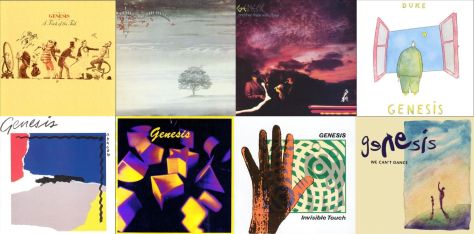
After the emotional experience of Giant, we are treated to an instrumental interlude that begins with a Bill Evans-like jazz passage on piano, transitions to a Bach-like fugue on acoustic guitar, and ends up with a guitar/synthesizer duet that reminds me of classic Genesis. (Side note: the cover art is by Paul Whitehead, who painted several classic covers for Genesis.)

The album wraps up with the magnificent The Common Thread. This is, hands down, the best song I’ve heard this year. Full of tricky time changes but always staying accessible and engaging, it progresses upward inexorably, gaining power with every bar. By the time we get to the final minute and the triumphant conclusion, I feel like I’ve reached the top of a mountain. This song is as good as anything Yes recorded in their classic incarnation.

Days Between Stations have only released three albums, but I’ve never seen such growth in group like they’ve accomplished with Giant. Billy Sherwood definitely deserves a lot of the credit, with his production, bass and drum work, and vocals. Their debut was all instrumental, their second was about half instrumental, whereas Giants is a full-bore progrock vocal tour de force. Album of the year? There are some strong contenders from Glass Hammer, Bardic Depths, Pendragon, Katatonia, Pain of Salvation, and Pineapple Thief, but right now Days Between Stations’ Giants is at the top of my list.

I ordered a CD from their website for my collection, and they included some DBS pencils and guitar picks. How’s that for customer service!

DBS picks

The video below is a nice sampler of the album:

In The DropBox: Ayreon, Flower Kings, And Short-Haired Domestic

This week, I feel like the DropBox is in a holding pattern (with one exception). We have two well-established prog artists with new albums, but neither one indicates much artistic growth. Both are solid efforts that will certainly please die-hard fans, but I don’t see them attracting many new ones.

ayreon-e28093-transitus-600x600-1

Arjen Lucassen, the king of prog operas, has released a new magnum opus, Transitus. This is the first of his operas that isn’t tied to his Ayreon world in some way (although there is a sly reference the “The Human Equation”). Transitus is a Victorian ghost story/morality play that tells the story of two doomed lovers – one a wealthy young man and the other a servant of his – and how they overcome the barrier of death to be together.

If you’re an Ayreon fan, musically this fits in with everything Lucassen has done previously. There’s not a lot of new ground broken, but it’s hard to fault an artist for being so consistently good. Tommy Karevik (Kamelot) sings the lead role of Daniel, and Cammie Gilbert (Oceans of Slumber) takes the role of Abby. 

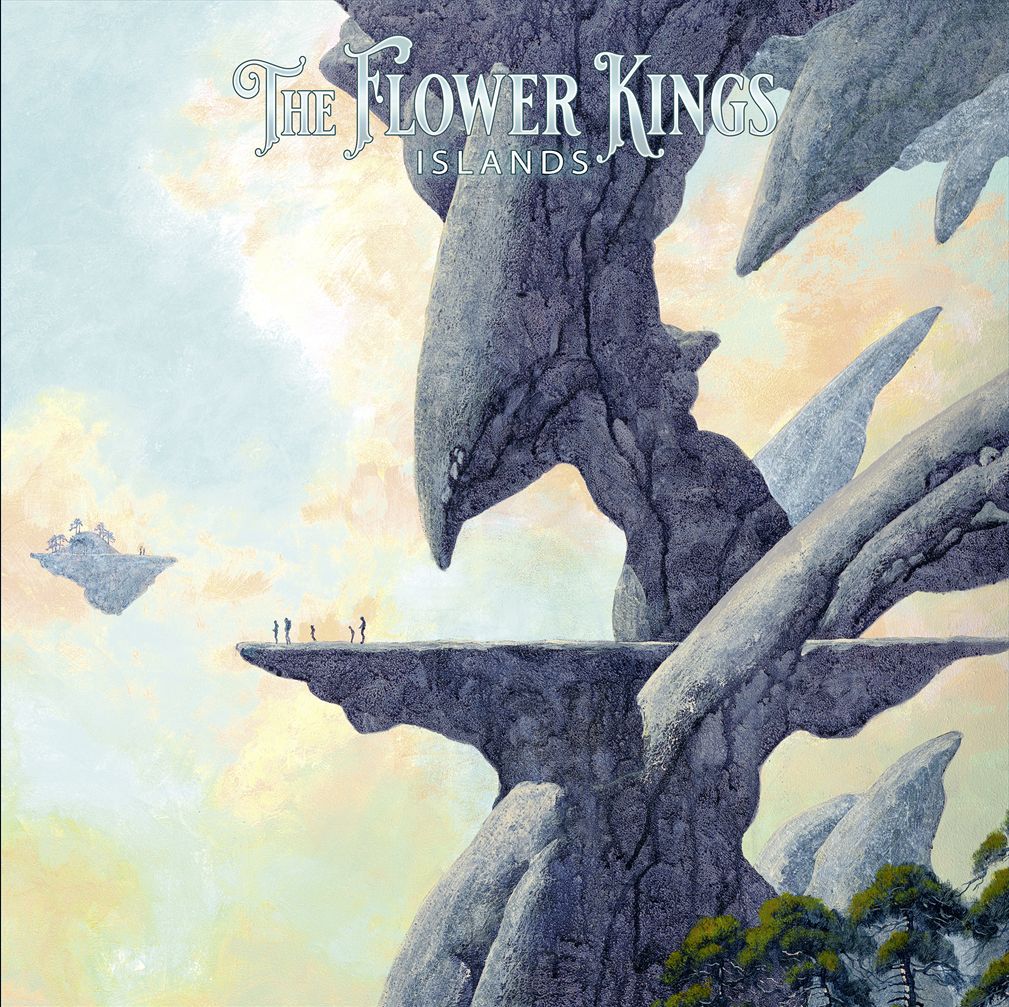
islands

The Flower Kings are never ones to stint their fans when it comes to providing music, and Islands is no exception. It is a big 2 CD album that features Roine Stolt’s trademark guitar work and laconic vocals. On this outing, I actually prefer the songs bandmate Hasse Froberg sings – he is a little grittier. According to Stolt, all of the songs revolve around the theme of isolation, hence the title. There are some beautiful moments in this sprawling set, particularly All I Need Is Love. Fans of the Flower Kings and Transatlantic will not be disappointed with this one.

short-haired-domestic-album-cover

This album is the most interesting one of this week’s batch. Short-Haired Domestic is Tim and Lee Friese-Greene, and their offering is not exactly prog, but it is some of the most delightfully quirky artpop I’ve heard in a long time. Every song is sung in a different language – Japanese, Bulgarian, Italian, German, Hindi, even Latin. It is funky, catchy as hell, and just plain fun. Tim is best known for his extraordinary production of Talk Talk’s last few groundbreaking albums, and Short-Haired Domestic makes clear he still has a few tricks to share with us.

Here’s the first single, A Song In Latin About The Importance Of Comfortable Shoes (yes, that’s the actual title):

A Double Take on Neal Morse’s Solo Gratia

Solo Gratia


Progrock artist Neal Morse has just released his latest solo album, Solo Gratia, and it has elicited varying reactions from your Spirit of Cecilia editors. Here is a friendly dialogue about Morse’s new opus between SoC’s Editor-In-Chief Brad Birzer, and Arts Editor Tad Wert


Tad: Brad, you know what a big fan I am of Neal Morse’s work, and I was excited to listen to the new album of his last week. One thing you can say about him: he’s never boring or predictable! When I first heard he was working on a new album to be called Solo Gratia, I immediately wondered if it was going to be a sequel to his 2007 Solo Scriptura. It turns out the answer is, “Yes and no”. 


Musically, it begins with a reference to a theme from Scriptura, and there are several other musical references throughout (“In the name of God, you must die”, etc.). However, instead of continuing to chronicle Martin Luther and the Reformation, in Gratia Morse decided to go back to the very beginning of the church: the conversion of St. Paul! That was a big surprise for me, and a welcome one.


Brad: Thank you so much, Tad.  I always love talking with you.  One of the finest evenings of my life was when you, Dedra, and I attended Morsefest together.  Morse is exceptional at every level, and no one performs live better than he does.  I’m a huge fan of Morse’s work, and I’m pretty sure I have everything (even the fan releases) that the man has released.


That said, I’m never quite sure how to take some of Morse’s more explicitly religious albums.  Of course, in one sense, everything since Snow has been religious.  The distinction for Morse’s work is not which is religious and which isn’t, but, rather, which is blatantly religious, and which is only merely religious.  Sola Gratia, of course, is blatantly religious.  Overall, I like the album, but I was struck by two things.  


First–and, of course, this isn’t my album, so Morse has every right to make the album he wants to make–I wanted an album about St. Paul.  That is, I thought what are the last three songs of Sola Gratia would make up the content of the album as a whole.  I’m not really that interested in following Saul through his sordid exploits when he was persecuting Christians.  The album, in this way, reminds me of a Stephen Lawhead novel, Patrick.  I wanted a novel about St. Patrick, instead, the first 95% of the novel was about what a wretch the guy was before his conversion.


Second, I find Sola Gratia–even for Morse–way too heavy.  I have nothing against heavy when it comes to music, and much prog demands a certain amount of heaviness.  But, Sola Gratia’s heaviness seems, to me, to just be some unmitigated anger.  Again, I suppose the anger fits when it comes to Saul, but I really don’t want an album about Saul.


I do, however, hunger for an album about St. Paul.  Can you imagine!  A double CD about the teachings of Paul, to Corinth and beyond!


Tad: Brad, I hear you! I think my favorite Morse albums are One (solo) and The Grand Experiment (Neal Morse Band), neither of which are “blatantly religious”. After a few listens of Solo Gratia, I think Sola Scriptura is heavier overall, but In The Name Of The Lord and Building A Wall are pretty crushing. In his notes to the album, he mentions how getting a Telecaster guitar really had an effect on the sound.


I also hear the anger, and I suppose that is Neal putting himself into the shoes of Saul the persecutor of Christians. I think he balances Saul’s anger nicely with St. Stephen’s faith and martyrdom. Seemingly Sincere, Saul’s ruminations on Stephen’s unwavering faith and love, is one of my favorite tracks. Now I Can See/The Great Commission is the other. That said, there really aren’t any melodies in this set that immediately grab me like Neal’s compositions usually do. It may take some more listens to sink in.


To your point about wanting the album to begin with the last three songs, I think conversion stories are very important to Neal. He’s put out two albums that deal with just his own conversion! By spending so much time on the anger and hatred of Saul towards the early Church, he is emphasizing how miraculous his transformation into St. Paul was. 


This was recorded during the lockdown, and I wonder how it would have turned out if Mike Portnoy and Randy George could have been with him in his studio while they were bouncing ideas off of each other.

Here’s my takeaway: Solo Gratia is not Neal’s finest album, but it’s not his worst, not by a long shot. It’s a solid effort that I hope sets the stage for more concept albums based on St. Paul and other founders of the Church.

In The DropBox: Flying Colors, Nick Mason, Djabe with Steve Hackett, and Gazpacho

The DropBox overfloweth this week: two live sets, an interesting prog/jazz offering, and the new Gazpacho album.

First up, Flying Colors’ third live album, Third Stage: Live In London, recorded during the tour in support of 2019’s excellent Third Degree. The prog supergroup of Mike Portnoy, Steve Morse, Dave LaRue, Casey McPherson, and Neal Morse just gets better and better. This is a two-disc set featuring the cream of their crop of arena-rock style prog. The rhythm section of Portnoy and LaRue is insane, especially LaRue’s funky bass. If you aren’t familiar with Flying Colors, this is the perfect introduction. If you’re a fan, it’s the best document of their scorching live prowess yet recorded.

Next up is Nick Mason’s Saucerful of Secrets. This is a real treat: Nick Mason, original drummer for Pink Floyd, put together a talented group of musicians to play a relaxed set of pre-Dark Side Of The Moon classics at the Roundhouse. If all you know about the Floyd is DSOTM and later, these songs (with the exception of the Meddle ones) will surprise you. They are playful and psychedelic in a very charming way. Gary Kemp, of Spandau Ballet fame, handles vocals, and he is terrific. It’s obvious both the band and the audience are having a great time, and Nick Mason has not lost his chops one bit.

The Magic Stag, by Hungarian group Djabe, is hard to categorize. The first few songs sound like some sort of raga/smooth jazz hybrid, as if Bob James found himself in Bollywood. Okay, I exaggerate, but there’s definitely an Indian feel to “Power of Wings” courtesy of a sitar jamming with trumpet. Steve Hackett lends his always tasteful guitar to seven of the eleven songs, and he and his wife wrote the lyrics to the title track.

The sixth track, “Unseen Sense” is the highlight, with some outstanding acoustic guitar work supporting a beautiful melody. This is a song worthy of stellar fusion artists such as Oregon, Weather Report, or Mark Isham. The rest of the album maintains the high standard set by this track. If you are looking for a nice album to play on a lazy Sunday morning, Djabe’s The Magic Stag is a perfect choice.

Anything new from Gazpacho is big news, and it’s been two years since we heard from them. Fireworker is their latest, and it is somewhat of a departure from previous efforts. I, for one, am glad to see them stretch out a little. The past few albums were starting to sound a little interchangeable. This one kicks off with the 20-minute epic “Space Cowboy”, which features a huge choir. It’s as if Carl Orff took his Carmina Burana and scored it for a prog rock group. That sounds ambitious, but Gazpacho pulls it off with aplomb.

This song cycle, like most of Gazpacho’s, has a unifying concept. In the words of keyboardist Thomas Andersen,

“There’s an instinctual part of you that lives inside your mind, separate from your consciousness. I call it the ‘Fireworker’ or the ‘Lizard’ or the ‘Space Cowboy.’ It’s an eternal and unbroken lifeforce that’s survived every generation, with a new version in each of us. It’s evolved alongside our consciousness, and it can override us and control all of our actions.” In order to get us to do what it wants, he clarifies, the “Fireworker” will silence the parts of our mind that feel disgust or remorse so that we’re unable to stop it. The conscious part of our mind, Andersen notes, will actually “rationalize and legitimize” those thoughts and actions so that we never discover the beast behind-the-scenes. No matter how we feel about ourselves in terms of identity, accomplishments, and value, we’re all just vessels—or “Sapiens”—that the creature uses until it no longer needs us. “If you play along,” Andersen explains, “It’ll reward you like a puppy and let you feel fantastic; if you don’t, it’ll punish you severely.”

From arena prog, through psychedelic pop, to jazz prog, and finally Norwegian choral prog (for want of a better term!), this is the most eclectic batch of music we’ve ever pulled from the DropBox. I’ll leave you with a little Djabe and Steve Hackett:


In The DropBox: Arcade Messiah, Katatonia, and Pineapple Thief

John Bassett was very active in the mid 2010s with his KingBathMat, solo, and Arcade Messiah projects. KingBathMat was a quirky prog group that released five excellent albums of melodic metal, while Arcade Messiah began as an instrumental outfit. AM has released a few EPs since 2016’s III, but Bassett is back with a vengeance in 2020, and it sounds like he never left. In fact, he has taken the best elements of KingBathMat and Arcade Messiah and melded them into a sleek prog-metal machine. He’s now working exclusively under the Arcade Messiah moniker, and their latest effort is The Host. It features his trademark gift for a memorable melody delivered with crunching guitars. If you like your prog rock on the heavy side while remaining hummable, then your can’t go wrong with Arcade Messiah’s latest.

Katatonia’s City Burials is their followup to 2017’s magnificent The Fall of Hearts. This is a set of songs that explore the sadness and sense of loss one gets as one realizes that the past is buried forever. “Behind The Blood” is a ferocious rocker in the tradition of past Katatonia, but the majority of tracks are more hushed and tender. Jonas Renkse’s vocals have never been more warmer and more expressive as they are here. “Vanishers” features a beautiful duet between Renkse and Anni Bernhard that is a highlight. Katatonia’s evolution from extremely dark metal to melodic prog has been fascinating, and City Burials is their strongest effort yet.

Speaking of evolutions, The Pineapple Thief has fully emerged from their Radiohead/minimalist origins, and with Versions Of The Truth they are now one of the finest prog/pop groups active today. In the early 1980s, The Police were one of the biggest groups in the world. Their secret power was letting Stewart Copeland’s drums take the lead, and having Andy Summers’ guitar provide the rhythm.

With Gavin Harrison, The Pineapple Thief have a percussionist as gifted as Copeland, and his drums are way up in the mix, propelling the entire project. Every song is credited to both Harrison and Bruce Soord, and these are the finest set PT has ever recorded. Gone are the 20+ minutes-long meandering explorations, to be replaced by perfectly crafted pop miniatures. Even the longest one – “Our Mire” at 7:26 – is a masterpiece of concision. Stylistically they range from the laconic “Driving Like Maniacs” to the pulverizing “Break It All”, and there isn’t a clunker in the lot.

Three albums, three winners. 2020 isn’t a total disaster!

In The DropBox: Rikard Sjöblom’s Gungfly & Pain of Salvation

For the past week I have been listening to new albums from Rikard Sjöblom’s Gungfly and Pain of Salvation. They are labelmates on InsideOut, and they are both excellent efforts.

I’m familiar with Sjöblom through his stellar work with Big Big Train, and he also led Beardfish. Gungfly is now his outlet for his solo work. For their second release, he has pared down Gungfly to a trio with Petter and Rasmus Diamant on drums and bass respectively, while Rikard tackles everything else – and “everything else” covers a lot of instruments!

Overall, it’s a rocking effort with Sjöblom’s vocals running the gamut from a warm and intimate tenor to a harsh low-register rasp. The first track, Traveler, immediately grabs the listener with a driving rhythm that conveys an urgent sense of movement. Sjöblom sings of the difficulties of traveling and being away from family. The fact that its more than 13-minute length feels much briefer is a testament to how well it is constructed.

Happy Somewhere In Between, the first single, is a catchy rocker with a bit of a hoedown feel to it. The rhythm section of the Diamant brothers really shines on this track, effortlessly keeping pace with some very tricky changes.

Clean As A Whistle is a pleasant change of pace with an acoustic guitar opening and a beautiful melody worthy of Nick Drake. It slowly builds in intensity until it explodes into a synthesizer/electric guitar jam.

Alone Together is a song that tugs at the heartstrings. It is a sensitive portrayal of the emotional turmoil parents of mentally ill children have to deal with. Sjöblom’s guitar solos remind me of Steve Howe’s work on Relayer. 

After the brief folky interlude of From Afar, the album closes with the epic On The Shoulders Of Giants. In this delightful track, Sjöblom pays tribute to his prog forebears:

“What happened to me?
The boy who listened to Frank Zappa
And said, ‘This is what I want to be.'”

Sjöblom makes good use of nearly all of its 15 minutes length with some fine guitar work that showcases his talent. Alone Together is a very solid effort from Gungfly, and it illustrates Sjöblom’s mastery of guitar and keyboards as well as his maturity as a lyricist.

Pain Of Salvation’s Panther opens with a chugging, synth-heavy riff on Accelerator. It could fit right in with current “Synthwave” scene with its slightly retro sound paired with contemporary production. As always, Daniel Gildenlöw’s vocals are outstanding – his energy and passion never flagging for a moment.

Unfuture opens with a snaky acoustic blues riff that soon explodes into a full metal treatment which then retreats into a more subdued passage as Gildenlöw sings (as far as I can decipher), “Welcome to the new world/Which sounds sublime/A better and improved world/For our mankind.” This is a song dripping with menace and foreboding, yet sounding seductive and enticing.

In Gildenlöw ‘s words, “Panther is an album with many layers, but at the heart of it you will find my lifelong struggle to calibrate my interface towards mankind, trying to calculate the offset to a species that I have on some levels always felt myself estranged to. A feeling I think many can relate to. ”

His alienation comes through loud and clear throughout the album, which covers an extraordinary range of musical styles. There isn’t a single clunker in the bunch, either. It’s very hard to pick a favorite song, but I  particularly like the title track with its 16(!) tracks of guitar and chorus of “How does it feel to be you?” she once asked me
I said “I feel like a panther trapped in a Dog’s world”.

Another highlight is Species, with the lines, “I stopped watching the news/It was hurting me so/All that matters beats through/Like plutonium glow.” A relentless and addictive guitar riff underpins his frustration with modern media manipulation.

Panther closes with the epic Icon, which, now that I consider it, is the best track on the album. Okay, I admit it – every dang song on this album is irresistible! With Panther, Pain of Salvation have come up with a masterpiece that perfectly captures our current state of isolation and anxiety. It is an artistic triumph, and one of the best releases of 2020.


Sea of Tranquility Interviews Glass Hammer

Pete Pardo of Sea of Tranquility conducts an in-depth interview of Steve Babb and Fred Schendel, the artists otherwise known as Glass Hammer. While focusing primarily on their newest album, Dreaming City (reviewed on Spirit of Cecilia here), they also cover a wide range of prog-related topics.

Part 1 of the interview:


Part 2 of the interview, in which Steve reveals which GH album is “the Seinfeld of prog rock”:

An Interview With Neal Morse

Randy George, Neal Morse, and Mike Portnoy

I think Neal Morse is one of the most exciting and important artists working in music today. Since his embrace of Christianity almost twenty years ago, he has stayed true to his faith while writing and performing some of the most thoughtful and original music in all of rock. However,  his upcoming release, with long-time collaborators Randy George (bass) and Mike Portnoy (drums), is a collection of covers. It is the third album in their wonderfully fun Cover to Cover series, and Inside Out music is rereleasing the first two volumes with it in remastered form.

The new volume, Cov3r to Cov3r, features songs originally performed by Yes, Jethro Tull, David Bowie, Ringo Starr, Gerry Rafferty, Badfinger, King Crimson, Squeeze, Tom Petty, and Lenny Kravitz. While some are obvious hits (their version of Rafferty’s Baker Street is killer) others are deeper cuts, like Crimson’s One More Red Nightmare.

I had the pleasure of chatting with him on the phone while he was out walking with his daughter, enjoying a beautiful summer day in Tennessee.

Thanks for sharing a little of your time with me to discuss yours, Mike’s, and Randy’s new covers album! I think we’re pretty close to the same age, and if I made a massive mixtape of my favorite songs from high school and college, it would include every song on all three volumes of Cover to Cover. How do you all decide which songs to record?

Thanks! Mike loves to do covers, and he is the driving force behind most of these songs. The first two volumes are mostly bonus tracks from earlier albums. We’d finish an album, and the record company would ask us to do some songs for bonus tracks. We all love covers, because they are a wonderful way to blow off some steam after playing long and complicated prog tunes. If we’re on the road, and I’m doing a soundcheck, I can start playing some Zeppelin, and Mike will come running out of the dressing room to join in!

My favorite moment on the new album is pairing up Squeeze’s Black Coffee in Bed with Tempted. Whose idea was that?

That was mine – I used to play Black Coffee in Bed back in the ‘80s, along with Petty’s Running Down a Dream.

When I first heard the opening track, Yes’ “No Opportunity Necessary, No Experience Required”, I was wondering, “Who the heck is that singing?” Then I saw in the promo notes that it’s Jon Davison!

Yeah, we got together with him through playing Cruise to the Edge. When we looked at recording that song, I asked myself, “Can I sing this?”, and I realized there’s no way! So we were really glad Jon agreed to sing it.

I think I actually like your version of Baker Street better than the original. I’ve watched the video for it several times and  I get chills when you play your guitar solo. Who is the mystery sax player?

Thanks, man! That’s Jim Hoke, a local Nashville musician. He also does a great job on One More Red Nightmare, which is one of my favorite King Crimson songs.

Listening to all three volumes, it sounds like the three of you just had a blast recording these songs. What was it like recording during a pandemic?

We actually finished our recording before the pandemic hit. Mike recorded the drums in November, I did my stuff in December, and we mixed it in December and January. My “pandemic album” is my upcoming album, Solo Gratia, which I’m really excited about.

Are there any plans for you, Mike, and Randy to do some shows in support of Cover to Cover?

Well, we are going to play a bunch of covers the first night at Morsefest this September. Because of the virus, we have to limit the number of people who can be there in person, but we are also streaming it live, and we have some cool online VIP events planned, like charades and other interactive games.

I have the original versions of the first 2 Cover to Covers, and I notice you’ve changed the track order on the reissues. Why?

They are? I didn’t know that. Ha ha! Mike must have done that. He is the man for figuring out what the best order of tracks should be for albums. It’s his gift, you know, and we figure, let him use it!

I think Randy George is an unsung hero of the bass.  I’ve always wondered, how did you two first connect?

Oh, that’s an interesting story. He actually called me up – we had a mutual friend, and he asked me if I was interested in playing on a solo album of his. I think I was too busy at the time, and I put it off.  Then I had just left Spock’s Beard, I think it was around 2002, and he said he was willing to work with me if I had any projects. He drove all the way from Seattle to Tennessee to audition for my Testimony album, and we’ve been together ever since.

After Cover to Cover Vol 1 -3 is released in July, what other projects are you getting ready to unleash on the world?

Well, MorseFest is coming up in September, there’s a new Transatlantic album coming out next year, and I’m working on the mixes for my Solo Gratia album.

What are you listening to these days?

Ah, let’s see… mostly the Solo Gratia mixes. I am also listening to the audiobook of Andy Stanley’s Irresistible. As far as music goes, I was listening to Pandora’s Neal Morse station, and a really cool Frost* song came up. I’m a big fan of them.

One last question – what role should Christian artists play in today’s culture?

Well, I think we should be pointing people toward the Lord. I want people to experience God through my music; I’m trying to express the glory of God’s heart.

Yeah, I’m glad you didn’t get stuck in the CCM ghetto; you’re taking your music to whomever will listen to it.

You know, the old saying is true – God will provide. He has given me some incredible music for Solo Gratia. I’m the performer, but God is the director. I’m like a piece of glass reflecting his love and glory.

Can I make a request for Volume 4 of Cover to Cover? Something by Jellyfish, and something from Joe Walsh!

Ha Ha! Yeah, I know there are a lot of people who are fans of them, so that might happen one day.

Well, thanks so much for taking the time to talk with me, Neal.

Sure! Take care!

Cover to Cover Volumes 1 – 3 will be released July 24, 2020 on Inside Out Music, on CD, vinyl, and digital formats.

You can order tickets to Morsefest 2020 at nealmorse.com.


Music to Soothe the Troubled Mind

I love “ambient”, “space”,  or whatever you want to call that style of music that is primarily electronic and, well, spacey. That said, there’s a fine line between good space music and aural wallpaper. Too much of it is simply banal and trite with clichéd melodies performed on cheesy synths.

Brian Eno is generally considered one of the founders of space music, along with Vangelis, Steve Roach, Tangerine Dream, and others who worked in the 1970s and ’80s. There is a thriving ambient/space music scene today, as evidenced by such Spotify playlists as Atmospheric Calm.

In this post, I want to focus on one artist: Ulrich Schnauss. I first became aware of him when he joined England’s Engineers for their third album, in Praise of More. Intrigued by his effect on their shoegazey sound, I began investigating his solo work, and I was not disappointed. As a matter of fact, I can safely say I have listened to Schnauss’ new box set of his remastered first six albums more than anything else this year. (And what a year 2020 is turning out to be.)

Entitled Now Is A Timeless Present, it is a stunning collection of space, shoegaze, soaring pop, and electronica. Schnauss manages to consistently thread that needle necessary to keep the listener engaged and wanting more. Every album in it has its own identity, yet one can listen to it and understand how he has developed organically to become one of the finest practitioners of ambient working today.

If I had to pick a favorite, it would be his third album, Goodbye, which features vocals that hover just outside the range of intelligibility, in the tradition of classic Cocteau Twins.

Schnauss has also collaborated with Engineers’ guitarist Mark Peters on two albums. I highly recommend their first, Underrated Silence.

He has also joined the latest iteration of Tangerine Dream, continuing that storied group’s career. His latest effort is another collaboration, this time with guitarist Jonas Munk, and it is also excellent. Entitled Passage, it features driving rhythms reminiscent of Tangerine Dream (no surprise there!) as well as beautiful melodies. I’ve posted the video for the opening track, Amaris, below.

If you want to hear more, I’ve put together a Spotify playlist of the tracks that I think are his best. The fact that it is almost 4 hours long indicates the consistently high quality of his music!

Through A Glass Hammer, Darkly

One thing I’ve learned in my eight years of being an avid Glass Hammer fan is to expect the unexpected. While every album of theirs is consistently excellent, there is not a consistent style that runs from their debut through to their latest offering, Dreaming City. So, I shouldn’t have been surprised at the onslaught of metal that greeted my ears when I cranked up the first track, The Dreaming City. Wait, is this the same group that gave us the light-hearted Chronomonaut last year? Yes, it is, and I like it. Actually, I love it! Under the massive guitar attack I can still hear Steve Babb’s melodic bass pounding away, and Fred Schendel’s keyboards providing bursts of furious punctuation.

The core group of Babb (lead vocals, bass), Schendel (guitars, vocals, keyboards), drummer Aaron Raulston, and singer Susie Bogdanowicz have augmented themselves with Reese Boyd (guitars, vocals), John Beagley (vocals), Brian Brewer (guitars), Joe Logan (vocals), James Byron Schoen (more guitar!), and Barry Seroff (flute). Dreaming City features the largest cast of contributors of any Glass Hammer album I am aware of, yet it doesn’t sound crowded or too busy. It’s a surprisingly lean production, with every instrument locked into the overall groove.

Dreaming City is the soundtrack to a very dark fantasy adventure, with the songs seamlessly flowing into each other, much like 2012’s Perilous. Our hero is a lowly thief, Skallagrim, who awakes in the land of Pagarna,  ruled by an evil sorcerer who has kidnapped his love. While in the Dreaming City, he is surrounded by evil ones who want to kill him. At the last possible moment, a sword appears over his head, which he grasps and uses it to save himself.

The sword, named Terminus, is possessed by an angel who provides the hero strength and hope during his daunting quest to rescue his love:

“And the sword is hope that comes from without by divine design, not from within.”

I won’t relate any more of the story, but there is a wonderful twist to it at the end which took me by surprise.

Musically, this is one of the most diverse and satisfying set of songs Glass Hammer has blessed us with. They are brimming with confidence and invention, and every track is a delight to listen to. The aforementioned opener, The Dreaming City, is the heaviest thing GH has ever recorded, while The Lonely World is an aural dose of pure pop. The angelic-voiced Susie Bogdanowicz sings lead on the beautiful October Ballad, while the epic closing track, The Watchman On The Wall, is a glorious and triumphant song that recalls the heyday of Permanent Waves-era  Rush.

I could rave about every single song, but I must single out Terminus for special praise. If Rush and  The Alan Parsons Project had a love child, Terminus would be it. A propulsive beat and a fantastic synth line serve a hook-laden melody to combine for a compulsive listen. Other highlights include the atmospheric instrumental tracks, Threshold of Dreams and The Tower, both of which are reminiscent of classic Tangerine Dream. But, as I wrote, every single song is outstanding.

What is most impressive about Dreaming City is how all the tracks come together to create a most satisfying whole. This is an album to listen to in its entirety, as it tells the compelling tale of an unlikely hero thrust into a desperate quest to overcome evil, and in the process find hidden strength within himself – with a little divine assistance. In Babb’s words, “This is all about evil people robbing us of our joy – holding it hostage. There can be unfortunate episodes in life where that happens and you can barely even remember what “joy” was like – may even become resigned to the thought that you may never know it again in this life, but determine to look for it nonetheless. So this was an important story for me and I hope it brings encouragement to many.”

Dreaming City is an extraordinary and career-defining work from one of America’s finest rock groups, and I can’t wait to hear what unexpected delights they have in store for us in the future.