All posts by Thaddeus Wert

High school math teacher and fan of all kinds of music, but most of all prog.

The Neal Morse Band – Live In Brno 2019

The Neal Morse Band has just released its document of last year’s Great Adventour, the tour in support of their The Great Adventure album. As usual, it is a generous package consisting of 2 CDs and 2 Blu-ray discs.

The Great Adventure is, in my opinion, the NMB’s best album so far, so I was eager to see the show they put on to showcase it. Live In Brno does not disappoint. They play the entire 2-CD album, and close with a spectacular Great Medley.

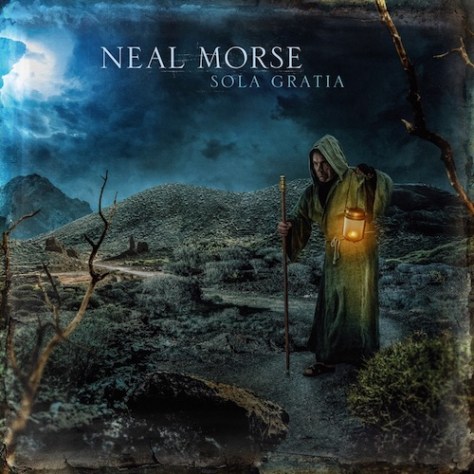
The show in Brno took place April 7, 2019, midway through their European tour, which followed a North American tour. There are signs of wear and tear on Neal’s voice, but he more than makes up for it with passion and emotion. It is interesting that as the NMB evolves, Neal has become somewhat less of a focal point in their live show, giving up many lead vocal spots to the incredibly talented Eric Gillette, as well as Bill Hubauer. That is fine with me, since Gillette has one of the finest voices in rock today. That said, this is definitely Neal’s production, as evidenced by his energetic moving about the stage, and his creative costume changes throughout the set. At various times he appears as a hooded mystery man, a ragged wanderer, a mad hatter, and other personae.

I’ve rarely seen a group of individuals lock together and perform as one coordinated unit the way Neal (keyboards, guitars, vocals), Randy George (bass), Bill Hubauer (keyboards, vocals), Eric Gillette (guitar, vocals), and the mighty Mike Portnoy (drums, vocals) do during this show. It really is amazing how tight and powerful they are on every single song.

And that is what makes The Great Adventure such an excellent album – the variety and high quality of every song. There is prog, metal, power pop, and balladry contained in this set, and the band successfully tackles these various styles with ease. The highlights are To The River, Hey Ho Let’s Go, Vanity Fair, The Great Despair, and A Love That Never Dies.

A Love That Never Dies is the final song, and as the audience joins with the band to sing the chorus it is a truly ecstatic moment. It’s no wonder Morse is visibly overcome with emotion.

The encore is a 25-minute medley of selections from every one of Neal’s albums beginning with Testimony and continuing through Similitude Of A Dream. What is clear is how consistently excellent Neal’s output has been since he began his solo career. He really hasn’t had a single clunker in his entire discography.

The Blu-ray video of the show is well-shot with lots of different perspectives of the stage. My only quibble is that the mix is a 2.0 stereo one. If an artist goes to the trouble of releasing something on Blu-ray, he should mix it to 5.1 channels.

The second Blu-ray has two almost hour-length videos documenting the North American and European tours with lots of behind-the-scenes footage. Interesting and fun, but not essential. It also includes the official music videos for I Got To Run, The Great Adventure, Welcome To The World, and The Great Despair.

Neal has released visual documents of practically every tour he has done, and The Great Adventour – Live In Brno 2019 is one of the best. Highly recommended for both the devoted fan and the curious.

The Bardic Depths: Truth, Goodness, and Beauty in Dark Times

The bard – singer, poet, truth teller. The one who expressed a community’s hopes, fears, and values in a form that everyone could immediately grasp and be inspired by. Every tribe needs someone who can remind them of their virtues and warn them of dangers. The prog tribe has a new bard, The Bardic Depths, comprised of Dave Bandana (music) and Brad Birzer (lyrics), with an all-star supporting cast of musicians.

Their eponymous debut album, The Bardic Depths, explores how vital true friendship is for people to survive in a fallen and dangerous world. It focuses on The Inklings, a group of 20th century British writers/philosophers/professors: J. R. R. Tolkien, C. S. Lewis, and Owen Barfield. They were survivors of The Great War – that cataclysmic conflict that signaled the end of liberal western civilization.

Our journey begins with the song “The Trenches” and a spoken excerpt from the memoir of a veteran (C. S. Lewis, maybe?) of The Great War. As Birzer reads the soldier’s account of the appalling conditions in the trenches, Bandana lays down a bed of ominous synthesizers. At the point where the soldier remembers the first time he heard a bullet whistle past his head, we are treated to a beautiful guitar solo by Kevin McCormick as various voices call out, “This is war!”

The ancient Greek poet Homer is the primal bard of western civilization, and Birzer’s lyrics make the connection to him explicit, as Bandana sings, “So this is what Odysseus felt/So this is what Leonidas felt…” and ending with “So, this is what Ronald [Tolkien] felt/This is what Jack [Lewis] felt/This is what Owen [Barfield] felt”.

In the second track, “Biting Coals”, we gather in a cozy pub with Tolkien, Lewis, and Barfield to “meet, smoke, and drink”, and wonder “Where is fair Albion/What has happened to the West?” This track evokes the best moments of classic Floyd, with strummed acoustic guitars, Bandana’s warm and intimate vocals, and majestic washes of synths. This is a wonderful song that never rushes the moment, allowing the listener to contemplate along with The Inklings if there is a way forward for civilized men when everything that was once certain and established is no longer.

Next up are the three central “Depths” songs: “Depths of Time”, “Depths of Imagination”, and “Depths of Soul”. “Depths of Time” is the longest track on the album at 12:35, and it is a standout. The first four and a half minutes feature a languid sax (Peter Jones, Camel/Tiger Moth Tales) gracefully soloing over some Vangelis-sounding synths. Once again, nothing is rushed – the music is allowed to develop at its own pace which increases the listener’s anticipation. That anticipation is well satisfied with the middle section, “The Flicker”, featuring a compulsively catchy and disco-y melody and beat. An edit of this section is the album’s first single, and it’s a great choice, rivaling the radio-friendly Alan Parsons Project at their ‘70s-era best.


“Depths of Imagination” celebrates the Inklings’ literary gifts, and how they bounced ideas off of each other to improve their art. “In brotherhood, we share and shape/In brotherhood, we hone and create.” Musically, this is a straightforward rocker, with a propulsive guitar riff and wicked synthesizer solo that captures the excitement of artists creating and collaborating.

“Depths of Soul” is a simple, almost creedal recitation of the Inklings’ faith in beauty, truth, and the excellent, and their efforts to bring them to light through their art: “There is a glass through which we see darkly/There is the spotless mirror/There is the Light/There is the reflection/Here is the shadow/But there is no nothingness/All moves with grace/Or it moves not at all.” Peter Jones returns with another excellent performance on sax, trading licks with Gareth Cole’s guitar. The melody is leavened with a little Floyd influence, especially in the final bars. Very tasty, indeed!

Which brings us to the final two tracks, “The End” and “Legacies”. “The End” chronicles the splintering of the Inklings’ brotherhood, and their recognition that human frailty is inescapable. “To the world we sang/To the world we spoke/To the world we enchanted/Yet, there is always frailty.” Bandana’s music perfectly complements the sentiments of the lyrics – he creates a hushed, delicate atmosphere through piano, cello, and flute. Of course, all good things on this earth must end, and the Inklings’ friendship was no exception. As Bandanna sings of the Inklings’ dissolution, there is palpable sadness and regret.

If The Bardic Depths closed with “The End”, it would leave the listener without any catharsis. Fortunately, we have “Legacies”, a celebration of the incredible literary legacies of Lewis and Tolkien. It’s hard to imagine a world without Lewis’ Chronicles of Narnia and Space Trilogy, let alone Tolkien’s Lord of the Rings. Even though their fiction was set in fantasy worlds, they used them to hold up a mirror to our own world and remind countless readers of eternal truths that must never be forgotten. In the dark ages of the 20th century, Lewis, Tolkien, and Barfield nurtured the flame of Christendom. The music is appropriately joyous, featuring lush vocal harmonies worthy of Big Big Train. Gareth Cole and Robin Armstrong (Cosmograf) both contribute stellar guitar work on this standout track.

The Bardic Depths is set for release on March 20, 2020, on Robin Armstrong’s new label, Gravity Dream. Dave Bandana is the primary musician/vocalist/composer, and it features an impressive lineup of artists from the world of prog rock including the aforementioned Kevin McCormick and Peter Jones, as well as Tim Gehrt on drums (Streets/Steve Walsh), Gareth Cole on guitar (Tom Slatter/Fractal Mirror), and the marvelous Paolo Limoli on various keyboards. Mr. Armstrong himself contributes keyboards, guitars and vocals. It’s a very impressive debut, full of atmospheric musical passages and inspiring lyrics. This is an album to savor slowly and with appreciation, like a sip of single-malt scotch. And just as with a fine scotch, it has all kinds of hints and complexities that reward repeated hearings. Fans of classic Pink Floyd, Alan Parsons Project, and Cosmograf should definitely snap this one up. Even though 2020 is just getting underway, The Bardic Depths is a contender for one of the best albums of the year.

You can purchase The Bardic Depths here.

Brad Birzer Discusses Rush on Political Beats Podcast

Our own Dr. Brad Birzer joins hosts Scott Bertram and Jeff Blehar for an in-depth discussion of Rush on their Political Beats podcast. The more than 2 1/2 hour conversation begins with Rush’s debut album and continues all the way through Clockwork Angels. It’s a lot of fun to listen to, even if you aren’t a Rush fanatic. Jeff Blehar had never heard a single Rush song before he listened to their entire discography in preparation for this episode, and his takes on their various albums are refreshingly honest and fair.

Click here to play the episode.


New I Am The Manic Whale Coming Soon

One of the highlights of 2017 was I Am The Manic Whale’s second album, Gathering the Waters.

Here’s their press release for the upcoming third album, Things Unseen:

Things Unseen by I Am The Manic Whale

Release:     24/04/2020

Formats:     CD, vinyl, download

Labels:     Independent (CD/download)
Plane Groovy (vinyl)
Run time:     65 minutes

Track listing

  1. Billionaire                        7:30

  2. The Deplorable Word     7:56

  3. Into The Blue                  6:28

  4. Celebrity                       19:01

  5. Smile                              4:24

  6. Build It Up Again            7:03

  7. Halcyon Day                  5:28

  8. Valenta Scream             7:19

Following the success of 2017s Gathering The Waters, Michael, David, John and Ben have been working hard writing, recording and producing 8 more songs of intelligent, energetic, beautiful, whimsical, thought provoking and inspiring progressive rock for your listening pleasure.

The boys have again chosen to work with the mighty Rob “mix wizard” Aubrey at Aubitt studios and the result, Things Unseen, will be released on the 24th of April on CD through the band’s bandcamp page and as a download in all the usual places. There will also be a vinyl release courtesy of the magnificent Chris Topham and Plane Groovy, including a limited run on coloured vinyl.

So what are the songs about? Michael Whiteman (bass/vocals) explains; “Expect the unexpected. These songs aren’t about what you might at first think. They are inspired by urban myth, fantasy literature, ecology, celebrity culture, a baby’s smile, a summer afternoon at Grey’s Court, interlocking block construction toys and a British engineering marvel. What more could you want?”

“We are delighted to be working with Plane Groovy again,” said John Murphy (keyboard/vocals). “We’re very proud of this album and knowing that it’ll be available in such a great quality 180 gram double vinyl version is incredibly exciting. Vinyl is so visceral, so tactile and above all, so large that we’re even able to include some bonus music on the fourth side; a live recording of Derelict, our 20 minute epic song about an abandoned swimming pool, which we recorded one night at a theatre in Reading last year. The night of that show, I heard that Reading even has a swimming pool somewhere, which made playing the song feel even more poignant.”

David Addis (guitar/vocals) had this to say; “Things Unseen has been a labour of love for three years, and the conception reaches back to some musical ideas that have been in incubation for over a decade. We hope everyone will have something to relate to on the album and that it conjures up some tangible and fantastical images. Also, the metal parts kick ass.”

Ben Hartley (drums/vocals) said this; “I am thrilled that Things Unseen is coming out soon. Pre-orders will be available on our bandcamp page for CDs and Burning Shed for the vinyl from Monday 10th of February. We’re also setting up some crowdfunding options through bandcamp, so people can help us finish the album. These include booking us for a house concert, purchasing sheet music and sticks I used during the recording process, or buying a cover song of your choice, which we will lovingly make for you.”

For more information visit the band’s bandcamp page from Monday
iamthemanicwhale.bandcamp.com


The Overshadowed Child of Big Big Train

I freely admit that I am an Anglophile. When I was 13, my father took a one-semester sabbatical from Vanderbilt University – where he was a materials science professor – to do research at Cambridge University. He loved to tell me how he worked in the same lab where J. J. Thomson discovered electrons. Our family lived in a house in Cambridge, and I went to school at Comberton Village College. The few months we were there were some of the happiest of my life.

I don’t know how we first learned about brass rubbing, but we quickly adopted it as our family hobby while we lived in England. Brasses are engraved plates of brass that were placed over tombs in English churches. They were popular from the 1200’s until Victorian times, and they were often quite ornate representations of the person they commemorated. Many are over six feet long and portray knight crusaders. Others are more modest in size, and they might represent prosperous merchants or accomplished academics.

Brass rubbing is the same as putting a penny under a piece of paper and rubbing it with a crayon. As you rub, all the details of the penny emerge onto the paper. With a medieval brass, it’s same principle, just on a much larger scale.

My family had a book that catalogued all of the brasses in Europe and Great Britain. Every week, we would locate a promising brass somewhere within driving distance and spend a Saturday afternoon making rubbings of it. Some small country churches had many beautiful examples, hidden under old rugs in the aisles, or atop sarcophagi in side chapels.

I wasn’t aware of it at the time, but our family hobby ended up being a marvelous way of visiting out-of-the-way villages all over East Anglia. We even got fairly proficient at spotting churches that were likely to contain hidden brass treasures. While we worked, the local vicar would often stop by to chat with us and share the history of the church and the person under the brass. To my 13-year-old eyes and ears, these impossibly old churches and the persons buried in them came to life, and I grew to love British culture and history.

A brass rubbing of Sir Roger de Trumpington, 1289

Which is a convoluted way of explaining why I also love Big Big Train, possibly the most “British” group working today. In song after song, they sing of forgotten heroes and heroines, everyday Britons who labored without complaint to make their communities safe and prosperous. As an American, I don’t understand all of the references in their lyrics, but, God bless ‘em, their albums contain enough notes for me to get the gist of what they are trying to convey.

One of Big Big Train’s albums that is most grounded in English life is English Electric Part One. (Even the title is a reference that is easily missed by a non-Britisher. English Electric manufactured diesel engines for trains.) It is also one of the strongest set of songs they ever recorded.

Released in September of 2012, it came two years after BBT’s Far Skies, Deep Time EP, and three years after The Underfall Yard. So BBT fans were eager to hear new music from them, and English Electric did not disappoint. From the energetic opener The First Rebreather to the immensely satisfying closer Hedgerow, there is not a weak track on this perfectly sequenced album. Even the cover art, featuring Matt Sefton’s close up photos of rusted and worn metal surfaces, contributes to the sense of past glories and forgotten men and women.

The Underfall Yard was the first album that featured vocalist/flutist David Longdon, and with English Electric Part One, he is a fully integrated member of the group. Drummer Nick D’Virgilio is also officially on board, so the original core trio of Greg Spawton, Dave Gregory, and Andy Poole is now a quintet.

The First Rebreather is a tale of diver Alexander Lambert, who, in 1880, used an experimental “rebreather” (like today’s scuba equipment) to rescue some workmen who were trapped in an underground tunnel. While they were digging the tunnel, they struck a spring which quickly flooded their exit. Lambert used the rebreather to swim 1000 feet in total darkness to reach the trapped workers. Greg Spawton brilliantly imagines Lambert as a “mummer” (a British folk actor who brings dead characters to life). The guitar-driven melody features a beautiful string interlude composed by Dave Gregory. The musical tension builds inexorably until it is blessedly released with the spring water bursting out to the words “Here she comes/the sleeper wakes/ten thousand years/she lay in wait for this.”

After the intense drama of The First Rebreather, we need a little relief, and Longdon’s Uncle Jack is the perfect song for that. It starts with a down-home banjo riff that is soon augmented with fiddle, keyboards, double bass, and melodica. It features one of the most infectious melodies BBT has ever recorded, particularly when Lily and Violet Adams chime in on background vocals to sing, “Rose Hips/Haw Berries/Hedgerow/Dry Stone/Dog Rose/Honeysuckle/Blackbirds/Red Wing” – all inconspicuous and mundane sights of an outdoor stroll, but to Longdon’s coal miner Uncle Jack they are magical elements that cannot be taken for granted. Spending hours toiling underground makes any time in the sun outdoors infinitely precious.

Spawton’s Winchester From St. Giles’ Hill is a beautiful ode to the historic town of Winchester. Its heritage goes back to ancient times of chalkhills and Alfred. Danny Manners’ piano and Longdon’s flute combine for an exquisite duet on this celebration of a quintessentially British town.

Judas Unrepentent is a tribute to Tom Keating, a frustrated artist who turned to painting forgeries of masters’ works to undermine the art establishment. He left clues in all his works, and he was eventually found out. He has since passed away, but he has the last laugh, as his art now fetches high prices. “So now we can all buy/Real genuine fakes/That’s posthumous fame/It’s always the same”. Another Longdon composition, this track features an insistent rhythmic base supporting an irresistible melodic hook and cascading vocal harmonies. It is one of the most enjoyable songs in BBT’s entire catalog.

Summoned By Bells is a gentle celebration of Spawton’s mother’s hometown of Leicester. Spawton’s lyrics describe the nostalgia and disorientation one feels when returning to a place of one’s childhood after it has changed and evolved: “A stone’s throw from the line/some of the old places survive/ a golden thread in time.” Once again, Danny Manners’ piano playing is masterful, and a musical theme emerges that will be heard again in the finale, Hedgerow.

Upton Heath is a Spawton/Longdon collaboration, and it draws on the strengths of both songwriters. The melody conveys a yearning that cannot be put into words, yet the lyrics complement it perfectly. Ethereal voices sing, “And all that we are/And all that we shall be/Walk with me/Up on Upton Heath” and transform the simple activity of strolling through the countryside into a sacramental act. The instrumentation is all acoustic – this is timeless folk music, and like the best folk music, it manages to evoke contradictory emotions. Listening to it makes me melancholy and joyful at the same time. It is a masterpiece, plain and simple.

From the heavenly heights of Upton Heath, we are brought down to earth with a crash by the harrowing A Boy In Darkness. This song begins with a clear-eyed depiction of the horrors of child labor in 19th century British coal mines and fast forwards to the suffering of abused children in our supposedly more enlightened times. It is a fearless and unflinching song, performed with sensitivity. It doesn’t preach; it just makes its case. You have to have a heart of stone to not say a prayer for the young innocents who suffer after hearing this song.

English Electric Part One finishes with another masterpiece, the Longdon/Poole/Spawton composed Hedgerow. An ebullient guitar riff kicks it off, and before you know it, we’re off on another jaunt outdoors with Uncle Jack. Musical and lyrical motifs from Uncle Jack, Summoned By Bells, and Upton Heath pop up, tying together the entire album into a satisfying whole. It is the perfect conclusion to a song cycle that celebrates all that is good (and weeps for some that is bad) in England.

I titled this reflection on English Electric Part One The Overshadowed Child Of Big Big Train, because one year later they released English Electric Part Two, and a few months after that they combined both (with a few extra tracks) into English Electric: Full Power. Full Power is a gorgeous two-disc package with a huge full-color booklet featuring explanatory notes on every song, brief bios of all the contributors, and beautiful photos. It makes sense to plunk down the money for the two-disc set, right?

Well, yes, but I also want to make the case for English Electric Part One as a major work that deserves its own place in the BBT pantheon. As I stated at the beginning of this essay, it is a perfectly sequenced album, moving effortlessly from peak to musical peak. Spawton and Longdon both subsume their individual songwriting styles to serve the needs of the group, and as a result come up with some of their finest efforts ever. There is quite a large supporting cast of musicians (including future official members Danny Manners and Rachel Hall), but every song sounds intimate, like someone tapping you on the shoulder and asking, “Can I share with you a story about this place you might find interesting?”

In these times of streaming music, you can create endless playlists of your favorite songs of your favorite artists, but back in 2012, Big Big Train released an album that they obviously lavished great care on. Do them a favor and listen to it as they originally intended. Uncle Jack would appreciate it.

Those Awkward Teenage Years – The 2010’s, pt. 10: 2019

Well, we’ve reached the end of the decade, and the end of our retrospective. Whew!

2019 proves that prog rock’s current renaissance is showing no signs of slowing down. We finish this decade with another year providing a surfeit of wonderful music. I’ve picked 11 representatives from 2019 for your listening pleasure. Here they are, in alphabetical order.

Big Big Train: The Grand Tour

Big Big Train went for the big ideas on this one. It’s loosely based on the concept of a “grand tour” that educated Europeans took in the 1700’s and 1800’s. They manage to pull together such disparate topics as St. Theodora, the poet Shelley, and the Voyager spacecraft. Believe it or not, it all works!

Cyril: The Way Through

Both Manuel Schmid and Marek Arnold are in Cyril, and I recently wrote a review of their excellent 2019 release, The Way Through. It’s about a man who has a near-death experience, and the struggles he has to overcome to reunite with his earthly body. A great prog effort!

Flying Colors: Third Degree

This supergroup just gets better and better. On their third album, Flying Colors branches out into a diversity of styles, and come up with one of the best of the entire decade.  “Last Train Home” is my favorite, “Geronimo” is funky blast of fun, and “Love Letter” sounds like a lost Raspberries classic.


Continuum Acceleration
In Continuum: Acceleration Theory

In Continuum is another Dave Kerzner project that rose from the ashes of a planned Sound Of Contact reunion. It is a concept album about an alien who falls in love with a human, before Earth is scheduled to be destroyed. Kerzner recruited the cream of the crop to play on this, and it is a fine addition to his already impressive resume.


Izz: Don’t Panic

Izz released one of the most enjoyable albums of 2019. “42” is about Jackie Robinson breaking baseball’s color barrier. While “Age Of Stars” features interweaving vocals and a driving beat. Their previous album, Everlasting Instant, was good, but Don’t Panic has more focus and confidence.


Moron Police
Moron Police: A Boat On The Sea

Goofy name, amazing music! These guys sound like a hybrid ska/prog/new wave band with an incredible vocalist. They have terrific playing chops, and their ability to switch styles mid-song makes my head spin. I found them via Tony Rowsick’s indispensable Progwatch podcast, and you can’t beat them if you just want to have something fun to listen to. “Captain Awkward” is a great track to start with, if you’re curious.


Neal Morse Band: The Great Adventure

The Neal Morse Band pick up the story where Similitude Of A Dream left off. In this installment, the son of the protagonist from Similitude must battle his own demons and find salvation. I actually like this album better than Similitude, because there is more variety in the songs. There are so many good ones, but “Vanity Fair” really stands out.


Pattern Animals
Pattern-Seeking Animals

Since Pattern-Seeking Animals consists of current and former Spock’s Beard members, you would expect this to sound somewhat Beard-like. However, the Pattern-Seekers come up with their own individual style that sets them apart. Ted Leonard is excellent on vocals and guitars, and John Boegehold steps up and takes a more visible role. “No One Ever Died and Made Me King” is the key track.


Bruce Soord: All This Will Be Yours

Often a much-loved album doesn’t make a positive first impression on me. That was the case with Bruce Soord’s (The Pineapple Thief) second solo album, All This Will Be Yours. On first listen, it is an unassuming set of songs, softly sung by Soord over a bed of mostly acoustic guitar and murmuring electronics. However, the more I listen to it, the more I am taken by it. “One Misstep” in particular is an engaging tune, with a mournful melody as Soord sings of his determination to make a broken relationship whole. As a matter of fact, I like this record better than the Thief’s much-acclaimed Dissolution, which was also released this year.


Tool: Fear Inoculum

This was the biggest news in progworld in 2019 – after more than a decade, Tool reunited and recorded this massive groove-laden record. All of the songs segue into each other, and the result is almost trance-inducing. I was not a huge fan of Tool’s early work, but I love this one. Maynard James Keenan seems to be rejuvenated these days (as last year’s Eat The Elephant illustrated), and that is good news.

Devin Townsend: Empath

After recording several albums with his Devin Townsend Project, Townsend decided to go solo for the highly personal Empath. Once again, his patented wall-of-sound production is in play, and his incorporates choirs, strings, and guitars. Lots of guitars. Devin can be inconsistent, but Empath is one of his best.

And that completes our look back at the decade from 2010 – 2019. There were some exciting new artists that emerged, like Damanek, Evership, Perfect Beings, and Southern Empire, while veterans like Big Big Train, Gazpacho, Glass Hammer, Katatonia, and Neal Morse released some of the best music of their careers. Several surprise reunions bode well for the future: it was great to see Kino, A Perfect Circle, Tool, and Slowdive back in action.

I hope this series of posts inspired you to check out somebody you may not have been aware of, or go back a revisit an old musical friend. If you are interested in hearing more prog news and music, check out the podcasts ProgWatch and The Prog Report. Both are excellent resources for learning about and hearing new music in progworld.

Merry Christmas, Happy New Year, and Happy New Decade!

Those Awkward Teenage Years – The 2010’s, pt. 9: 2018

We’re getting close to the present day in our look back at the best music of the decade. 2018 was another bountiful year for prog fans, and, like 2017, it included a couple of surprise reunions along with some reappearing favorites.

We’ve chosen 15 albums to represent the excellence of 2018, so without further ado, here they are in alphabetical order.

Damanek: In Flight

Damanek’s second album is even better than their impressive debut. “Skyboat” sounds like a mid-70s Jethro Tull single, and the three-part “Big Eastern” is an epic telling of a family’s saga from their roots in China to their settling in America. Thanks to Damanek, I have become a big fan of Guy Manning.

Evership II

Another sophomore effort that improves on an excellent debut. Evership II continues their championing of classic prog. Fans of Marillion and early Spock’s Beard will love this.

Gazpacho: Soyuz

Gazpacho released one of their all-time finest albums in 2018 with Soyuz. Loosely based on the true story of a doomed Soviet Russian space mission, the music is uplifting, angry, and heroic.

Glass Hammer: Chronomonaut

There’s a reason a Glass Hammer album has been featured almost every year this decade: they have consistently produced great music! This entry to their catalog is a sequel to Chronometree, and it showcases their pop skills (think classic Todd Rundgren). “Fade Away”, the majestic finale, is one of their best.

Haken: L-1VE and Vector

Haken released a 2-CD/DVD set of a great performance in Amsterdam in 2018, where they play the entire Affinity album. Later in the year, they put out Vector, which made quite a few Best of 2018 lists. Haken are at the top of their game, with no sign of fading.

Kino: Radio Voltaire

This was a nice surprise! Way back in 2005, John Mitchell (Arena, Frost*, Lonely Robot, It Bites), Pete Trewavas (Marillion), John Beck (It Bites), and Chris Maitland (Porcupine Tree) got together and recorded what many people thought was a one-off album. Lo and behold, they reunited in 2018 and released Radio Voltaire, which ended up being one of the best of the year. Like anything Mitchell is involved in, there are excellent tunes, superb guitar, and a dash of humor.

Tim Morse III

Tim Morse (no relation to Neal) quietly and carefully self-produces gems of albums every few years. Tim Morse III is a delight to listen to, and I hope he never stops creating music.

North Atlantic Oscillation: Grind Show

If you’ve worked your way through this series, you know that I like North Atlantic Oscillation – a lot. Grind Show doesn’t disappoint, as they continue to hone their unique sound that marries layered harmonies to synth-heavy music. Sort of like what would happen if Brian Wilson collaborated with Kraftwerk.

Oak: False Memory Archive

A fascinating set of songs from the Norwegian group Oak. I would classify it as chamber pop music. They even include “Clair de Lune” in one of their songs, but it doesn’t come off as pretentious. Highly recommended if you are looking for something pretty to listen to.

Perfect Beings: Vier

Wow. This is one of the best albums of the decade, let alone 2018. Vier means “four”, and the songs are divided into four groups: Guedra, The Golden Arc, Vibrational, and Anunnaki. The entire album is one long suite as various themes emerge, recede, and reappear. On their previous two albums, Perfect Beings incorporated some Beatlesque power pop into their music, but this is on another plane of music entirely.

A Perfect Circle: Eat The Elephant

Another surprise reunion. Maynard James Keenan’s side project A Perfect Circle released two incredible albums in 2000 and 2003, and a horrible one in 2004. It seemed like that was that, and they were done. Fourteen years later, they put out Eat The Elephant, which is excellent. Not as metal-oriented as their earlier music, but more subtle. Beautiful melodies and lyrics expressing barely controlled rage characterize this one.

Riverside: Wasteland

Riverside survived the dreadful loss of Piotr Grudzinski, their guitarist, and released the very strong Wasteland in 2018. Set in a post-apocalyptic future, this album manages to be hopeful and uplifting.

RPWL: Tales From Outer Space

RPWL started out as a Pink Floyd tribute band, which was obvious on their earlier Beyond Man and Time. On Tales From Outer Space, they just rock out and have a great time. I ended listening to this album almost more than anything else in 2018. “Not Our Place To Be” has a great hook that gets in your ear and won’t come out.

Manuel Schmid Und Marek Arnold: Zeiten

This is the album I actually did listen to more than anything else. It is sung in German, and the melodies are elegant art-pop. Here’s what I said in my original review: Schmid and Arnold’s melodies are beautiful and delicate, catchy without being cloying, and deceptively complex. The instrumentation is primarily keyboards based, and mostly acoustic. There are very tasteful synth flourishes and electric guitar solos, but none of them overwhelm the beauty of the underlying melodies.

Southern Empire: Civilisation

The second outing by this band from Down Under consists of four epics, and there isn’t a wasted note anywhere. These guys are going to be prog superstars very soon.

That completes our look back to 2018. Honorable mentions are Big Big Train’s live set Merchants of Light, Gunship’s Dark All Day, Pineapple Thief’s Dissolution, Tesseract’s Sonder, and Umphrey McGee’s It’s Not Us.

Let us know what we’ve missed in the comments!


Those Awkward Teenage Years – The 2010’s, pt. 8: 2017

Seven years down and three to go in our look back at the best music of 2010’s. This post features 18 fine albums no self-respecting prog aficionado should be without. Here they are, in alphabetical order.

All Them Witches: Sleeping Through The War

Southern spacey swamp rock (if that makes any sense!) that sounds relaxed and easygoing until the coffee kicks in. They really stretch out and mine some fine grooves on “Bulls” and “Alabaster”. If the Allman Bros. and Porcupine Tree had a child, it would sound like this.

Ayreon: The Source

A prequel to the Ayreon mythos, this 2-disc set is one of the most metallic in their catalog. It rocks incredibly hard, and as usual, Arjen manages to recruit an impressive cast of vocalists. The Ayreon arc of albums is one of the most impressive in rock, and The Source is a fine addition to it.

Richard Barbieri: Planets + Persona

This was my top album of 2017. It’s an all-instrumental affair by Porcupine Tree keyboardist Richard Barbieri. While it is mostly jazz influenced, it also contains entrancing songs like “Unholy” – a meditative song with wordless vocals that could be a prayer. Nothing is rushed on this record, and I still never tire of listening to it.

Big Big Train: Grimspound and The Second Brightest Star

We got an embarrassment of riches from Big Big Train in 2017. First, they released Grimspound which continued in the fine tradition of Folkore of celebrating unsung or forgotten heroes. “Experimental Gentlemen” and “A Mead Hall In Winter” are two outstanding tracks from this set.

A few months later, BBT released The Second Brightest Star, which was almost as good as Grimspound. The title track and “The Leaden Stour” are highlights.

BBT also gave away a digital-only release, London Story, which was a 34 minute track that combined several London-related songs. All of this activity was unprecedented for BBT and much appreciated by their fans.


Birzer Bandana: Becoming One

Spirit of Cecilia’s founder and editor Bradley Birzer got in on the prog action in 2017 with this collaboration he made with Dave Bandana. Birzer wrote the lyrics – based on the sci-fi novel A Canticle For Leibowitz – and Bandana played and sang. It is full of majestic synths and great melodies.

Damanek: On Track

Damanek is led by Guy Manning, and On Track is one of the best albums of the decade. Very sophisticated songwriting and playing abounds on this debut. African rhythms and catchy choruses make for a very nice experience. Marek Arnold lends his sax to the proceedings as well.

Depeche Mode: Spirit

I was beginning to wonder if Depeche Mode was ever going to make a decent album after Playing the Angel. Fortunately, Spirit has some of their best tunes in years, and they sound energized. Let’s hope it lasts.

Downes Braide Association: Skyscraper Souls

I didn’t catch this one until after 2017, but if I had I would have picked it as my favorite of the year. Geoff Downes (Buggles, Yes, Asia) and Chris Braide (Producers) join forces and produce an extraordinary album. The title track is one of the finest epics in the history of prog (and it even features vocals by Kate Pierson of the B-52s!). “Darker Times” has some of the most beautiful harmonies since the Beach Boys’ Surf’s Up. Chris Braide is a fantastic singer – pure and pitch perfect.

Glass Hammer: Untold Tales

This collection of songs from Glass Hammer’s vault turns out to be one of their most fun albums ever. The stomping “Troll” is a hilarious takedown of internet trolls, and “Cool Air” is a marvelous musical version of an H. P. Lovecraft story.

I Am The Manic Whale: Gathering The Waters

I Am The Manic Whale’s second album is even better than their first. More confident and risk-taking, they succeed on “Strandbeest” and “Stand Up”. If you like XTC and Frost*, you will enjoy IATMW.

Katatonia: The Fall Of Hearts

What a gorgeous album. It begins almost in midsong with Jonas Renske’s warm and hushed baritone singing, “You wait by the river/Days are long” and continues for more than a hour as one song flows into another. Even though there is a superficially languid feel to the music, I always sense the enormous power this band is capable of.

KXM: Scatterbrain

A supergroup composed of King’s X bassist/vocalist Dug Pinnock, Korn’s drummer Ray Luzier, and Lynch Mob’s George Lynch, this is a straight rock album with no apologies necessary. “Breakout” is a killer song.

Lonely Robot: The Big Dream

The second installment in John Mitchell’s Lonely Robot trilogy. “Awakenings”, “Sigma”, and “In Floral Green” are an incredible one-two-three punch early in the album.

Gary Numan: Savage: Songs For A Broken World

Gary Numan followed up the excellent Splinter with the even better Savage. There is a definite Middle Eastern vibe here, and Numan is still the master of the irresistible hook. His band lays down a massive groove on every track. It’s been fascinating to watch Numan struggle with his atheism – for someone who doesn’t believe in God, he sure does yell at Him a lot.

Slowdive

Slowdive were founding members of the “shoegaze” movement in the 90s. They disappeared after1995, and then suddenly showed up  in 2017 with this eponymous album. It is as good as their best work from 20 years ago. Here’s hoping they don’t wait another 20 to make another.

Threshold: Legends Of The Shires

Damien Wilson is no longer with Threshold, but that didn’t stop them from producing the fantastic double disc set Legends Of The Shires. “Stars and Satellites” is a fantastic song with layers of guitars and an unforgettable chorus.

Steven Wilson: To The Bone

Wilson embraces his love for ’80s new wave pop, and comes up with the most consistently enjoyable album of his solo career. His guitar solo on the title track is perfect: concise, melodic, and lyrical. “Pemanating” could be a Tears For Fears single, and “Blank Tapes” is unbelievably sweet and heartbreaking. A great, great record.

That’s our look at 2017, folks. Two more years to go! Honorable mentions for this year go to Dave Kerzner (Static), Godsticks (Faced With Rage), Lunatic Soul (Fractured), Sons Of Apollo (Psychotic Symphony), and Wobbler (From Silence To Somewhere). Add your choices in the comments!


Those Awkward Teenage Years – The 2010’s, pt. 7: 2016

Welcome to Spirit of Cecilia’s retrospective of this decade’s musical highlights! This is the seventh chapter, which covers the best of 2016, and Hoo Boy! we had a bumper crop of great music that year. Here are 20(!) of the best prog and rock albums from 2016, in alphabetical order.

Big Big Train: Folklore

Big Big Train continued its decade-long conquest of progworld with Folklore. A big part of their appeal (aside from their wonderful musicianship and beautiful melodies) is their knack for finding forgotten heroes and paying musical tribute to them. In Folklore, we are treated to the fascinating story of the messenger pigeon, Winkie. “The Transit Of Venus Across The Sun” is another indispensable BBT track.

Blueneck: The Outpost

Blueneck hails from Britol, UK, and The Outpost was one of the standout albums of 2016. Shimmering, slow-building, atmospheric, and majestic music made this a compulsive listen for me. “From Beyond” is a tremendous track.

David Bowie: Black Star

David Bowie had this album released posthumously. As always, he resists easy categorization. The nearly ten minute title track is full of skittery rhythms, disembodied jazz sax, and disturbing lyrics. A fitting final statement from one of the most talented and creative souls in music.


Cyril: Paralyzed

I did not hear about this group until recently, but I am glad I discovered them. Cyril is from Germany, and Marek Arnold and Manuel Schmid are members. Paralyzed is a fantastic prog album – one of the best of the last ten years. There are hints of classic Genesis in their sound, and I can’t recommend this album enough.

Devin Townsend Project: Transcendence

It looks like this is the final offering from the Devin Townsend Project, and what a way to finish! They revisit a DTP classic (“Truth”), and cover a Ween song (“Transdermal Celebration”). In between are some of the strongest songs Townsend has ever written. His vocals can make my hair stand on end, they are so, well, transcendent.

Evership

Evership is from my own city of Nashville, TN, but I would add this to our list regardless of their location. These guys write lyrical epics that are performed flawlessly. “Ultima Thule” is a near-perfect song, building slowly and quietly to a roaring conclusion. I can’t wait to hear more from this group.

Frost: Falling Satellites

How about a little fun? Jem Godfrey’s project Frost* released a terrific pop/prog collection in 2016 that I still listen to often. “Closer To The Sun” is one of the most enjoyable and reassuring seven and a half minutes in music.

Glass Hammer: Valkyrie

Glass Hammer embraced their inner Rush and put together a challenging concept album based on the trauma suffered by a WWI veteran. Suzie Bogdanowicz never sounded better, the band rehearsed all the songs before recording, and it shows. They really fire on all cylinders.

Haken: Affinity

Haken took a time machine back 30-odd years ago for Affinity. There all kinds of vintage synth sounds and nods to ’80s hair bands that make Affinity a hugely enjoyable record. Of course, they still have their 21st century wall of sound on great songs like “1985” and “The Architect”. This is one of Haken’s best albums, and it is scary how good they are.

Headspace: All That You Fear Is Gone

The second album from Adam Wakeman’s and Damien Wilson’s project was a stunning set of songs. There are rough blues (“Polluted Alcohol”), straight ahead metal (“Kill You With Kindness”), and complex prog (“The Science Within Us”). “Secular Soul” is the kind of song that forces you to stop what you’re doing and just listen.

iamthemorning: Lighthouse

A beautiful and sensitive portrayal of a young woman’s battle with mental illness, Lighthouse was iamthemorning’s second album. In my original review, I noted, “Imagine, if you will, a world where Aerial-era Kate Bush, Dumbarton Oaks-era Igor Stravinsky, and Sketches of Spain-era Miles Davis got together to compose a song cycle.”

Kansas: The Prelude Implicit

One of the biggest surprises of 2016 was the triumphant return of Kansas. This was no cashing in on nostalgia – this was a truly excellent album that successfully compares to their classics from the ’70s and ’80s. Welcome back, boys!

Kyros: Vox Humana

These guys started out as Synaesthesia, and morphed into Kyros. Whatever they call themselves, Adam Warne and Co. are some of the most talented songwriters and musicians working today. Vox Humana was a 2-disc concept album about a scientist who creates an artificial human, and the problems that ensue. Highly recommended.

Neal Morse Band: Similitude Of A Dream

The Similitude Of A Dream was the Neal Morse Band’s second album, and it was a monster. Over 2 hours long, it told the story of John Bunyan’s Pilgrim’s Progress. Upon its release, it was immediately hailed as a prog classic.

Opeth: Sorceress

Opeth’s Sorderess topped a lot of critics’ Best of 2016 lists. With this album, Opeth laid to rest any remains of their death metal past, and jumped headlong into prog.

Pineapple Thief: Your Wilderness

In 2016, Pineapple Thief released what I consider to be their finest album to date, Your Wilderness. Bruce Soord came up with a diverse and satisfying set of songs that really rocked (“Tear You Up”). Gavin Harrison plays drums, and he kicks them into high gear.

Radiohead: A Moon-Shaped Pool

Radiohead rediscovered melody on A Moon Shaped Pool and came up with a beautiful album. String quartets, gentle synth washes, and massed voices combine for one of their finest hours.

Southern Empire

Australia’s Sean Timms (keyboards) and Danny Lopresto (vocals, guitar) lead this marvelous new prog band. Their debut was one of the best albums of 2016, with “The Bridge That Binds” the standout track.

Syd Arthur: Apricity

I listened to this album by Syd Arthur more than practically anything else in 2016. It is a funky, catchy set of songs that remind me a bit of Talking Heads. I dare you to sit still while listening to “No Peace”.

Vangelis: Rosetta

And finally, an offering from an old veteran: Vangelis. He can veer dangerously close to cheesy romanticism, but Rosetta is one of his best set of songs in his long career. He composed them to accompany the European Space Agency’s Rosetta spacecraft that successfully landed on a comet. It is appropriately spacey and atmospheric.

Whew! I hope this long post convinced you that 2016 was one of the best for great music. Let us know in the comments below what you enjoyed back then.

Those Awkward Teenage Years – The 2010’s, pt. 6: 2015

We’re midway through the decade – thanks for joining us on our journey through the musical highlights of the 2010s!

In terms of music distribution, compact disc sales continued their steep decline. In 2000, 943 million CDs were sold. By 2015, that number had dropped to a little over 100 million. iTunes (and mp3s in general) was fading fast as Spotify, Amazon Music, and Apple Music attracted listeners to their streaming platforms. What these trends mean for artists remains to be seen. As it gets harder to earn income from recorded music, will that discourage new artists from getting started?

On the other hand – stepping back and taking a longer view of history – perhaps we’ll look at the 20th century as an aberration in terms of the financial rewards many recording artists were able to garner. For most of recorded history, musicians and composers have  had to struggle to survive, and even the the most gifted relied on wealthy patrons.

Fortunately for us in the 21st century, there is no shortage of great artists producing fine music, and 2015 was a good example. So here are the highlights of that year, in alphabetical order.

The Dear Hunter: Act IV: Rebirth In Reprise

Casey Crescenzo has released five of his planned six acts. Act IV: Rebirth In Reprise is my favorite so far. As usual, there is everything but the kitchen sink here. “A Night On The Town” is the key track as it swings like a Gershwin composition before an exhilarating rock motif takes over.

Gazpacho: Molok & NIght Of The Demon

Another year, and not one, but two Gazpacho releases. Molok is another dark concept album about the ancient demon utilizing modern technology for his nefarious purposes (I think). The fact that Molok has some of the prettiest music Gazpacho has ever made makes the concept go down easy. Night Of The Demon is a live set where the band really cooks. It’s a perfect introduction to them, if you’re curious.

Glass Hammer: THe Breaking Of The World & Double Live

Another year, and not one, but two Glass Hammer releases. The Breaking Of The World is another peak for them (how do they keep doing that?) with essential songs “Mythopoiea”, “North Wind”, and “Nothing, Everything”.  Double Live is a terrific no-frills live performance. Susie Bogdanowicz and Carl Groves are excellent singing classics like “The Knight Of The North” and “If The Stars”, while the band rocks tighter than a tick.

I Am The Manic Whale: Everything Beautiful In Time

A new band from Reading, England, I Am The Manic Whale sprang fully formed from the brain of Michael Whiteman (the band name is an anagram of his). This is an impressive debut with songs celebrating subjects ranging from 10,000 year clocks to the joys of parenting messy toddlers. “Princess Strange” is an inspiring take on cyberbullying.  A true delight to listen to, and worthy of a large audience.

Karnatake: Secrets of Angels

Veteran proggers Karnataka enlisted new singer Hayley Griffiths for Secrets Of Angels, and she really lit a fire under them. Opening track “Road To Cairo” has a killer middle eastern riff that is as satisfying as Led Zep’s “Kashmir”. The title track is also excellent.

Dave Kerzner: New World

The keyboardist and composer from Sound Of Contact struck out on his own and produced this wonderful Floydian sci-fi epic. Put it on, and imagine you are back in 1977, hearing a fantastic new prog masterpiece.


Lonely Robot: Please Come Home

John Mitchell’s (Arena, Frost*, It Bites) first album in a trilogy about an astronaut lost in space. One of the best albums of the decade, Lonely Robot features John’s excellent vocals and stellar guitar work. Every song is memorable, but “Oubliette” and “Are We Copies?” are standouts.

Neal Morse Band: The Grand Experiment

The first album from The Neal Morse Band is one of the best of the decade. First, it is NOT a Morse solo record – this is a band effort with all members contributing to the songwriting. Second, Neal found a young multi-instrumentalist in Eric Gillette who is simply phenomenal and spurs everyone to new heights. “Alive Again” may just be the finest epic Neal has been involved in.

Riverside: Love, Fear, and the Time Machine

This was my favorite album of 2015, and I still listen to it fairly often.  Riverside pulled together their metal and hard rock roots with Mariusz Duda’s gentler Lunatic Soul excursions, and came up with a winning mix. Add in some nods to ’80s new wave, and this is a very fine record.

Rush: R40

A document of Rush’s 40th anniversary tour, where they played songs from every phase of their long career. The stage set began filled to the brim with props and effects, and they gradually shed them as they worked their way back to the first shows they played in a high school auditorium.

Subsignal: The Beacons Of Somewhere

Subsignal’s The Beacons Of Somewhere was a highlight of 2015. Straight-ahead prog rock with awesome melodies. “Everything Is Lost” is an excellent song, as is the multi-part title track. Every time I listen to this marvelous album, I hear new details that delight.

Tesseract: Polaris

Tesseract toned down the more extreme metal aspects of their music for Polaris, and that made a huge difference. Daniel Tompkins has always been a terrific vocalist, but on this album he really shines.  “Dystopia” soars, and “Tourniquet” is a gorgeous cacophony of sound. “Phoenix” makes me want to drive 100 mph. A great album that earned Tesseract a well-deserved wider audience.

Steven Wilson: Hand.Cannot.Erase

Steven Wilson’s Hand.Cannot.Erase caused the biggest stir in progworld in 2015. It was his breakthrough album, catapulting him into the mainstream, and deservedly so. That said, the subject is so emotionally harrowing (the true story of a young woman who died alone in her apartment, and wasn’t discovered for three years) that I have a hard time enjoying it.

Yes; Progeny

A box set that contains recordings of seven concerts from 1972. Yes was touring in support of Close To The Edge, and this is a fascinating document of a young and hungry band at the peak of their powers. Yes, the setlist stays constant, but it is fun to hear how their performances evolved over a short period of time, and how they dealt with onstage setbacks, like a local FM radio station taking over their PA system!

Once again, I easily could have doubled the length of this post. I left off excellent albums by Bruce Soord, Downes Braide Association, Echlyn, Izz, and Perfect Beings, among others. Let us know what your Best of 2015 list is in the comments!