All posts by Thaddeus Wert

High school math teacher and fan of all kinds of music, but most of all prog.

Those Awkward Teenage Years – The 2010’s, pt. 2: 2011

In our continuing series of posts celebrating the music of the 2010’s, here is Chapter 2: 2011.

2011 was a relatively quiet year music- and prog-wise. I’ve chosen to highlight ten albums that have survived the test of time, and one or two might surprise. Once again, they are listed in alphabetical order.
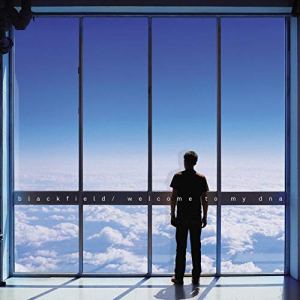
Blackfield: Welcome To My DNA

A Steven Wilson side project with Aviv Geffen, Welcome To My DNA is their third release. This was a very nice, radio-friendly collection of songs (with one terrible misstep: Geffen’s “Go To Hell”).  With the benefit of hindsight, one can see the influence this project had on Wilson’s excellent To The Bone years later.

The Dear Hunter: The Color Spectrum

Casey Crescenzo took a break from his six-act arc of albums (still in progress, BTW) to record this nine EP collection of songs inspired by the color spectrum. It begins with black, and works through the rainbow to end at white. It sounds insufferably pretentious, but it works. Dear Hunter manages to master every conceivable style of rock, from hard-core industrial (black) to pleasant folk (yellow). If you missed this set, check it out. It is an amazing achievement.

Duran Duran: All You Need Is Now

Duran Duran were always far more than ’80s pinup boys. Simon LeBon is a fine lyricist, and their melodies stand the test of time. All You Need Is Now is a surprisingly strong album, where they come close to the peaks they reached in their heyday, after spending years wandering in the wilderness.

Glass Hammer: Cor Cordium

The second Glass Hammer album to feature vocalist Jon Davison, and it builds on the strengths of 2010’s If. Every track is a winner, with “To Someone” a particular highlight. Once again, the cover art is a hoot.
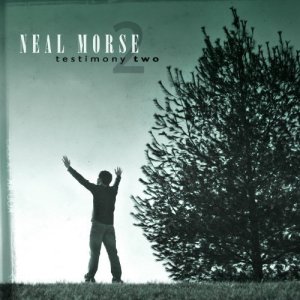
Neal Morse: Testimony 2

Neal Morse continued chronicling his conversion to Christianity, focusing this time on a miraculous healing of his infant daughter. As expected with Morse, the music is excellent as endlessly satisfying melodies pour forth. The bonus disc contains three of his finest compositions: “Absolute Beginners”, “Supernatural”, and the 26-minute epic “Seeds Of Gold”.

Radiohead: King Of Limbs

Radiohead releases are few and far between, so when King Of Limbs showed up in 2011, it caused a stir. The first five tracks are dominated by relentless rhythm – maybe they’d been listening a lot to Philip Glass and Steve Reich? Anyway, it isn’t until “Codex” that a real melody shows up. “Give Up The Ghost” and “Separator” close things out on a relatively gentle note.

Rush: Time Machine

A DVD/CD set that documented Rush’s performance in Cleveland. Rush has released a lot of concert videos, and this is one of their best. They weren’t touring in support of a specific album, so they cover songs from every phase of their long career, and even preview a couple from the not-yet-released Clockwork Angels.

Sanguine Hum: Diving Bell

When I first heard this group, I was very excited. They managed to meld Devo-like rhythms to XTC-worthy tunes while creating a sound all their own. This was the strongest debut album of 2011, and is still a joy to listen to.
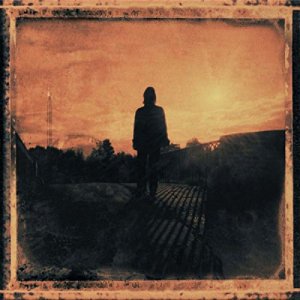
Steven Wilson: Grace For Drowning

Steven Wilson’s second solo album, and it put to rest any hopes of Porcupine Tree working together again. This was an ambitious two-disc set that ran a gamut of styles. Wilson is an inspired composer of seductive melodies (“Deform To Form A Star”), and he isn’t afraid to wear his influences on his sleeve, i.e. late-’60s Beach Boys or King Crimson. Like a lot of double albums, it might have been stronger as a single disc.

Yes: Fly From Here

Just when you think you’ll never hear anything new worth hearing from Yes, they surprise you with a strong album like Fly From Here. This one featured vocalist Benoit David, from the Canadian group Mystery, and it included Trevor Horn and Geoff Downes from Drama days. One of their best late-career efforts.

And that wraps up our musical look back to 2011. Not the most productive year with regard to prog, but just wait until 2012 – the floodgates are about to open!


Those Awkward Teenage Years – The 2010’s, pt. 1: 2010

Now that we are nearing the end of another decade, it seems appropriate to take a look back at some of the fine music that was produced in the past ten years. This is the first of ten posts – one for each year – of the decade that went from compact discs through mp3 files to streaming. So, in alphabetical order, here are some notable albums from 2010:

Anathema: We’re Here Because We’re Here

It’s nice to kick off our list with my favorite album of 2010! What a great collection of songs that proudly announced the new, sleek, and sophisticated Anathema. This album was a peak in their career, as it explored the mystery and loss that is inextricably bound up in the death of a loved one.

Big Big Train: Far Skies, Deep Time

The patron band of Spirit of Cecilia? Looking back at this “EP” (the playing time runs a generous 41:00), it’s hard to believe how far BBT has come. And yet, this contains indispensable songs from their canon like “British Racing Green” and “The Wide Open Sea”. This is definitely NOT a stopgap released to please fans between full albums.

Broken Bells

The debut collaboration between the Shins’ James Mercer and Danger Mouse, Broken Bells managed to transcend both the Shins’ and Mr. Mouse’s other work. The opening notes of “The High Road” never fail to bring a smile to my face. Off-kilter pop that is timeless.

Crowded House Intriguer
Crowded House: Intriguer

Neil Finn is one of the greatest songwriters, ever. This album by Crowded House is a fitting swan song to their career: somewhat subdued and very sophisticated pop.

DTP Addicted
DTP: Addicted

Devin Townsend is a gifted and restless soul who is constantly exploring new areas of music. In 2010, his Devin Townsend Project released this slab of power-pop-metal that is one of his most enjoyable listens. It doesn’t hurt that Anne Van Giersbergen lends her angelic voice to the proceedings, and “Supercrush!” has one of the most addictive hooks in the history of rock.

Engineers: In Praise Of More

The third album from Engineers was a definite letdown after the glorious shoegazey roar of Three Fact Fader. Adding Ulrich Schnauss seemed to have smoothed off the rough edges and introduced an “ambient” element. However, it was still one of the better releases of 2010.

Gazpacho: Missa Atropos

This was my introduction to Norwegian proggers Gazpacho, and I admit I wasn’t particularly impressed. However, I gave their earlier album, Night, a listen, and Missa Atropos started to make sense. Now they are one of my favorite groups.

Glass Hammer: If

The first Glass Hammer album to feature Jon Davison on vocals, and it is a wonderful work. An album I never tire of listening to, and it has some of their finest songs ever, including “If the Stars/If The Sun”. The cover art is a hoot.

Lunatic Soul II

The second effort by Riverside’s Mariusz Duda continued the atmospheric and world music vibe of the first. In this chapter, the soul of the person who died in the first album finds a home after wandering around in the afterlife. A great listen on headphones.

Pineapple Thief: Someone Here Is Missing

This was Pineapple Thief’s bid for the prog big leagues, but it missed the mark. Bruce Soord’s songwriting had tightened up quite a bit, but his best work was still ahead of him (i.e. Magnolia, Your Wilderness, Dissolution). If you were a PT fan in 2010, though, this was a very nice listen, and the Storm Thorgerson cover was intriguing.

Porcupine Tree: Anesthetize

And we wrap up our stroll down Memory Lane with the kings of early 2000s prog, Steven Wilson’s Porcupine Tree. This was a recording of a 2008 concert, released in 2010. They play the entire Fear of a Blank Planet album along with other songs from their vast catalog, and it is a phenomenal performance. If anyone wonders what all the commotion about Porcupine Tree was about, this is the one work that proves how great they were.

I hope this post brought back some fond memories of the beginning of the decade. These are personal favorites – if you have others, let us know in the comments!


Cyril – The Way Through

Earlier this year, I posted a review of one of my favorite albums of 2019, Manuel Schmid and Marek Arnold’s Zeiten. Mr. Arnold was kind enough to comment on it, and he mentioned that he and Mr. Schmid have another project: Cyril, which is a full-fledged prog rock group.

Cyril’s latest album is The Way Through, which was released last spring. It is a terrific work, showcasing the talents of Marek Arnold (keyboards, sax), Manuel Schmid (vocals, keyboards), Ralf Dietsch (guitars), Clemens Litschko (drums), Denis Strassburg (bass), and Larry B. (vocals). Guy Manning from Damanek wrote the lyrics.

The Way Through is a concept album about a man who has a near death experience. In “The Gate”, he rises above his dying body, and he notices

There is a light in the darkness here
I feel its call
I know in my heart that I must journey on
and find the way through
One step into night, one last look behind
In silence I walk
If I am to live once again I must meet my life
Head on and right the wrongs

And right the wrongs of his life he does. Each of the following three songs chronicles his efforts to atone for mistakes he made in his life. “My Own Reflection” is a portrait of him as a young boy who is near despair. His spirit gives his young self comfort and courage.

“First Love (A Lullaby)” is a beautiful song about revisiting his first love and treating her with respect and tenderness as their relationship ends.

“Get Up High” is a ferocious rocker that expresses his confusion and panic as he realizes he is trapped in a maze of trees with no direction home. Things settle down for the gentle and enchanting “A Sign On The Road”, where he has a choice to make:

‘To sleep not dream’ or “To dream not sleep’
What does it mean? Cos I must decide now

He chooses life (to dream, not sleep), and returns home to his body. But is he really alive, or still in a dream?

Cyril’s music is simply gorgeous. Arnold, Strassburg, and Schmid are responsible for the melodies, and every track shines. Arnold’s sax work is exceptionally fine, lending a jazzy touch to the proceedings. Larry B and Manuel Schmid complement each other’s vocals perfectly.

In my review of Zeiten, I stated that that album was my favorite of 2019, but I’m afraid it’s been deposed. The Way Through is now the best of the year, in my opinion. Give it a listen, and enjoy the excellent musicianship of Cyril. You will not be disappointed!

Here is “The Wasteland – Home Again”:

In Praise of Compact Discs

Compact Disc edit

Now that sales of physical music product have cratered, and streaming is the default delivery mode for the majority of music fans, I want to raise a glass to the lowly compact disc. The decision by Tool to release their long-awaited Fear Inoculum only via streaming and digital download is probably the final nail in the CD’s coffin.

It’s hard to convey what a magical technological leap forward the compact disc was for serious consumers of music in the early 1980’s. I came of age in the ’70s, when the only choice was vinyl or cassette tape (8-track was so horrible, I never gave it a thought). I bought hundreds of LPs, and every time I opened a new one, I prayed that it wouldn’t have a scratch or skip. By the late ’70s, record companies were pressing records on such thin vinyl that you were all but guaranteed to have a warped album to deal with. To this day, whenever I listen to Kraftwerk’s Autobahn, I expect to hear a skip at the 2:34 mark, because that is where my LP had a scratch.

When compact disc players’ price dropped below $400, I jumped at the chance to buy one. The first CD I bought? Roxy Music’s Avalon. I still have it. What a relief to not have to get up every 20 minutes to turn the record over! What a relief to know that I could listen to an entire album without a skip, pop, or wiggle! CDs took up much less space than LPs, and those plastic jewel boxes were so cool.

Suddenly, albums that were 2-disc sets in vinyl were now single-disc CDs. It’s almost as if Bob Dylan knew that one day there would be the right medium for Blonde on Blonde. I’m currently working my way through Keith Jarrett’s monumental Sun Bear Concerts. When it was released in 1978, it was a ten LP set, and his brilliant long-form improvisations were interrupted by the time limitations of an LP’s side. On CD, it is five discs (plus an encore one), and every performance is complete. I get to immerse myself in the flow of Jarrett’s genius without the rude interruption of the needle hitting the end of the grooves.

Yes, I know that analog vinyl sounds “warmer” than digital CDs. However, with a nice amp and speakers, CDs sound incredible: beautiful stereo separation, and amazing dynamic range. (If you can find a copy, check out the jazz group Flim and the BBs’ Tricycle on DMP from 1983. You will jump out of your chair when the full group kicks in on the first track.) I will trade an uninterrupted Beethoven’s Ninth for some subjective “warmth” any day.

NME recently reported that vinyl sales are outperforming CD sales for the first time since 1986. My 2017 Mazda 3 came with Bluetooth and USB ports, but no CD player. At my local used books/music/movies store the “bargain” bins for CDS are overflowing with 25 cent copies of stuff from the ’80s and ’90s. Heck, it looks like even Blu-Rays are on the path to extinction, now that Samsung is not manufacturing players for them any more.

My only question is this: what if someone at Spotify, or Google, or Amazon, or Apple decides that that album or movie you really like is not acceptable in polite circles any more? When you only own a license to stream something, it can be taken away very easily, and there isn’t a blessed thing you can do about it.

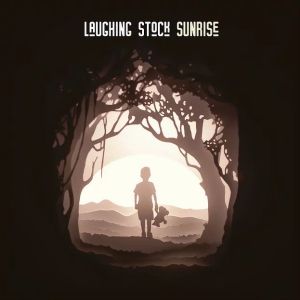
Laughing Stock’s Sunrise: No Laughing Matter

You have to admire a group that name themselves after one of the most legendary albums in prog history, and Norway’s Laughing Stock live up to their namesake.  Jan Mikael Sørensen, Håvard Enge, and Jan Erik Kirkevold Nilsen have released a very fine album that leaves me wanting more.

They certainly reference all the right artists, calling to mind Pink Floyd one moment, King Crimson another, Porcupine Tree, Close to the Edge-era Yes, and of course, Talk Talk (literally singing in the song Echoes, “I still believe in you”). What is so  appealing about Laughing Stock is their ability to absorb and honor those influences while forging a distinctive sound of their own. Not quite pop, not quite prog, not quite folk, but a wonderful combination of them all.

The album begins with a clanging alarm bell on Sunrise, which is followed by a television playing in the background, a la Wish You Were Here. Somber vocals – accompanied by acoustic guitar – chant, “Stay awake, take me to daybreak – sunrise.” Drums, mellotron, bass, and guitar are gradually added to the mix to great effect.

The album is a song cycle chronicling daylight hours, Sunset, Fading Light, a Darkest Hour, and finally, Another Sunrise. The third track, Afraid, is a great song, where they sing “I’m afraid, afraid of the morning/When dreams are fading away/I’m afraid, afraid of the light/Rising daylight, come out to play/What the hell is wrong?” A loping guitar riff pushes the song along as bits of sitar weave in and out of the background. It’s slightly unsettling, yet very attractive.

In Sunset, they sing, “I am falling for you” over a gorgeous acoustic guitar, drums, and bass melody. Beach Boys -like harmonies abound, and everything seems to be at peace. It’s a beautiful track. As a matter of fact the entire album is a beautiful piece of work – primarily acoustic, featuring slower tempos with deliberate pacing. Not until Darkest Hour do we hear some serious rock, and it is excellent. Imagine King Crimson and Porcupine Tree getting together for a slow jam session, and that gives you an idea of its atmosphere.

Sunrise is being released on Apollon records. It’s the perfect thing to listen to at the end of a long day when you want to relax and unwind. However, it’s definitely not background music, as their sophisticated lyrics conjure grown-up themes. Highly recommended!


The Elegant Art-Pop of Manuel Schmid und Marek Arnold

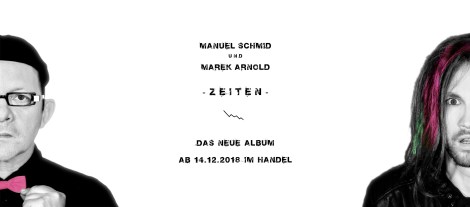
One of the most delightful aspects of prog music is the convoluted networks of artists that can lead one to discover surprising hidden treasures. My latest vein of musical gold is an album by German artists Manuel Schmid and Marek Arnold. Their album, Zeiten, is my favorite of 2019 so far. (It was released in December 2018, and I wasn’t aware of it until March of this year, so I’m counting it as a 2019 release.)

How did an American fan of prog rock find this relatively obscure album that is sung entirely in German? Even Schmid’s official website is in German, so it’s incomprehensible to me. Well, I am a big admirer of the Australian group, Southern Empire. Sean Timms is their keyboardist and main songwriter. He is also a member of another excellent prog group, Damanek. Damanek includes multi-instrumentalist Marek Arnold. I noticed that Arnold’s newest project was Zeiten, and, voila!, I found this gem of an album

Zeiten is entirely sung in German, but that hasn’t detracted from my enjoyment of it one bit. I wish I could tell you what the songs are about, but based on the official video for Kleines Glück, I would say they are about relationships. Zeiten itself means “times” or an era in one’s life. All I know is that every song is perfectly crafted jewel.

Schmid and Arnold’s melodies are beautiful and delicate, catchy without being cloying, and deceptively complex. The instrumentation is primarily keyboards based, and mostly acoustic. There are very tasteful synth flourishes and electric guitar solos, but none of them overwhelm the beauty of the underlying melodies. Stiller Schrei features Schmid singing with a string quartet, and it is comparable to a work by Schubert.

Schmid has a wonderful voice – warm, clear, and strong without any histrionics. Arnold supplies sympathetic accompaniment with keyboards, synths, and sax. Their talents combine to create some of the most seductive music I’ve ever heard.

Here is the video for Kleines Glück, which I assume is a bittersweet meditation on memories of childhood:


1980s Synthpop Redux

Early ’80s synthpop, an often maligned style of music, is having a resurgence in popularity. Maybe it’s the nostalgia generated by Netflix hits like Stranger Things, but there is a new appreciation for music that was first produced in the early 1980s by artists like Orchestral Manoeuvres In The Dark, Howard Jones, Gary Numan, Ultravox, Camouflage, early Tears For Fears, and Depeche Mode. If you’re like me, and you’ve always had a soft spot in your heart for those groups, then today’s new synth wizards are a lot of fun to listen to.

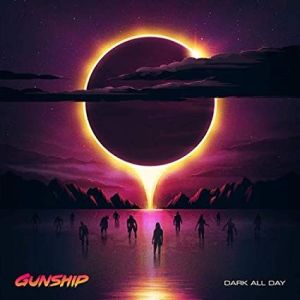
Gunship,  from the UK, has two albums out, and they are both excellent. Their latest, Dark All Day, is very melodic with prominent rhythm.  The video for the title track has over 3 million views, so there is definitely an audience for their style of music.

The Fixt label curates a synthwave playlist on Spotify called Neon that features their stable of artists. You can hear the latest tracks from Soul Extract, The Bad Dreamers, 3Force, and many others there.

Two of my favorite synthwave artists are also on Fixt: The Anix and Scandroid. Scandroid is a project of Fixt label founder Klayton, and he is an unabashed lover of classic synthpop new wave. He even included a fine cover of Tears For Fears’ “Shout” on his first album.

The Anix is darker and more modern sounding.  Their excellent album, Shadow Movement, is set in a dystopian future, and it features catchy melodies linked to relentless beats.

Finally, LA-based I Will Never Be The Same is the brainchild of Josh Atchley. His music combines Nine Inch Nails industrial style with the melodicism of Depeche Mode and The Cure. Add a dash of Pink Floyd and Led Zeppelin, and you have an irresistible mix. Take a listen to “Last Goodbye”:

These recommendations barely scratch the surface of the fun and interesting music that synthwavers are releasing now. Check them out, and let us know your current guilty pleasures in the comments below!


Jesus Christ The Exorcist

Just when you think you have Neal Morse figured out, he throws another curve ball. His latest project is “a progressive rock musical”, and it is unlike anything else he has produced.

First, Neal himself is not a prominent voice here. He only sings the part of Pilate, along with very minor contributions as a demon and a disciple. Second, this really is a musical, where one song flows seamlessly into another. To fully appreciate it, the listener needs to set aside the time to listen to it in one setting. Third, stylistically this is the most diverse set of songs Neal has written. In his own words, “There are touching ballads, rousing ensemble pieces, classical elements, and dramatic Broadway musical type songs, as well.”

The role of Jesus is performed by Ted Leonard, and he is perfect for it – authoritative one minute, combative the next, and achingly tender in other settings. It’s one of Leonard’s finest performances. Another standout performer is Nick D’Virgilio as Judas, where he manages to convey his initial excitement at Jesus’ early miracles, and then his confusion and disillusionment when he realizes his rabbi isn’t going to overthrow the Roman oppression of Israel. His anguish in “Dark Is The Night” is palpable as he sings,

Jesus there must be some other way
Of conquering the enemy
How can you help us
If you are dead and gone?

Speaking of Jesus, Morse’s version is definitely not the same as the Jesus Christ Superstar from the early ’70s. Where Andrew Lloyd Webber’s Jesus was the happy, hip leader of a group of countercultural provocateurs, Morse’s is a man of action. As I listened to Jesus Christ The Exorcist, the Gospel of Mark came to mind: to the point, not a lot of parables or theological discussions, but many examples of active ministry. Morse’s Jesus is the one in the title: an exorcist waging spiritual battle against the devil and his demons. In many ways, it’s a refreshing portrait. Morse strips the story of Jesus down to the bare essentials – his baptism, temptation, casting out seven demons from Mary, saving the madman of the Gadarenes, the Last Supper, his arrest, trial, crucifixion, and resurrection. If someone who had no idea who Jesus Christ was listened to this album, he or she would have a pretty good understanding afterwards.

What about the music? Neal still has the gift of beautiful melody, and “Love Has Called My Name” is one of the catchiest songs he’s ever composed. There are some fairly heavy tracks (“Get Behind Me Satan”, for example), some singer/songwriter songs (the aforementioned “Dark Is The Night”), some blues (“The Woman of Seven Devils”), and some very nice prog (“Jesus’ Temptation”). “There’s A Highway” sounds like it could be blasting out of a late-70s FM rock radio station.

The vocal performances are uniformly excellent, especially Talon David as Mary Magdalene. Neal wrote and produced the entire piece, as well as playing guitar, keyboards, bass, and percussion. Eric Gillette from the Neal Morse Band plays drums (!), and long-time collaborator Randy George is on bass. Paul Bielatowicz plays lead guitar. There’s also a string orchestra, horns, male chorus, female chorus, and a kitchen sink (just kidding!).

If you’re a fan of Neal, you probably already have this. If his occasional flights of prog excess have made you wary of his music, give this a try – it covers more familiar musical territory. Even if you are not a Christian, give it a listen. It’s actually not as “preachy” as Morse’s earlier Testimony albums, and his gift for composing a memorable melody really shines here, making Jesus Christ The Exorcist one of the most enjoyable musical experiences of 2019.