Hitting the St. Cecilia Music Center stage 20 years on from his last visit (and 40 years on from when I first heard him live with his brother Wynton, then with Sting), sax legend Branford Marsalis seemed relieved to have safely made it to Grand Rapids, just one night after two shows further north in snowbound Traverse City. (“Turned right at Cadillac and — whoa!! Where’s Santa?!?”)
But any fear that Marsalis’ tight quartet had been shaken by their brush with a spring blizzard soon vanished; loose and comfortable as their leader teased drummer Justin Faulkner about being the “birthday boy”, they were also focused and ready to play. With a flourish, pianist Joey Calderazzo launched into his postbop workout “The Mighty Sword” — and instantly, the band was in the moment, bringing the sold-out audience with them. Off the knotty head statement, Calderazzo built a two-handed solo to a simmering climax (both his legs were moving, too) that Branford took higher with volcanic soprano licks; meanwhile bassist Eric Revis pushed the pulse onward as Faulkner rolled and tumbled around and across his kit. On the edge of fully free expression, yet always locked into the underlying groove and listening hard to each other, the Quartet’s interplay was riveting and undeniable.
Keith Jarrett’s “‘Long As You Know You’re Living Yours” was up next. A funky highlight of Jarrett’s 1974 album Belonging(which the Quartet covered in full last year for Blue Note), it brought out a rambunctious streak in Branford, progressing from rhythmic subtones to frenetic sheets of sound; Calderazzo answered with deft, deeply swinging gospel. Which then dramatically transitioned into the rich lyricism of his “Conversation in the Ruins”, as both he and Marsalis took wing above Revis and Faulkner’s subdued, flickering rhythms.
Then, the history lesson. With Branford namechecking songwriter Fred Fisher (born Alfred Breitenbach in Germany before he emigrated to the USA), the Quartet timeslipped back to the primal years of jazz with “There Ain’t No Sweet Man That’s Worth the Salt of My Tears” (made famous by bandleader Paul Whiteman with Bix Beiderbeicke on cornet and Bing Crosby singing). Everyone soloed to powerful effect — Marsalis crooning on soprano, Revis gracefully, purposefully walking the bass, Faulkner delighting with a dynamic feast of accents and colors. It was only later that I realized: as bland, as polite – even as patronizing – as this music seems in retrospect, 100 years ago, it was on the cutting edge of American pop culture. Why not take it out for a spin today and see what happens?
“Why not?” turned out to be the throughline of everything the Marsalis Quartet did onstage, always leavened with affection for and attention to the music’s potential and each other. As the night went on, the crowd tuned into it, too: how Jarrett’s melancholic “Blossom” was elevated by Rives’ rhapsodic feature and Calderazzo and Branford’s insistent quotes from “Happy Birthday to You” (said one-upmanship bringing hysterical guffaws from Faulkner); how, nudged by the group’s thoughtful probing, Jimmy McHugh’s “On the Sunny Side of the Street” morphed from a hesitation shuffle through stop time to flat-out rock and back again.
And then, coming to an impasse onstage, Marsalis and Calderazzo asked the audience for multiple shows of hands : “Monk or Ellington?” (Branford after that vote: “Ellington wins. Ellington always wins.”) “Up or down?” (Up.) Which yielded a loping, speedy “It Don’t Mean A Thing (If It Ain’t Got That Swing)” as the last tune — and, announced as for the benefit of the “young musicians” from local high schools in the audience, a downtempo take on the same tune as the encore! Both ways, Branford smoked, Calderazzo swung, Rives flowed — but each drew on varying parts of their vocabulary, to vastly different effect. Though working in the same vein, Faulkner well and truly went to town throughout; his creatively minimalist solo choruses for the encore (first brushes on snare with quarter-note kicks, then entirely on floor tom, ranging from warm caresses to rim cracks to meaty thuds) proved an enticing riot of colors and syncopations. The standing ovations that followed each version were both earned and inevitable.
This lineup of the Branford Marsalis Quartet has worked together for more than a decade. As friend and fellow blogger Cedric Hendrix has observed, that’s rare in jazz circles; the consistent result, whether on record or live, is spectacular internal chemistry – which in turn provides extraordinary opportunities for the music to truly breathe, scaling ever-increasing heights of freshness, invention and resonance. To witness all that, generated by four masters at play, bringing a century’s worth of music to spectacular, technicolor life — well, it’s an experience I’m glad I shared with 600 + others last night!
A review of Philip Clark, Dave Brubeck: A Life in Time (New York: DaCapo Press, 2020). Xvii + 403 pp of text + discography, bibliography, and index.
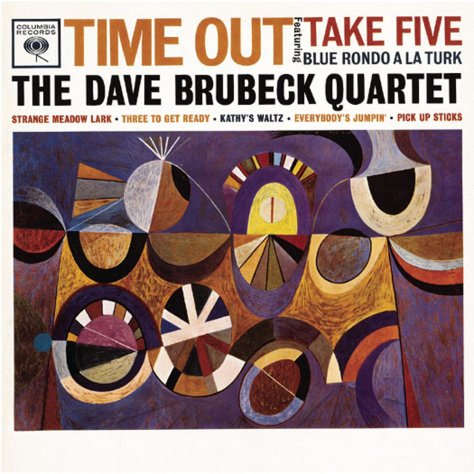
I do not remember a time in my life when Dave Brubeck’s music did not provide the soundtrack. Indeed, his music is inextricably tied up to and with my own life. Some of my earliest memories come from staring at Brubeck’s album covers—Time Out and Time Further Out by S. Neil Fujita and Joan Miro, respectively—and trying to make sense of the abstractions. And, as family lore goes, even as a kid I loved dancing to music such as “Take Five,” even waking up the entire household in the middle of the night by blaring the stereo system at full volume. As was the case with probably many of us of my generation, Time Out was one of my father’s favorite albums and Brubeck one of his favorite musicians, rivaled only by Herb Alpert. To this day, I have stacks and stacks of Brubeck CDs and boxsets, and his music plays throughout the house and the office. Maybe not daily, but certainly weekly. When my older brother, Todd, and I get together, we still talk Brubeck. Even now, as I pour through various prog and jazz albums, I’m always on the lookout for Brubeck’s influences.
As a case in point, Pat Metheny’s latest, From This Place—arguably this jazz master’s best—reflects widely and deeply the compositional structure of Brubeck’s best album, 1964’s Time Changes. The resemblance is simply too obvious to ignore. Even the theme is critical. Brubeck’s album was inspired by a short story involving two cellmates and a crust of bread. The religious essence of the album is blatant, with Brubeck trying to find that which ties all humans together, regardless of ethnicity or race. It is, for all intents and purposes, a meditation on human decency and divine agency. Metheny’s latest calls us to be the best we can expect of ourselves as Americans.
In 2012, when Brubeck died around Christmas time of that year, I vowed that I would one day write a biography of him. Despite preliminary research and reading, I’ve really not dived into this project, but Brubeck remains a profound part of my life, nonetheless.
Two stories from Brubeck’s own life mean everything to me.
First, at Ronald Reagan’s last summit with Soviet leader Mikhail Gorbachev, held in Moscow in 1988, the Reagan administration insisted that Dave Brubeck represent America as her greatest cultural achievement. Brubeck’s producer, Russell Gloyd, recognized this grand achievement for what it was. “You have to put this in perspective,” he argued. “There was Perestroika, the whole awakening of the Soviet Union, the whole concept of what was taking place at that time in world history. This was the first time there was hope of a real chance for an understanding between the East and the West,” he continued. “For Dave to be the representative artist meant everything to everyone who was close to us.”
The atmosphere was tense. Reagan was exhausted from his trip, Gorbachev’s security was worried about assassination plots, and it was a ridiculously hot and humid day in Moscow. “I walked in thinking that this was the hardest room Dave had ever had to work in his life,” claims Gloyd. After a number of lackluster diplomatic niceties in the stuffy room, Brubeck walked up to the piano, sat down, and started playing “Take the ‘A’ Train.” “It brought down the house,” Gloyd reports. “People were up and cheering. I’ll never forget Bob Dole—he looked like a little kid. He had his one good hand raised above his head like he was at a football game. He’d turn around, and there was a Soviet general, loaded with medals, doing the same thing! They looked at each other like, ‘You like Brubeck? I like Brubeck! We like Brubeck.” It was, Gloyd notes, “the greatest single twenty-minute set in his life.” The Cold War became much less frigid that day.
Second, though he came from a Presbyterian family, Brubeck converted to Roman Catholicism as an adult. “I never had belonged to any church. I was never baptized before,” Brubeck remembered. “I was the only son in the family who wasn’t baptized a Presbyterian. It was just an oversight.” To be certain, religious music—from the African-American community as well as from the white/European community—had always intrigued and influenced him. He wrote liturgical-jazz pieces about Easter, Christmas, and Martin Luther King.
Though he had written a number of specifically religious themed albums and pieces, however, his greatest expression of his Christianity came when Our Sunday Visitor (headquartered in Huntington, Indiana) commissioned Brubeck to write a Mass. He, in very Brubeck fashion, entitled it, To Hope! A Celebration, and performed it—with Gloyd conducting—at Washington National Cathedral. The premier music review website, Allmusic, writes of it: This stunning work incorporates jazz interludes into the hypnotic Responsorial “The Peace of Jerusalem” and “Alleluia,” a particularly challenging section for the choir. The vocal soloists are impressive; tenor Mark Bleeke’s feature “While He Was At Supper” is especially moving. The overall effect of this beautiful work is absolutely stunning; it resists being labeled in any one category, it is simply great music.” Fundamentally optimistic about the human experience, Brubeck had said in a commencement address in 1982: “What is really important in the community, in the worst of times, is often music. It’s the cement for the community that holds it together, and the thing that gives it hope.”
Sadly, neither of these stories can be found in Philip Clark’s just published “biography,” Dave Brubeck: A Life in Time (New York: DaCapo Press, 2020). Though the cover proclaims this to be “the definitive investigative biography of jazz legend Dave Brubeck,” there is not a single mention of Brubeck’s 1988 trip to Moscow or his conversion to Catholicism. Just how definitive is this biography by Clark? Bizarrely, Brubeck is not even born until page 302.
When I first learned of the existence of this book—on February 19—I purchased it at a Books-a-Million within a few hours of the news. Rather than wait for the cheaper Amazon.com version, I had to have the book immediately. I was thrilled it existed, and I dove right into it. Alas, rarely have I been so disappointed by a book.
When it comes to writing—on a sentence by sentence basis—Clark is outstanding. According to the dust jacket, he has written for a vast number of music periodicals as well as for the London Guardian and the London Times. There’s no doubting his grammar or style. But when it comes to composing a book of this length, he is. . . to be polite. . . lacking. It turns out that Clark knew Brubeck relatively well and had interviewed him a number of times in the last twenty years of his life. Though we learn nothing of Brubeck’s Catholicism or his trip to Moscow—both so essential to his life—we do get editorial comments such as
“As the bus breaks for the London border, with the motorway to Brighton stretching ahead, [bassist] Moore falls into earnest conversation with Iola Brubeck. Heads nod remorsefully, then Moore’s grotesque caricature of President George W. Bush’s nervy Texas drawl hits a manic crescendo reminiscent of an operatic made scene.”
Or, this tidbit:
“As I wrote all these years later, that Brubeck’s accounts of his country’s gravest shame should have such damning relevance to Trump’s America felt unbearably poignant and tragic—time overlaps, but it is also cyclic.”
I am certainly no fan—in any way, shape, or form—of Presidents Bush or Trump, but I very much fail to understand why these things matter in a biography of Dave Brubeck, who was so much better and worthy of so much more than what Clark presents in this book.
Clark is at his best in the book when not writing the biographical parts. Indeed, Clark excels at explaining Brubeck’s techniques, his influences, and his influence. During parts of the book—especially Clark’s section on Brubeck’s influence on rock and progressive rock—I was riveted. Clark is also good when it comes to Brubeck’s defying the horrific racialist laws, habits, and customs of much of 1950s and 60s America. Brubeck was not only an optimist in his view of humanity, he was deeply humane in his understanding of the dignity of the human person. He never backed down from what he believed correct, and his actions on race relations are nothing short of heroic in his own lifetime.
If you’re looking for a fan-boy appreciation of Brubeck’s talents and his understandings of race relations, Dave Brubeck: A Life in Time, is a fine outing. If, however, you’re looking for the “definitive, investigative biography of jazz legend Dave Brubeck” run as far away from this book as possible. One of the greatest talents to come out of 20th-century America, Brubeck deserves so much better.
Until someone actually does the critically hard work of looking closely at Brubeck’s life through his music as well as through his letters and papers and getting into the very bright and endlessly creative soul of Brubeck, no definitive biography yet exists. The best book on Brubeck remains Fred M. Hall, It’s About Time: The Dave Brubeck Story (Fayetteville: University of Arkansas Press, 1996). It’s an excellent book, and the stories above come from Hall’s work.
Or, just listen to Brubeck’s music. He poured himself into his art—into every note.
ON FIRE: LIVE FROM THE BLUE MOROCCO, A HEATED UNISSUED 1967 PERFORMANCE BY FREDDIE HUBBARD, DUE FROM RESONANCE AS LIMITED THREE-LP SET ON RECORD STORE DAY APRIL 12
Legendary Trumpeter is Heard at His Ferocious Peak at Sylvia Robinson’s Bronx Club with an All-Star Combo Featuring Bennie Maupin, Kenny Barron, Herbie Lewis, and Freddie Waits
Deluxe Package, Also Available on CD on April 18, Includes New Interviews with Maupin and Barron, Notes by Jazz Authority John Koenig, Appreciations and Interviews with Charles Tolliver, Eddie Henderson, Steven Bernstein, Jeremy Pelt and More Trumpet master Freddie Hubbard is heard at the apex of his early brilliance in the newly unearthed collection On Fire: Live from the Blue Morocco, which arrives on April 12 as an exclusive, limited three-LP Record Store Day release from Resonance Records.
Remastered from the original tapes by Matthew Lutthans, with the LPs mastered by Bernie Grundman and pressed at Le Vinylist, the previously unreleased set was captured by recording engineer Bernard Drayton in 1967 at the Blue Morocco, a jazz spot located in the New York borough of the Bronx and operated by Sylvia Robinson, later a co-founder of Sugar Hill Records. The collection was produced with the full endorsement of the trumpeter’s son and estate representative Duane Hubbard.
Hubbard’s work with Art Blakey & the Jazz Messengers, his appearances on historic recordings by John Coltrane and Ornette Coleman, and his own brilliant recordings as a leader for Blue Note and Impulse! Records led contemporary observers to hail him as the masterful successor to the late Clifford Brown. He is heard on the new release playing a storming set of his own compositions and a pair of smartly arranged standards. Hubbard is backed by his working group of the day, a skilled unit that included saxophonist Bennie Maupin, pianist Kenny Barron, bassist Herbie Lewis, and drummer Freddie Waits.
The package — which will also be issued as a two-CD set on April 18 — is co-produced by Bernard Drayton, his celebrated son and drummer Charley Drayton, and Zev Feldman, the award-winning “Jazz Detective” and co-president of Resonance Records. It includes an introductory essay by jazz scholar John Koenig; new interviews by Feldman with Maupin and Barron; and interviews and appreciations by trumpeters Charles Tolliver, Eddie Henderson, Steven Bernstein, and Jeremy Pelt; and more.
Feldman says, “This album captures Freddie Hubbard at an important point in his career. He had come fully into his own and was forging for himself an honored place in the pantheon of the world’s greatest jazz trumpet players. These live recordings represent Freddie at the height of his powers. The band on these recordings was Freddie’s working group at the time, and they certainly rose to his level.”
“We were excited about Freddie Hubbard coming to the Blue Morocco,” says Drayton, who also captured the previously unreleased recording of Kenny Dorham at the club that is being released for RSD by Resonance. “By 1967, when this album was recorded, Freddie was laying his claim, as Dizzy Gillespie put it, as the greatest trumpet player in the world. Freddie was a dynamo, full of energy and full of pepper. As you can hear, he was on fire. I’m proud to have documented this page in the annals of Freddie’s career.”
Duane Hubbard adds, “My dad, to me and millions of fans, was one of the greatest trumpet players in history. He came to New York from Indianapolis with the drive to be great. In New York, he worked with the top musicians of the time. He took every gig, and he practiced so much and worked so hard that with his natural gifts he rose to be one of the greatest jazz musicians of his, or any, generation.”
“As the performances on this album show,” Koenig writes, “it’s easy to see the qualities that allowed Freddie to make his way into the rarefied milieu of the jazz elite as an instrumentalist. But with this recording, we also have a view of Freddie coming fully into his own as a bandleader. These tracks have never before been heard publicly. They show Freddie in action in a live setting with what was his first regular working band.”
Hubbard’s gifted sidemen of the day testify that playing alongside Hubbard at the top of his game was a thrilling experience.
“Playing with Freddie was very, very intense,” Maupin says. “It was really exciting for me to be able to be a part of the group and be doing these things with him. It was a lot of fun, just great musical fun. For me, playing with someone who had been working with people like Art Blakey, who had that kind of incredible experience, I realized what I needed to do just to keep up with him: I had to really practice a lot. It inspired me to really up my game.”
Hubbard’s formidable legacy as a trumpeter has served as an example for his successors on the instrument.
“Hub was one of my trumpet heroes in my youth,” Tolliver says. “Initially coming out of Brownie, by slightly modifying an already great embouchure, he was able physically to fashion and create the style he was aiming for — to execute and muscle the trumpet in a saxophone-like pianistic manner resulting in incredible improvisational feats and solos never heard before, while at the same time delivering a big, sassy, warm, brass sound without ever sacrificing those crucial inherent elements of our art form — swing, the blues, and pure sophistication.”
Henderson recalls, “Freddie dominated the trumpet scene in the ‘60s, ‘70s and ‘80s. He was without a doubt the top of the hill — his trumpet expertise and prowess, his execution and facility, his range. And his compositions were so challenging, over and above what was coming out of the bebop era. They were very difficult harmonically to maneuver through.”
In an enthusiastic outburst, Bernstein says, “This recording is insane! It’s one of the most exciting live documents I’ve ever heard in my life. It’s f!cking mind-blowing. Freddie’s on fire. It’s just so damn good.”
Resonance Records is a multi-GRAMMY® Award-winning label (most recently for John Coltrane’s Offering: Live at Temple University for “Best Album Notes”) that prides itself in creating beautifully designed, informative packaging to accompany previously unreleased recordings by the jazz icons who grace Resonance’s catalog. Headquartered in Beverly Hills, CA, Resonance Records is a division of Rising Jazz Stars, Inc. a California 501(c) (3) non-profit corporation created to discover the next jazz stars and advance the cause of jazz. Current Resonance Artists include Tawanda, Eddie Daniels, Tamir Hendelman, Christian Howes and Donald Vega. www.ResonanceRecords.org
Greetings, music lovers and readers of Spirit of Cecilia! 2024 is fast coming to a close, and the SoC crew would like to share their favorite albums of the year. There was a lot of great new music, terrific deluxe reissues, and releases from old favorites. Hopefully, our lists will lead to some albums you will love as well.
Brad: Tad, thanks for starting us off and inviting everyone to participate. Always great to write with you! I’ll just start with an alphabetical listing of my favorite releases of 2024:
“Dogs” by Pink Floyd, as done by Tim Bowness and Giancarlo Erra
Airbag, The Century of the Self
BBT, Flare on the Lens
BBT, The Likes of Us
Bruce Soord, Caught in the Hum
David Gilmour, Luck and Strange
Frost*, Life in the Wires
IZZ, Collapse the Wave
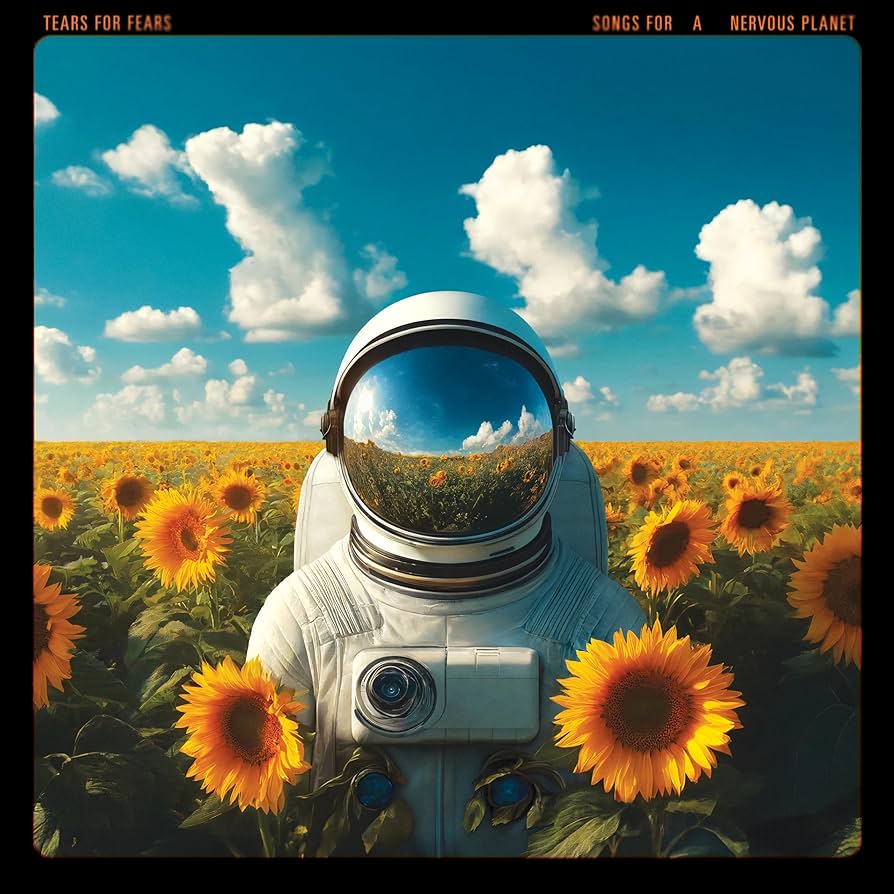
Tears for Fears, Songs for a Nervous Planet
The Bardic Depths, What We Really Like in Stories
The Cure, Songs of a Lost World
The Pineapple Thief, It Leads to This
The Pineapple Thief, Last to Run EP
The Tangent, To Follow Polaris
Tim Bowness, Powder Dry
And, I’m not even including vital re-releases such as the deluxe edition of Synchronicity by the Police; Fear of a Blank Planet by Porcupine Tree; Spectrum ‘97 by Phish; Lament by Ultravox; Bursting Out by Jethro Tull; or This Strange Engine by Marillion.
If I go just by my playlist numbers, I’d have to list “Dogs”, Frost*, IZZ, and, especially, The Cure. In fact, since The Cure first arrived, I’ve listened to almost nothing else. But, I went through such phases with Frost* and IZZ, too. And, really, I can’t recommend the single of “Dogs” highly enough. Bowness and Erra give it just the right beauty and creepiness that a proper Pink Floyd remake so desperately needs.
I must admit, though, I’m totally against the lyrical content of “Dogs.” I can’t believe our entrepreneurs are so bloodthirsty as this. Like or despise Elon Musk, for example, as you will, but he’s not bloodthirsty. In fact, if anything, I think he’d hate to “be dragged down by the stone.” And, he would hate to drag anyone else down by the stone. He definitely wants to win, but he wants to win fairly, by the rules established by society (unless all of society is corrupt, but let’s hope that Pink Floyd isn’t so Marxian as this). Maybe I’m wrong, however. Perhaps, I’m deaf, dumb, and blind, and that I keep pretending. . . Is this how Roger Waters saw his friendship/adversarial relationship with David Gilmour? If so, so very sad. For my money, give me Phish’s “Bouncing Around the Room” as the touchstone song dealing with entrepreneurship.
To be certain, though, I’m also a bit biased on the whole The Bardic Depths release. Given that I wrote the lyrics for it, I’m quite taken with it. Dave Bandanna did an amazing job in composing the music. So brilliant, so beautiful, so mystical, so joyful. Dave brings every song to life, and I’m always stunned to hear my own words given form and made manifest.
And, then, what’s not to love about the new David Gilmour? In fact, when he sings with his daughter, Romany, I’m completely taken. So much better than Dogs, co-written with Roger Waters.. Especially if you listen to something as glorious as “Between Two Points.” I would give anything to have such a relationship with my daughter that I could write something so gorgeous with her. Romany over Roger any day.
And, seriously, this brings me to all the incredible re-releases of 2024. Oh, to be “Prince Caspian” and float upon the waves. Oh, to be Prince Caspian. Dang, Phish was simply brilliant when they were.
I also want to single out Airbag. I don’t know their politics, but it strikes me that with this release, especially, they’re trying to combat conformism and cancel culture. I could be wrong, but I’m willing to take a chance that this is a brilliant counter-cultural masterpiece. One that shakes the conformists of the world to their very foundations. And, who wouldn’t love that bass playing and interplay with the drums? Genius. Thank God for the non-conformists of the world. Airbag sounds like Pink Floyd, in terms of legacy, but they are completely their own band.
If Airbag sounds anti-political, Robert Smith on the new Cure album, sounds confessional. Bless me, Father, I, Robert Smith, have sinned, and something wicked this way comes. Truly, the latest The Cure album is a masterpiece, a true sequel to Pornography and Disintegration. My love and respect for Smith only grows with age.
If Airbag is countering the world and Smith is confessing for us all, then IZZ is proclaiming the inherent goodness of each one of us. I’m not sure what the lyrics are all about on Collapse the Wave, but I feel that John Galgano and Laura Meade are asking us to look at our best selves. Rather than be dour, they find wonder. As far as I can tell, IZZ has been reading a lot of T.S. Eliot and a lot of John Paul II.
Tad: What a great list, Brad! Yours and mine overlap quite a bit, since we are often of like mind when it comes to music. Here is mine, based on how often I listened to each album:
8. Kyros – Mannequin
7. IZZ – Collapse the Wave
6. Jeff Johnson/Phil Keaggy – Spinning On a Cosmic Dime
5. Tears For Fears – Songs For a Nervous Planet
4. Airbag – The Century of the Self
3. Bardic Depths – What We Really Like In Stories
2. The Cure – Songs of a Lost World
1. Frost* – Life In the Wires
I’ve been a fan of Kyros’ music for several years now. They wed 80s sensibilities to 2020s expertise. Mannequin is another great collection of pop/prog.
Like you, I admire IZZ enormously. As far as I can tell, the lyrics to the title track are about quantum physics and faith. Who else but the Galgano brothers could pull off such an ambitious song? They definitely succeed.
Jeff Johnson and Phil Keaggy have collaborated several times before, and Spinning On a Cosmic Dime is the most lighthearted and fun of their albums. Johnson is a master of all keyboards – acoustic and electronic, while Keaggy is one of the finest guitarists alive today. When they get together, magic happens.
The Tears For Fears is primarily a live album, but the five new studio tracks are some of the best songs they’ve ever recorded.
You’ve already said everything I could want to say about the Airbag album. They continue to impress me with their social commentary, and their instrumental chops are outstanding. Their previous album, A Day At the Beach, is still my favorite, but The Century of Self is really, really satisfying.
The Bardic Depths’ new one is also a great album. Listening to it is like having a beer with C.S. Lewis, Tolkien, and the other Inklings. To my ears, it’s the most musically ambitious set of songs from TBD, and I have thoroughly enjoyed listening to it throughout 2024.
The Cure’s album came out of nowhere as far as I was concerned, and I approached it with some trepidation – there’s nothing worse than an old favorite trying to recapture the spark and failing miserably. Robert Smith et al. came up with a fantastic album that easily holds its own with their previous best. Amazing!
Frost*’s Life In the Wires is far and away the most-played album of 2024 for me. I have yet to tire of it, and every time I listen to it I find some new and delightful detail. Jem Godfrey sings all of the vocals on this one, and he is terrific. The beautiful melodies pouring out of my speakers are such a bountiful feast for my ears. The story is fascinating as well – a young man rebels against a world run by AI when he hears a pirate radio broadcast. After tracking it down to its source, it turns out to be an automated program. But then things get weird – he seems to sacrifice himself to become the new source of the radio broadcasts and spark an awakening of humanity. At least that’s how I read it.
So that’s what I spent my time listening to this past year. I also loved the Ultravox Lament box set and the Talk box set by Yes. It’s nice to have this often overlooked album get the treatment it deserves.
Brad: Yes, Tad, thanks for the reminder about Yes’s 30th anniversary edition of Talk. The last of the Trevor Rabin-Yes era albums, it’s simply beautiful. Clearly, the band was going for a progressive AOR sound at the time, but the production is so very clean. I love the packaging as well for it. Not overblown, but a solid release in terms of presentation. Don’t get me wrong, I love big box sets like Lament by Ultravox, but sometimes the smaller packaging works just as well. For me, Marillion’s and Jethro Tull’s releases–in terms of packaging–hit the sweet spot. Basically small books that fit perfectly on a book shelf.
Thanks, too, for the story about the new Frost*. I’ve listened to it numerous times, but I’d not figured out the lyrics. What a great story! Now, I’ll listen to it with different ears.
I’m so glad we agree on The Cure, on Airbag, and on Frost*. Three essentials of the year.
As it turns out, The Cure also released their brand new album as a live release–Songs from a Live World–as well. Gorgeous. Seriously, what else can Robert Smith do? He simply captures the mood of every era in which he finds himself. And, I, for one, am so fortunate to be alive when Robert Smith is alive.
I would also note that 2024 is an important anniversary date. Kevin McCormick’s gorgeous Squall came out in 1999, a mere 25 years ago! Even the rather snobbish All-Music recognized the brilliance of Squall. As far as I understand it, McCormick is working on a follow-up CD.
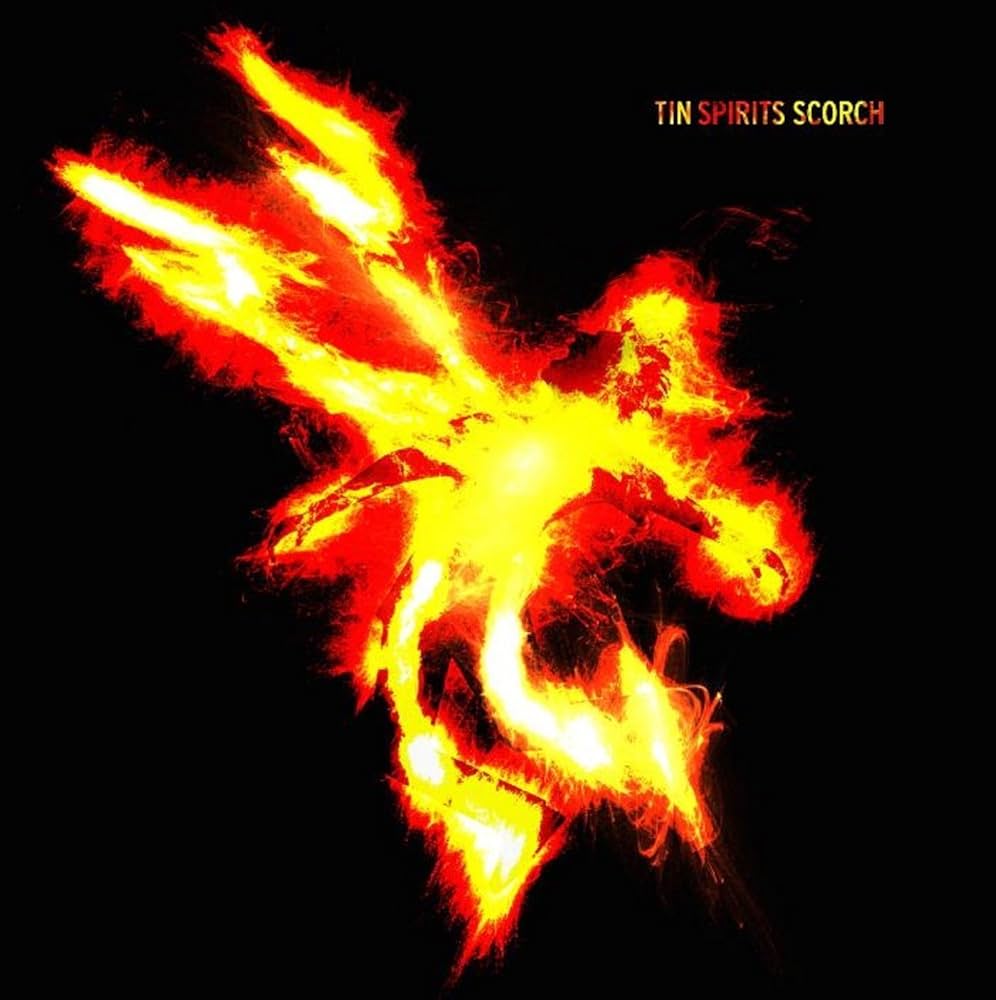
It’s also the ten-year anniversary of the genius Scorch by the Tin Spirits. A favorite album. Also, ten years ago, appeared the brilliant Demon by Gazpacho and Anathema’s mediocre to good Distant Satellites.
But, Holy Moses, it’s not just about Tin Spirits. If we go back to the twentieth anniversary of releases, 2004, we get to The Pineapple Thief, Variations on a Dream; Glass Hammer’s Shadowlands; Proto-Kaw, Before Came After; The Tangent, The World We Drive Through; Ayreon, The Human Equation; and Marillion, Marbles. Sheesh, what else do you want?
Carl: Full and necessary confession: 2024 turned out to be year in which I listened to little new prog rock, or rock of any kind. Not for any lack of new and worthy rock music, but 2024 also turned out to be the year in which I fell quite a ways down The Vinyl Rabbit Hole. I’ll likely say more about that in a separate post on my favorite jazz of 2024, but suffice to say that I’ve been haunting various thrift and record stores.
My most listened album of the year was released 30 years ago: Seal’s second album (1994), titled, inconveniently enough, Seal—just like his 1991 debut. A deluxe edition was released, with a remastered version of the album (fantastic), as well as alternative versions of the songs (also wonderful). I listened to this album countless times when it first came out, and I have never tired of it (or of his first or third, titled Human Being). Why has it resonated so strongly with me? I’m not entirely sure, but for me it is a perfect pop/rock album, and it sits squarely in the middle of a trio of albums that I continue to think is one of the finest three-in-a-row rock/pop album families you’ll ever hear.
I enjoyed the new albums by Frost* and Pineapple Thief and if I listened more closely, I’m confident that I would really like them. Both bands have consistently produced accessible, intelligent prog rock of the highest order, so I plan to revisit them in the weeks to come.
Caligula’s Horse’s Charcoal Grace is mysteriously but aptly titled, as the music has a dusky, burnt quality that also shines with many moments of delicate beauty. This Aussie band has been a longtime favorite, and this album adds to a discography rich with ridiculous chops and vocals at the service of exquisitely crafted songs. A keeper.
Keep Me Fed by The Warning, the talented sister trio out of Mexico, is (as they say) a banger. Or a series of bangers, the sort of swaggering, catchy hard rock—with sublime harmonies—that has been sorely missed in recent years. For my money, I prefer their live versions a bit more; they are dynamic performers whose young ages (20 to 25) defy (even bely) the band’s evident maturity and exuberant zest.
Speaking of all female bands, a somewhat guilty pleasure this year has been watching videos of the mind-melting Japanese metal band Lovebites. They have been compared to Iron Maiden and similar metal bands, which makes it all the more strange as I have never cared that particular genre. All five of these ladies are virtuosos, and Miyako Watanabe, one of the two guitarists, was a classical pianist until her late teens, when she picked up electric guitar for the first time. The live album Memorial For The Warrior Souls (2024) and the studio album Judgment Day (2023) are unrelentingly fast, in-your-face, melodic, and—yes—tremendous fun. Check them out live on YouTube and prepare to be amazed.
Myles Kennedy might just be the hardest working and (by all accounts) nicest rocker out there today, and his third solo album The Art of Letting Go is classic Kennedy—powerful, assured, dynamic, moving—with some nice little twists. His is one of the finest rock voices of the past couple of decades, but his guitar playing and song writing are just as polished, varied, and inviting.
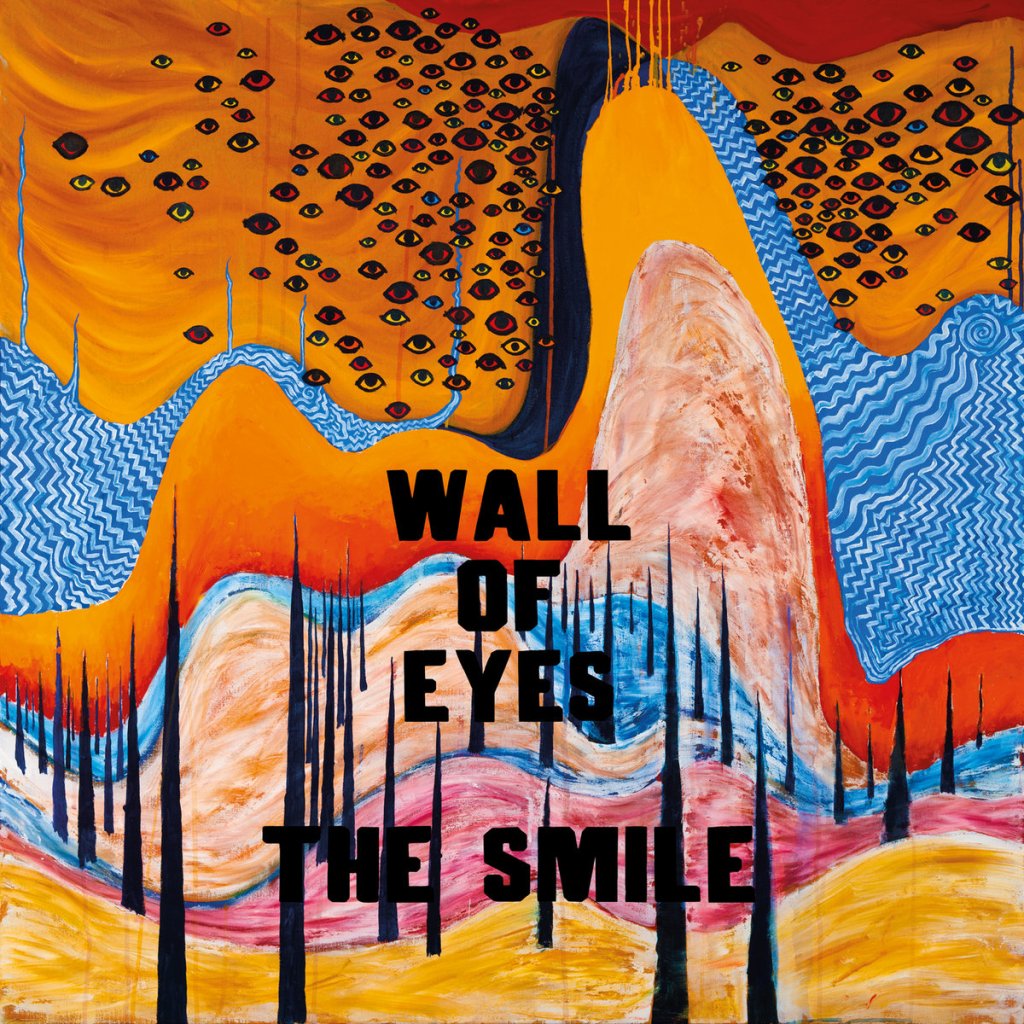
The Smile is like Radiohead if it didn’t have all of its members–and if it released albums more quickly. Which is what it is, with Thom Yorke (vocals, guitar, bass, keys) and Jonny Greenwood (guitar, bass, keys) joined by Tom Skinner (drums). Wall of Eyes (released in January) and Cutouts (same session, released in October) are quirky, dark, strangely fun, often weird, always melodic, and never, ever boring. Yorke’s voice is timeless and Greenwood’s playing, which is always so distinctive, is a revelation. And this album comes across to me as even more jazz influenced than their debut—but never in a direct, obvious way. Great stuff!
One of my favorite country artists, Dwight Yoakam, is back with his first new album in almost a decade. Brighter Days finds the Bakersfield legend firing on all cylinders, apparently reenergized by marriage and a young son. Dwight sounds half his age (68) and his band, no surprise, is tight and razor sharp. Every cut is worth the price, with the deceptively simple “I Spell Love” getting a nod from this fan.
Speaking of artists aging well, Van Morrison continues his remarkable output, with three albums: Beyond Words, New Arrangements and Duets, and Live at Orangefield. The first is all instrumental and is enjoyable, with some unexpected quirks. The second is a solid collection, featuring collaborations with Kurk Elling, Joss Stone, and Willie Nelson, all to good effect. But the live album, recorded a few years ago, is a revelation, captures a mid-70s Morrison at the top of his powers, featuring (as usual) a crack band and some other-worldly backing vocals. It rewards repeated listens and is a notable testament to Morrison’s brilliance as both a singer and songwriter.
Brad: Carl, excellent choices. I, too, like The Smile, and I, too, (thanks to you) listened to a lot of Seal II as well! I also bought Trevor Horn’s memoir, but I have yet to read it.
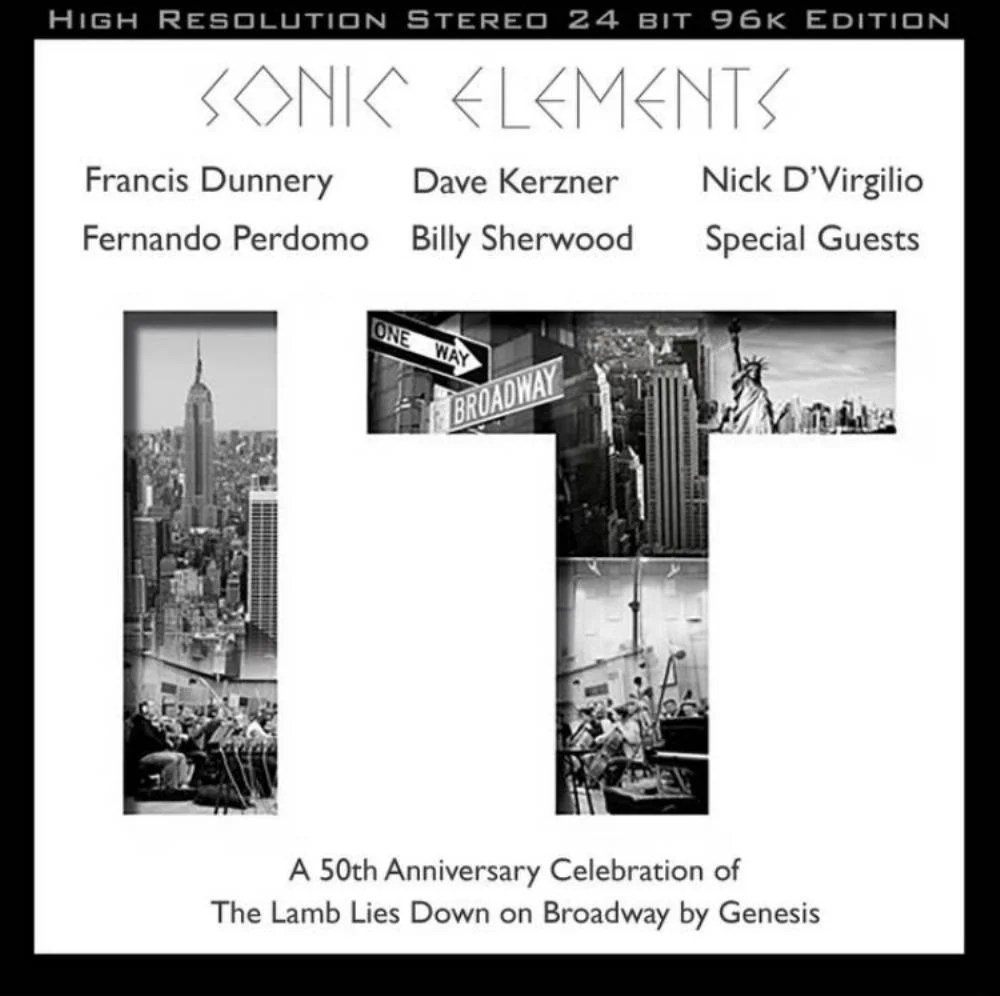
Well, folks, this pretty much wraps up 2024 for us. We have a lot to look forward to in 2025. It looks like The Cure will be releasing more music, there’s a new and final season of Stranger Things, and we’ll be celebrating the 50th anniversary of The Lamb Lies Down on Broadway by Genesis. Not only is there a 50th anniversary edition of The Lamb coming out, but the brilliant Dave Kerzner has re-recorded the entire album and is offering it as a 3-cd set plus hi-res download for only $49.99, plus shipping.
Big Big Train will be touring the U.S, and IZZ will be performing some stripped down shows–maybe even in Hillsdale!
I’m sure we’ll continue to give our hard-earned money to The Burning Shed and Rita Kay Drew’s The Band Wagon USA. I highly recommend supporting both of these truly excellent business enterprises. Amazingly enough, each is competitive with Amazon, even with overseas shipping costs.
Tad, Carl, Kevin, Erik, and I wish you all a Merry Christmas (remember, we’re only on day three of twelve), a Happy Hanukkah (remember, we’re also only on day three!), and Happy New Year, everyone!
ELEMENTAL MUSIC UNEARTHS BILL EVANS IN NORWAY FOR RSD BLACK FRIDAY RELEASE AS EXCLUSIVE TWO-LP SET ON NOV. 29
Master Pianist’s Energetic 1970 Performance at the Kongsberg Jazz Festival Arrives as a Deluxe CD Version on Dec. 6
Comprehensively Annotated Set Includes Interviews with Evans, Bassist Eddie Gomez and Drummer Marty Morell, and Norwegian Pianist Roy Hellvin; Reflections on Evans’ Art by Keyboardists Aaron Parks and Craig Taborn; and Notes by Evans Scholar Marc Myers
Elemental Music will release Bill Evans in Norway, a brilliant 1970 trio concert captured at the Kongsberg Jazz Festival, as an exclusive RSD Black Friday two-LP set on Nov. 29.
The 180-gram vinyl package, mastered by Matthew Lutthans at the Mastering Lab and pressed at Memphis Pressing, will be succeeded by a deluxe CD version on Dec. 6.
This latest Evans archival find by the team at Elemental Music, produced for release by the award-winning “Jazz Detective” Zev Feldman, is being issued in cooperation with the Bill Evans Estate. The package includes a rare interview with Evans conducted by Norwegian critic and impresario Randi Hultin at the Kongsberg Jazz Festival; new interviews with bassist Eddie Gomez and drummer Marty Morell, members of the pianist’s longest-lived trio, who supported him at the festival; an interview with Norwegian pianist Roy Hellvin, who was in the audience at the performance; reflections on Evans’ art by pianists Aaron Parks, Craig Taborn, and Eliane Elias; and concert photographs by Arthur Sand.
“Between Resonance Records and Elemental Music, I’ve had the good fortune of working with Evan Evans of the Bill Evans Estate for the past 14 years, and this will be my 12th production working with the family,” producer Feldman says. “These recordings come from the archives of Norway’s Kongsberg Jazz Festival, which was founded in 1964. It’s been a major breakthrough for us to have established contact with their team in 2023 and we’re very excited about this new relationship.”
Jak Kilby/Arena PAL
The Kongsberg appearance on June 26, 1970, found the Evans trio in especially stirring form. The pianist — who had recently begun to wean himself off a longtime addiction to heroin in a supervised methadone program — was especially sensitive to his audience’s tastes, and brought a fresh energy to his repertoire.
Myers notes, “Evans appreciated Norwegians’ reserve, modesty and politeness. He also was aware that their moods tended to be lugubrious in the winter, when there was less sunlight each day, and more gleeful in the summer, when the sun set around 11 p.m. While preparing the Kongsberg set list, he knew Norwegian concertgoers would have a deep connection to wistful songs such as ‘What Are You Doing the Rest of Your Life?,’ ‘Turn Out the Stars,’ and ‘Quiet Now.’ But as you listen, you’ll notice that the Bill Evans Trio took many of these traditionally somber songs at a more spirited clip.”
Evans himself said on the day after the date, “This is an excellent audience, and it’s weird to think that a little place like Kongsberg can hire musicians from all over the world just because they like jazz here. I admire the enthusiasm of the organizers, who do all of this without earning a penny for it….These days here in Kongsberg have really meant something to me. It’s a beautiful place, and I’ve been able to relax.”
The pianist’s rhythm section, both experienced hands at European touring, took their cues from the leader’s approach. Gomez says, “When we played in Kongsberg, we had just played at the Montreux Jazz Festival in Switzerland. The recording of that event was called Montreux II. And at that time Montreux was a very high-profile festival. Having passed that hurdle, we went on to Kongsberg, and that was a relief. I felt really relaxed, like, ‘Okay, this is good. It’s not like Montreux, there’s less pressure.’ And I think the outcome is a record that’s quite good.”
Adds Morell, “There’s nothing like playing jazz in Europe — Norway, Scandinavia. Bill was loved, and it was always a special treat, and an honor really, to play for those people, because he was appreciated so well. But then you go to Paris and London and other countries, and it was a similar vibe. And South America, too. Bill was revered all over the world.”
Hellvin says, “It was a great kick for me to hear the tape of this 1970 Bill Evans concert 54 years after being there. I can still remember the atmosphere created by the trio. The summer in Norway was unusually warm that year, but inside the Kongsberg cinema there was a special mood. I don’t think I’ve ever seen another audience so quiet and concentrated, especially during Bill’s rendition of Leonard Bernstein`s ‘Some Other Time.’ It really left us spellbound! To me, Evans was playing a little harder than usual, and with more attack on his up-tempo numbers.”
The players touched by Evans’ influence find the essence of the keyboardist’s genius expressed in a fresh way in the unique Kongsberg performance.
“I’ve come to realize that on Bill’s playing there is lyricism and sensitivity,” Parks says, “but also deep intelligence, and above all a great muscularity. There’s a tactile, grippy kind of thing to the way in which he approaches harmony. There’s a real vitality, and a sense of putting skin in the game, rhythmically. All of that can be felt on this Kongsberg concert.”
Taborn says, “The group playing in Kongsberg is really interesting for me, because I think the Marty Morell years are fascinating….With Morell, Bill is really on top a lot. He has a much brighter feel. He’s really pushing stuff. Even bringing the tempos up a little bit. This group is swinging along in a brighter way, which really brings out the more rhythmic side of Bill Evans.”
Summing up the impact of Evans’ enduring music, Elias says, “Bill Evans created his own musical universe in harmony, melody and rhythm and has influenced generations of musicians with his sound and conception of interplay. I consider him to be one of my important influences.”
A couple photos of my “music corner”, with one of my favorite jazz albums of any year.
I listen to a fair amount of rock music (as well as some country, folk, pop, electronica), but the majority of the time I listen to classical and jazz. I rarely buy new classical albums, as I have my favorites and very little modern classical appeals to me.
But I am constantly listening to new jazz releases, sometimes several a day. Yet, despite that, it seems as if I barely scratched the surface, as 2023 saw numerous exceptional releases. Here are my favorites.’But I am constantly listening to new jazz releases, sometimes several a day.
Yet, despite that, it seems as if I barely scratched the surface, as 2023 saw numerous exceptional releases. Here are my favorites.
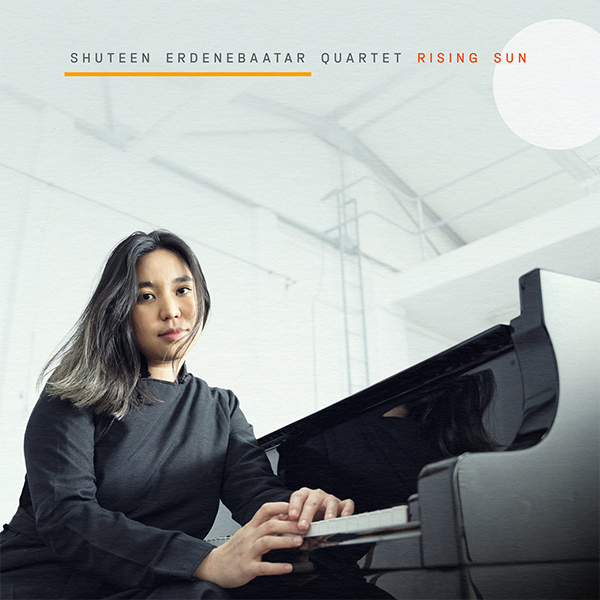
• Shuteen Erendenbaater—Rising Sun. Born in Mongolia, this 25-year-old composer, pianist and arranger has quietly (or so it appears to me) produced one of the finest debut albums in jazz in recent years. It is, in a word, impeccable. If that sounds too clinical, add lyrical, melodic, captivating, brilliant, and really, really great.
Erendenbaater certainly has “chops,” but what’s most impressive here is the songwriting and ensemble playing; she is obviously a mature and confident band leader. Anton Mangold, who plays soprano and alto saxophones and flute, is very much a co-star; his playing is perfectly suited to the songs and provides an edge and rawness that mixes sublimely with Erendenbaater’s elegant, beautiful lines. Yes, impeccable and impressive. The opening song, “In a Time Warp,” is a great place to start; here it is being performed live for Bavarian National Radio.
• Veronica Swift—Veronica Swift. It’s a real shame that the other Swift gets all the attention and fame, because this Swift has all the talent, versatility, and real swagger. Her 2019 album Confessions was top-notch and her 2021 Bitter Earth was brilliant and stunning. This self-titled album is eclectic, sophisticated, cocky, wild, and often startling; while not as poignant or emotionally wrenching as the edgy Bitter Earth, this is a chance for Swift to have some fun and to show that she can sing—well, let’s see—jazz (of course), rock, hard rock, pop, punk, R&B, Broadway, opera, and whatever else.
In fact, the idea behind the album is to rework songs in a style far removed from their original character. So, for example, the raw (okay, vulgar) Nine Inch Nails song “Closer” gets turned into a (PG-rated) face-melting funk/R&B tune with a scorching section of scatting (Swift is the finest scat singer around today and I think she rivals the great, including Ella and Mel Tormé). The Broadway tune “I Am What I Am” is reworked into a swinging jazz song that also features scatting—including a minutes of so of Swift scatting Bach. A favorite of mine is “Don’t Rain on My Parade”, from the 1964 musical Funny Girl and famously performed by a young Barbra Streisand, which Swift morphs into a Green Day-ish punk tune that is both smirky and joyous.
The presence of Freddie Mercury can be felt throughout, as two songs are Queen hits—”The Show Must Go On” and “Keep Yourself Alive”—reimagined, respectively, as a bossa nova-meets-Tin Alley tune and a bombastic blues number. Mercury would amused, I think, and impressed. I know that I am.
• Espen Ericksen Trio and Andy Shepperd—As Good As It Gets. The 2018 collaboration of the stellar Norwegian jazz trio and UK sax giant Andy Sheppard, titled Perfectly Unhappy, was a gorgeous, haunting work. This new release continues the Scandinavian-meets-Britain brilliance, with a strong fire underneath the inherent melancholy. In many ways, this reminds me of the great Keith Jarrett European group with Jan Garbarek: the shimmering piano work undergirds the longing saxophone journeys, everything propelled by a certain leisurely restlessness that is distinctly Nordic in tone and British in character.
• Benjamin Lackner—Last Decade. The legendary label ECM is both quite eclectic and yet almost immediately identifiable in terms of sound and aesthetic. The Germain-American pianist Lackner, joined by the fine Norwegian trumpet player Mathias Eick, has created a quintessential ECM album: slightly dark and pensive, perfectly played and with lots of space, featuring melodies that unfold with calm sureness. Lackner and Eick converse with attentive respect, like old friends discussing the mysteries of life, the songs expanding like sunlight slowing breaking through clouds, with moments of thoughtful intensity. One of the most beautiful albums of the year.
• Joe Locke—Makram. The vibraphonist Locke has long established himself as one of the finest players around. I’ve enjoyed many of his albums, but this is surely my favorite. The compositions are consistently great, the playing is the same, and the production is 10/10; the detail in each tune is impressive and captures the richness of the playing. A reader on Locke’s Bandcamp page says that the album “is almost overwhelming in its multitude of colors, moods and sheer energy. The joy of playing music on a very high level with virtuosic musical excursions by all musicians of this coherent band is exciting and just infectious.” Perfectly stated. A underrated jazz gem for 2023.
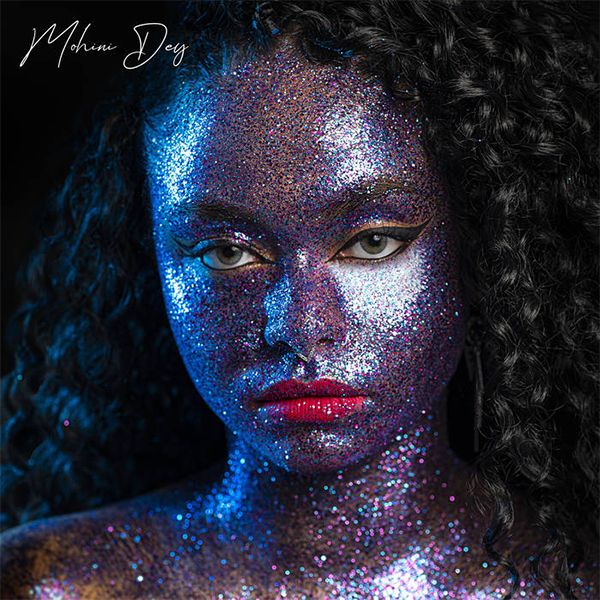
• Mohini Dey—Mohini Day. The Indian bass virtuoso, now in her late twenties, has been performing professionally since the age of 10. Little wonder: her technique, feel, playing, and musicality are simply stunning. She has played with a wide range of jazz, fusion, rock, funk, and world music groups, and seems to absorb and produce ideas and music like most people breathe air. Her debut album is, well, quite stunning. There is (of course) jazz, fusion, rock, funk, and world music. There is lots of energy (this is not background music); there are really good songs—this isn’t just a jam album. And the guest artists are of the highest order with, for example, Simon Phillips on drums and Guthrie Govan on guitar. There isn’t a dull or ordinary moment to be found.
Also recommended:
• Kurt Rosenwinkel—Undercover (Live at the Village Vanguard)
• Tingvall Trio—Birds
• Emil Brandqvist Trio—Layers of Life
• Joey Alexander—Continuance
• Yussef Dayes—Black Classical Music
• Jeremy Pelt—The Art of Intimacy, Vol 2: His Muse
• Walter Smith III—return to casual
• Kurt Elling and Charlie Hunter—SuperBlue: The Iridescent Spree
• Pat Metheny—Dream Box
• Affinity Trio—Hindsight
• Eric Alexander—A New Beginning: Alto Saxophone with Strings
Record producer Zev Feldman hasn’t slowed down one bit since we checked in with him about this time last year. For this year’s Record Store Day (Saturday, April 22nd), Feldman’s fingerprints are on no fewer than six releases of consistently excellent archival jazz — on four different labels, no less! All will be available on LP in limited quantities only at participating stores, beginning on RSD. CD and digital release dates vary; purchase links are included in the titles below.
Three of these releases come from the vaults of Baltimore’s Left Bank Jazz Society, which sponsored concerts by a multitude of great musicians for 50 years starting in 1964; two of them are the latest in a series from Cory Weeds’ Vancouver-based Reel to Real Recordings. OnBish at the Bank: Live in Baltimore, pianist Walter Bishop Jr. leads a quartet of first-class players — including saxophonist/flutist Harold Vick, bassist Lou McIntosh and drummer Dick Berk — through sets from 1966 & 1967 marked by thrillingly extroverted, thoroughly satisfying interplay. Confident and crisp, Bishop and his bunch leave a distinctive, sparkling mark on standards, blues and a hefty chunk of Miles Davis’ repertoire, based in classic bebop stylings but stretching the idiom to a John-Coltrane-tinged probing of “Willow Weep for Me” (complete with soprano sax).
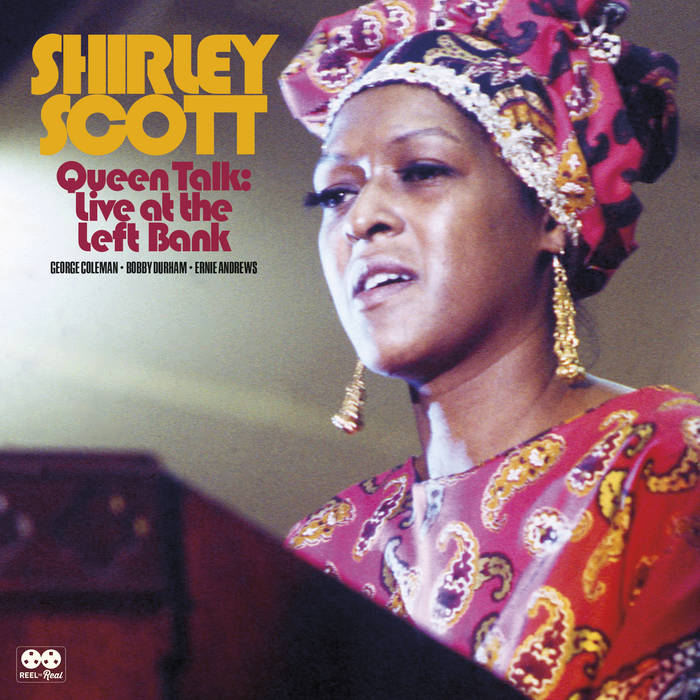
If Bishop’s music sparkles, organist Shirley Scott’s Queen Talk: Live at the Left Bank positively sizzles! Playing a classic Hammond B-3 (and providing her own bass lines on foot pedals) for this 1972 date, Scott, backed by George Coleman on tenor sax and Kenny Dorham on drums, leaps out of the gate ablaze on Coltrane’s “Impressions”, lays down smoky grooves that ground the contemporary hits “Never Can Say Goodbye” and “By the Time I Get To Phoenix”, and steps out in high style for the standards “Witchcraft” and “Like Someone in Love”. And when vocalist Ernie Andrews joins the party towards the end, full-fledged testifying breaks out and the blues prevail.
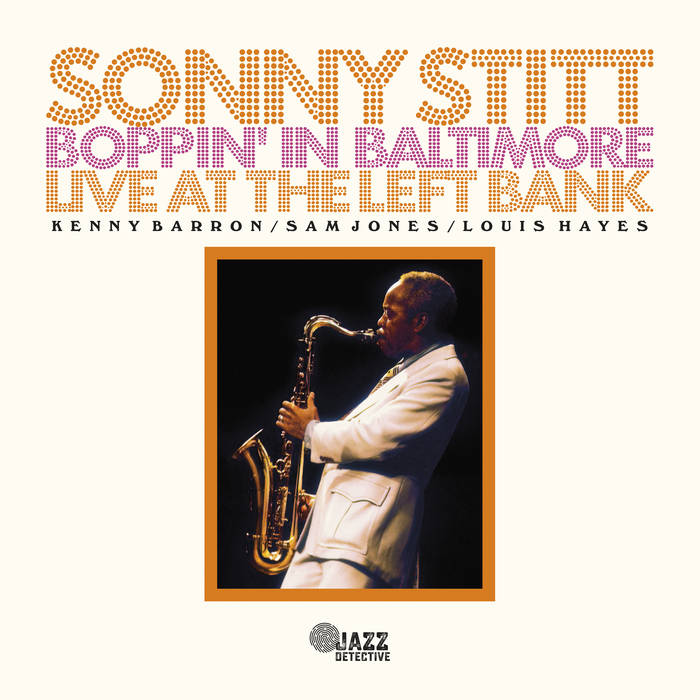
The third Jazz Society show, Sonny Stitt’s Boppin’ in Baltimore:Live at the Left Bank, is being released through Feldman’s new Deep Digs Music Group, on his fledgling Jazz Detective label. A giant on both alto and tenor sax, Stitt took the legacy of Charlie Parker to new heights of innovative expression; for this 1973 set, he brings a sweet, dancing touch to ballads “Lover Man” and “Stella By Starlight”, digs into the challenging changes of “Star Eyes” and “They Can’t Take That Away from Me” and turbocharges multiple 12-bar hard bop workouts. The veteran rhythm section of Kenny Barron on piano, Sam Jones on bass, Louis Hayes on drums meets the challenge of keeping up with Stitt with energy to spare, prodding his creativity onward and upward while asserting a presence all their own. Exhilarating stuff!
The other Jazz Detective release, Blue Room:The 1979 VARA Studio Sessions in Holland, provides an evocative distillation of the magic trumpeter/singer Chet Baker could conjure, taken from two Dutch studio sessions. Given room to explore on Wayne Shorter’s bossa nova “Beautiful Black Eyes” and the title ballad, Baker’s tone is rich and his improv work a thing of genuine beauty; his dashing up-tempo takes on “The Best Thing for You” and “That Old Devil Moon” build delightful momentum; and his vocals on “Oh You Crazy Moon” and “Candy” are finely shaded, with pensively inventive scat episodes. A variety of players provide empathetic backing; Phil Markowitz’s interactive piano and Jean-Louis Rassinfosse’s sturdy bass stand out.
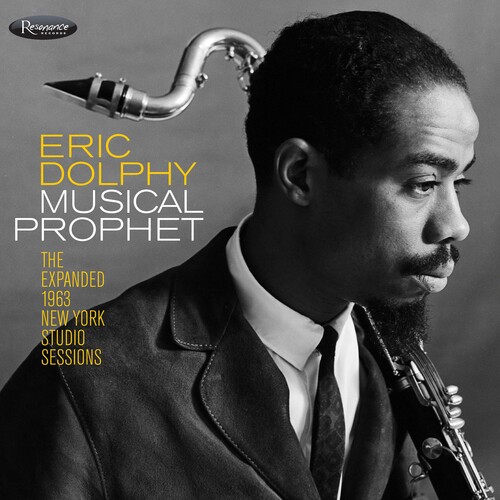
In lieu of a new release, Resonance Recordings (where Feldman made his initial impact and continues as Co-President) is offering a second LP edition of Eric Dolphy, Musical Prophet: The Expanded 1963 New York Studio Sessions. A fellow traveler with cutting-edge players such as Coltrane and bassist Charles Mingus, Dolphy brought a refined yet pungent new voice to the alto sax, flute and bass clarinet. This comprehensive set includes the solo albums Conversations and Iron Man (recorded by Jimi Hendrix’s future producer Alan Douglas with an all-star session group), plus outtakes and “A Personal Statement”, a flamboyant neoclassical piece by future smooth-jazz stalwart Bob James (?!?). Fusing primal hollers and sophisticated dissonance into a spicy musical gumbo, Dolphy was deprived of appropriate recognition by his early death; this multifaceted compilation lays out his unique contributions to jazz for all to hear.
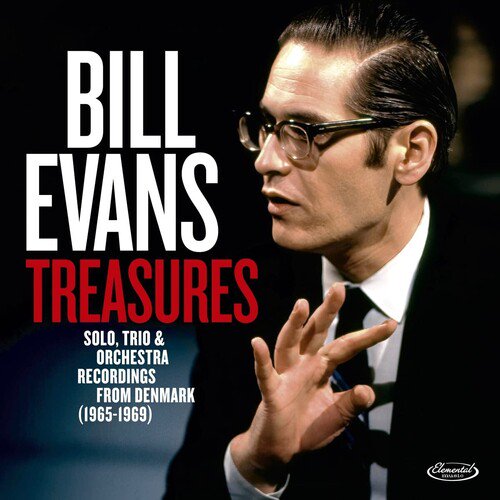
The final Feldman RSD release, Bill Evans’ Treasures: Solo, Trio & Orchestra Recordings from Denmark (1965-1969) on Elemental Music, was not yet available for review — but based on previous finds like 2020’s Live at Ronnie Scott’s and last year’s Morning Glory and Inner Spirit, it should be another winner. Kudos to Zev Feldman and to all involved for the cornucopia of great jazz from the past that makes every Record Store Day an eagerly anticipated event, and will enrich fans of the music for years to come.
Artemis, Royce Auditorium, St. Cecilia Music Center, Grand Rapids Michigan, February 16, 2023.
On a West Michigan night where snow and ice made travel a slippery business, Artemis cut right to the chase. Thanking those in attendance for braving the elements, pianist/founder Renee Rosnes briefly introduced her fellow players, then counted off the tricky opener “Galapagos”. Navigating the twists and turns of Rosnes’ post-bop tune, the sextet’s free-flowing intro and tight initial statement gave way to confident, creative solos by tenor saxophonist Nicole Glover, flutist Alexa Tarantino, trumpeter Ingrid Jensen, Rosnes and drummer Allison Miller, with bassist Noriko Ueda driving the supple, pulsing beat forward all the while. The applause after each solo and at the end of the tune was spontaneous and heartfelt; from where I sat, it felt like everyone in Royce Auditorium was in for a good night.
One secret of Artemis’ success would seem to be this: not only is every member a world-class player and leaders in their own right, but they absolutely delight in their ongoing collaboration. As they dug into the evening’s music (taken mostly from their upcoming second album for Blue Note Records), they frequently grinned with joy and cheered on each other — especially during the generously allotted solo spots. Glover lovingly developed core motifs into rich, flowing lines; her feature on Billy Strayhorn’s ballad “A Flower Is A Lovesome Thing” was the very model of an intense build to an expressive climax. Spending most of the night on alto sax, Tarantino brought a puckish sensibility to her solo moments, playing high-spirited rhythmic games while stretching tonality almost to the breaking point. And Jensen brought impressive range and imagination to bear on trumpet; her multifaceted arrangement of The Beatles’ “The Fool on the Hill” displayed the same dramatic juxtapositions of register and timbre and intricate melodic knots as her arresting lead moments.
A powerful front line like this demands a rhythm section that will step up to the challenge of egging them on — and again, the players on stage didn’t disappoint. Rosnes kept the band percolating with thrilling grooves under the tightly harmonized ensemble chorales and imaginative comping for solos, then unapologetically grabbed the spotlight during her own vibrant, gleeful features; Ueda’s imaginative propulsion flowered into joyous, brilliant melodic flights on Thelonious Monk’s “Hackensack” and a composition of her own; and Miller was always forceful, always elegant, always doing the unexpected — kaleidoscopically shifting to just the right accent, rhythm and color for the moment. Throughout the night, piano, bass and drums shouldered in alongside the horns and joined the conversation as equals, forging one marvelous moment after another.
Whether navigating the enthralling compositional hurdles of Miller’s “Bow and Arrow”, paying tribute to the late Burt Bacharach by debuting a fresh arrangement of his “What The World Needs Now” or stopping clocks (and hearts?) with Rosnes’ spare ballad “Balance of Time”, Artemis was in tune with each other and on point as an ensemble from beginning to end. Above all, they had serious fun — as good a definition of jazz as any — and, if the standing ovations that capped the night were any indication, so did the audience. Check out their first album (recorded with slightly different personnel) below, catch them live if you have the chance, and be on the lookout for a new album in May from this first-rate group!
WARNING: SPOILERS AHEAD!! Imagine if you will . . .
From silence, a seven note riff on piano, celeste and harpsichord, cycling over two repeated bass notes. Recorded so intimately you hear the piano’s damper pedals lift, as much a part of the cycle’s rhythm as the melodic tones.
About a minute and a half in, the cry of a saxophone. First responding to the keyboard cycles, then skirling continuously over them. Electric piano creeps in to fill the empty sonic crevices while the London Symphony’s strings pass above, dividing from a unison note into clustered washes. The blues are unmistakably evident from Pharaoh Sanders’ first note — and somehow the emotion he conveys is echoed in the ethereal, dissonant orchestral blanket.
The riff cycles, the sax and strings ebb; Sam Shepherd (aka Floating Points) steps forward with hesitant, mellow yet insistent synthesizers. Then, unexpectedly, Sanders vocalises — running scales, lip trilling, removing his horn from the equation and trusting us with his unadorned humanity, to gripping, gorgeous effect.
As he picks up the sax again, the mood and the eternal motif shift to match. Darker, thicker keys in a minor mode support grittier, more active improvisation and a stark synthesized squall by Shepherd, before subsiding to quiet counterpoint behind the unending riff.
Sanders leaps in once more — only to give way to a sustained, yearning solo cello solo that awakens the orchestra. The meditation that ensues is another moment of sheer beauty — gigantic, suspended unison lines that become a breathtaking mash-up of spiritual jazz and the English pastoral tradition, John Coltrane and Ralph Vaughan Williams locked in brotherly embrace.
The string chords pile up, mounting through consonance to dissonance — then collapse! In the ensuing silence, a quiet violin, answered by electric piano. Then, Sanders — this time so hushed, yet so gritty and breathy, over a fragile web of keyboard accents strung across the unstopping riff. A distant synth joins the dialog; Sanders cajoles it closer, helps it take more definite shape, then backs away, as Shepherd fires up free floating sequences across the stereo field and weaves a solo around them.
For the final time, Sanders breaks loose above the echoing, fading field of electronic sound, both conjuring up both the heady free jazz of his youth and the measured maturity of his long career into a memorable melodic volley. Shepherd returns to his subdued accents on synth, organ, electric piano; the riff patiently continues to cycle. Silence resumes its initial place in the piece, now dominant but not triumphant.
Until the riff stops! In its place, thick, ponderous organ chords that trail off into vibrato and echo. Total quiet; a slow-growing cloud of treated strings that burst into glittering fireworks, then subside into the final silence.
Fortunately, you don’t have to imagine this. Floating Points’ remarkable collaboration with Pharoah Sanders and the LSO is real. And moving. And my favorite album of the year to date. Listen to it below, then get it for yourself via Bandcamp.
It’s safe to say that I am the “jazz guy” here as I listen to jazz in some form or another on a daily basis, especially while working (along with some favorite classical works).
And so my first 20 favorites of 2020 are jazz.
(The next 20, to be posted separately, are “everything else”, which includes prog, singer-songwriter, instrumental rock, and a bit of country.)
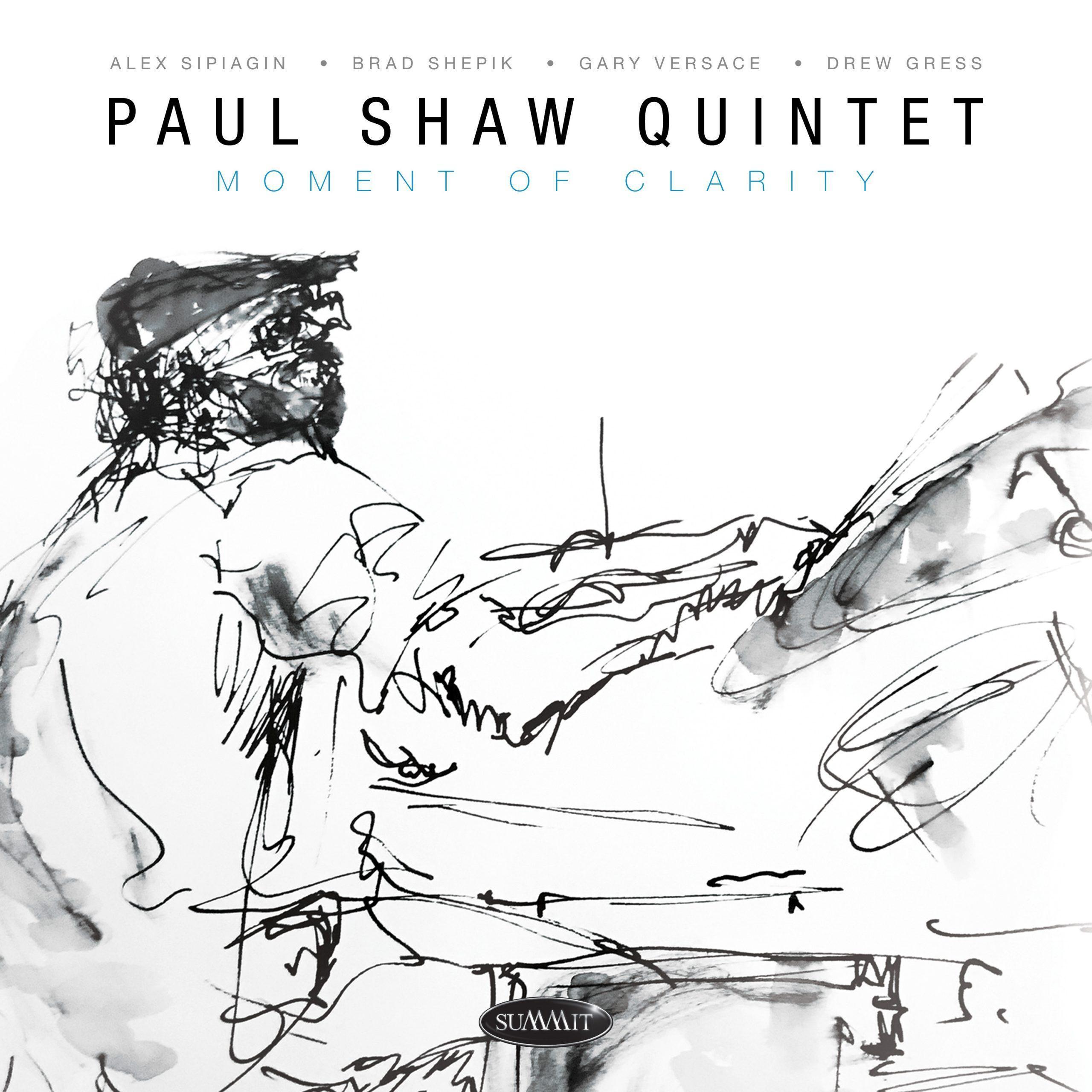
• “Moment of Clarity” by Paul Shaw Quintet: This beautiful album was my most played jazz release of 2020, a near perfect combo of interplay, melodic playing, and crisp production.
• “From This Place” by Pat Metheny: This epic album, which has a soundtrack quality to it, is one of my favorites of 2020 regardless of genre, with astounding playing at the service of deeply engaging songs. A masterpiece, in my opinion.
[Scroll down a bit to click on page 2 of this article. . .]















 Spirit of Cecilia
You must be logged in to post a comment.