Tag Archives: Music

Spirit of Cecilia’s Best of 2024

Greetings, music lovers and readers of Spirit of Cecilia! 2024 is fast coming to a close, and the SoC crew would like to share their favorite albums of the year. There was a lot of great new music, terrific deluxe reissues, and releases from old favorites. Hopefully, our lists will lead to some albums you will love as well.

Brad: Tad, thanks for starting us off and inviting everyone to participate.  Always great to write with you!  I’ll just start with an alphabetical listing of my favorite releases of 2024:

  • “Dogs” by Pink Floyd, as done by Tim Bowness and Giancarlo Erra
  • Airbag, The Century of the Self
  • BBT, Flare on the Lens
  • BBT, The Likes of Us
  • Bruce Soord, Caught in the Hum
  • David Gilmour, Luck and Strange
  • Frost*, Life in the Wires
  • IZZ, Collapse the Wave
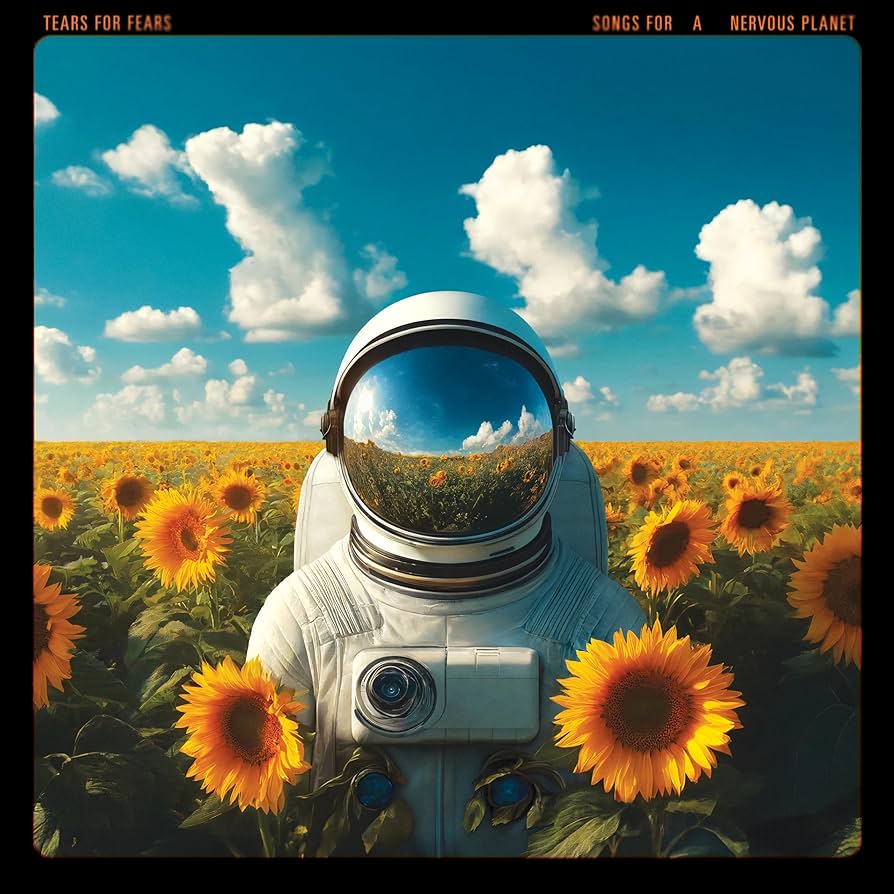
  • Tears for Fears, Songs for a Nervous Planet
  • The Bardic Depths, What We Really Like in Stories
  • The Cure, Songs of a Lost World
  • The Pineapple Thief, It Leads to This
  • The Pineapple Thief, Last to Run EP
  • The Tangent, To Follow Polaris
  • Tim Bowness, Powder Dry

And, I’m not even including vital re-releases such as the deluxe edition of Synchronicity by the Police; Fear of a Blank Planet by Porcupine Tree; Spectrum ‘97 by Phish; Lament by Ultravox; Bursting Out by Jethro Tull; or This Strange Engine by Marillion.

If I go just by my playlist numbers, I’d have to list “Dogs”, Frost*, IZZ, and, especially, The Cure.  In fact, since The Cure first arrived, I’ve listened to almost nothing else.  But, I went through such phases with Frost* and IZZ, too.  And, really, I can’t recommend the single of “Dogs” highly enough.  Bowness and Erra give it just the right beauty and creepiness that a proper Pink Floyd remake so desperately needs.

I must admit, though, I’m totally against the lyrical content of “Dogs.”  I can’t believe our entrepreneurs are so bloodthirsty as this.  Like or despise Elon Musk, for example, as you will, but he’s not bloodthirsty.  In fact, if anything, I think he’d hate to “be dragged down by the stone.”  And, he would hate to drag anyone else down by the stone.  He definitely wants to win, but he wants to win fairly, by the rules established by society (unless all of society is corrupt, but let’s hope that Pink Floyd isn’t so Marxian as this).  Maybe I’m wrong, however.  Perhaps, I’m deaf, dumb, and blind, and that I keep pretending. . .  Is this how Roger Waters saw his friendship/adversarial relationship with David Gilmour?  If so, so very sad.  For my money, give me Phish’s “Bouncing Around the Room” as the touchstone song dealing with entrepreneurship.

To be certain, though, I’m also a bit biased on the whole The Bardic Depths release.  Given that I wrote the lyrics for it, I’m quite taken with it.  Dave Bandanna did an amazing job in composing the music.  So brilliant, so beautiful, so mystical, so joyful.  Dave brings every song to life, and I’m always stunned to hear my own words given form and made manifest.

And, then, what’s not to love about the new David Gilmour?  In fact, when he sings with his daughter, Romany, I’m completely taken.  So much better than Dogs, co-written with Roger Waters..  Especially if you listen to something as glorious as “Between Two Points.”  I would give anything to have such a relationship with my daughter that I could write something so gorgeous with her.  Romany over Roger any day.

And, seriously, this brings me to all the incredible re-releases of 2024.  Oh, to be “Prince Caspian” and float upon the waves.  Oh, to be Prince Caspian.  Dang, Phish was simply brilliant when they were.

I also want to single out Airbag.  I don’t know their politics, but it strikes me that with this release, especially, they’re trying to combat conformism and cancel culture.  I could be wrong, but I’m willing to take a chance that this is a brilliant counter-cultural masterpiece.   One that shakes the conformists of the world to their very foundations.  And, who wouldn’t love that bass playing and interplay with the drums?  Genius.  Thank God for the non-conformists of the world.  Airbag sounds like Pink Floyd, in terms of legacy, but they are completely their own band.

If Airbag sounds anti-political, Robert Smith on the new Cure album, sounds confessional.  Bless me, Father, I, Robert Smith, have sinned, and something wicked this way comes.  Truly, the latest The Cure album is a masterpiece, a true sequel to Pornography and Disintegration.  My love and respect for Smith only grows with age.

If Airbag is countering the world and Smith is confessing for us all, then IZZ is proclaiming the inherent goodness of each one of us.  I’m not sure what the lyrics are all about on Collapse the Wave, but I feel that John Galgano and Laura Meade are asking us to look at our best selves.  Rather than be dour, they find wonder.  As far as I can tell, IZZ has been reading a lot of T.S. Eliot and a lot of John Paul II.

Tad: What a great list, Brad! Yours and mine overlap quite a bit, since we are often of like mind when it comes to music. Here is mine, based on how often I listened to each album:

8. Kyros – Mannequin

7. IZZ – Collapse the Wave

6. Jeff Johnson/Phil Keaggy – Spinning On a Cosmic Dime

5. Tears For Fears – Songs For a Nervous Planet

4. Airbag – The Century of the Self

3. Bardic Depths – What We Really Like In Stories

2. The Cure – Songs of a Lost World

1. Frost* – Life In the Wires

I’ve been a fan of Kyros’ music for several years now. They wed 80s sensibilities to 2020s expertise. Mannequin is another great collection of pop/prog.

Like you, I admire IZZ enormously. As far as I can tell, the lyrics to the title track are about quantum physics and faith. Who else but the Galgano brothers could pull off such an ambitious song? They definitely succeed.

Jeff Johnson and Phil Keaggy have collaborated several times before, and Spinning On a Cosmic Dime is the most lighthearted and fun of their albums. Johnson is a master of all keyboards – acoustic and electronic, while Keaggy is one of the finest guitarists alive today. When they get together, magic happens.

The Tears For Fears is primarily a live album, but the five new studio tracks are some of the best songs they’ve ever recorded.
You’ve already said everything I could want to say about the Airbag album. They continue to impress me with their social commentary, and their instrumental chops are outstanding. Their previous album, A Day At the Beach, is still my favorite, but The Century of Self is really, really satisfying.

The Bardic Depths’ new one is also a great album. Listening to it is like having a beer with C.S. Lewis, Tolkien, and the other Inklings. To my ears, it’s the most musically ambitious set of songs from TBD, and I have thoroughly enjoyed listening to it throughout 2024.

The Cure’s album came out of nowhere as far as I was concerned, and I approached it with some trepidation – there’s nothing worse than an old favorite trying to recapture the spark and failing miserably. Robert Smith et al. came up with a fantastic album that easily holds its own with their previous best. Amazing!

Frost*’s Life In the Wires is far and away the most-played album of 2024 for me. I have yet to tire of it, and every time I listen to it I find some new and delightful detail. Jem Godfrey sings all of the vocals on this one, and he is terrific. The beautiful melodies pouring out of my speakers are such a bountiful feast for my ears. The story is fascinating as well – a young man rebels against a world run by AI when he hears a pirate radio broadcast. After tracking it down to its source, it turns out to be an automated program. But then things get weird – he seems to sacrifice himself to become the new source of the radio broadcasts and spark an awakening of humanity. At least that’s how I read it. 

So that’s what I spent my time listening to this past year. I also loved the Ultravox Lament box set and the Talk box set by Yes. It’s nice to have this often overlooked album get the treatment it deserves. 

Brad: Yes, Tad, thanks for the reminder about Yes’s 30th anniversary edition of Talk.  The last of the Trevor Rabin-Yes era albums, it’s simply beautiful.  Clearly, the band was going for a progressive AOR sound at the time, but the production is so very clean.  I love the packaging as well for it.  Not overblown, but a solid release in terms of presentation.  Don’t get me wrong, I love big box sets like Lament by Ultravox, but sometimes the smaller packaging works just as well.  For me, Marillion’s and Jethro Tull’s releases–in terms of packaging–hit the sweet spot.  Basically small books that fit perfectly on a book shelf.

Thanks, too, for the story about the new Frost*.  I’ve listened to it numerous times, but I’d not figured out the lyrics.  What a great story!  Now, I’ll listen to it with different ears.

I’m so glad we agree on The Cure, on Airbag, and on Frost*.  Three essentials of the year.

As it turns out, The Cure also released their brand new album as a live release–Songs from a Live World–as well.  Gorgeous.  Seriously, what else can Robert Smith do?  He simply captures the mood of every era in which he finds himself.  And, I, for one, am so fortunate to be alive when Robert Smith is alive.

I would also note that 2024 is an important anniversary date.  Kevin McCormick’s gorgeous Squall came out in 1999, a mere 25 years ago!  Even the rather snobbish All-Music recognized the brilliance of Squall.  As far as I understand it, McCormick is working on a follow-up CD.

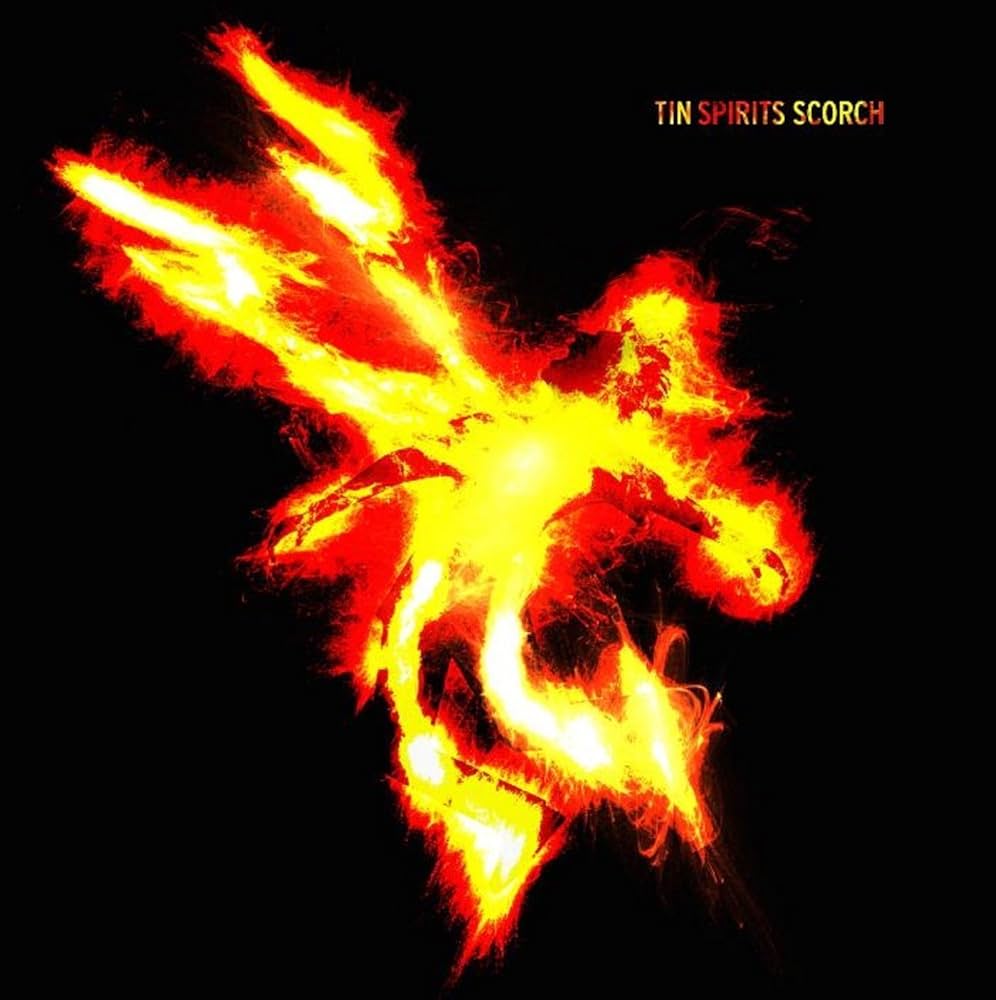
It’s also the ten-year anniversary of the genius Scorch by the Tin Spirits.  A favorite album.  Also, ten years ago, appeared the brilliant Demon by Gazpacho and Anathema’s mediocre to good Distant Satellites.  
But, Holy Moses, it’s not just about Tin Spirits.  If we go back to the twentieth anniversary of releases, 2004, we get to The Pineapple Thief, Variations on a Dream; Glass Hammer’s Shadowlands; Proto-Kaw, Before Came After; The Tangent, The World We Drive Through; Ayreon, The Human Equation; and Marillion, Marbles.  Sheesh, what else do you want?

Carl: Full and necessary confession: 2024 turned out to be year in which I listened to little new prog rock, or rock of any kind. Not for any lack of new and worthy rock music, but 2024 also turned out to be the year in which I fell quite a ways down The Vinyl Rabbit Hole. I’ll likely say more about that in a separate post on my favorite jazz of 2024, but suffice to say that I’ve been haunting various thrift and record stores. 

My most listened album of the year was released 30 years ago: Seal’s second album (1994), titled, inconveniently enough, Seal—just like his 1991 debut. A deluxe edition was released, with a remastered version of the album (fantastic), as well as alternative versions of the songs (also wonderful). I listened to this album countless times when it first came out, and I have never tired of it (or of his first or third, titled Human Being). Why has it resonated so strongly with me? I’m not entirely sure, but for me it is a perfect pop/rock album, and it sits squarely in the middle of a trio of albums that I continue to think is one of the finest three-in-a-row rock/pop album families you’ll ever hear. 

I enjoyed the new albums by Frost* and Pineapple Thief and if I listened more closely, I’m confident that I would really like them. Both bands have consistently produced accessible, intelligent prog rock of the highest order, so I plan to revisit them in the weeks to come. 

Caligula’s Horse’s Charcoal Grace is mysteriously but aptly titled, as the music has a dusky, burnt quality that also shines with many moments of delicate beauty. This Aussie band has been a longtime favorite, and this album adds to a discography rich with ridiculous chops and vocals at the service of exquisitely crafted songs. A keeper. 

Keep Me Fed by The Warning, the talented sister trio out of Mexico, is (as they say) a banger. Or a series of bangers, the sort of swaggering, catchy hard rock—with sublime harmonies—that has been sorely missed in recent years. For my money, I prefer their live versions a bit more; they are dynamic performers whose young ages (20 to 25) defy (even bely) the band’s evident maturity and exuberant zest. 

Speaking of all female bands, a somewhat guilty pleasure this year has been watching videos of the mind-melting Japanese metal band Lovebites. They have been compared to Iron Maiden and similar metal bands, which makes it all the more strange as I have never cared that particular genre. All five of these ladies are virtuosos, and Miyako Watanabe, one of the two guitarists, was a classical pianist until her late teens, when she picked up electric guitar for the first time. The live album Memorial For The Warrior Souls (2024) and the studio album Judgment Day (2023) are unrelentingly fast, in-your-face, melodic, and—yes—tremendous fun. Check them out live on YouTube and prepare to be amazed.

Myles Kennedy might just be the hardest working and (by all accounts) nicest rocker out there today, and his third solo album The Art of Letting Go is classic Kennedy—powerful, assured, dynamic, moving—with some nice little twists. His is one of the finest rock voices of the past couple of decades, but his guitar playing and song writing are just as polished, varied, and inviting. 
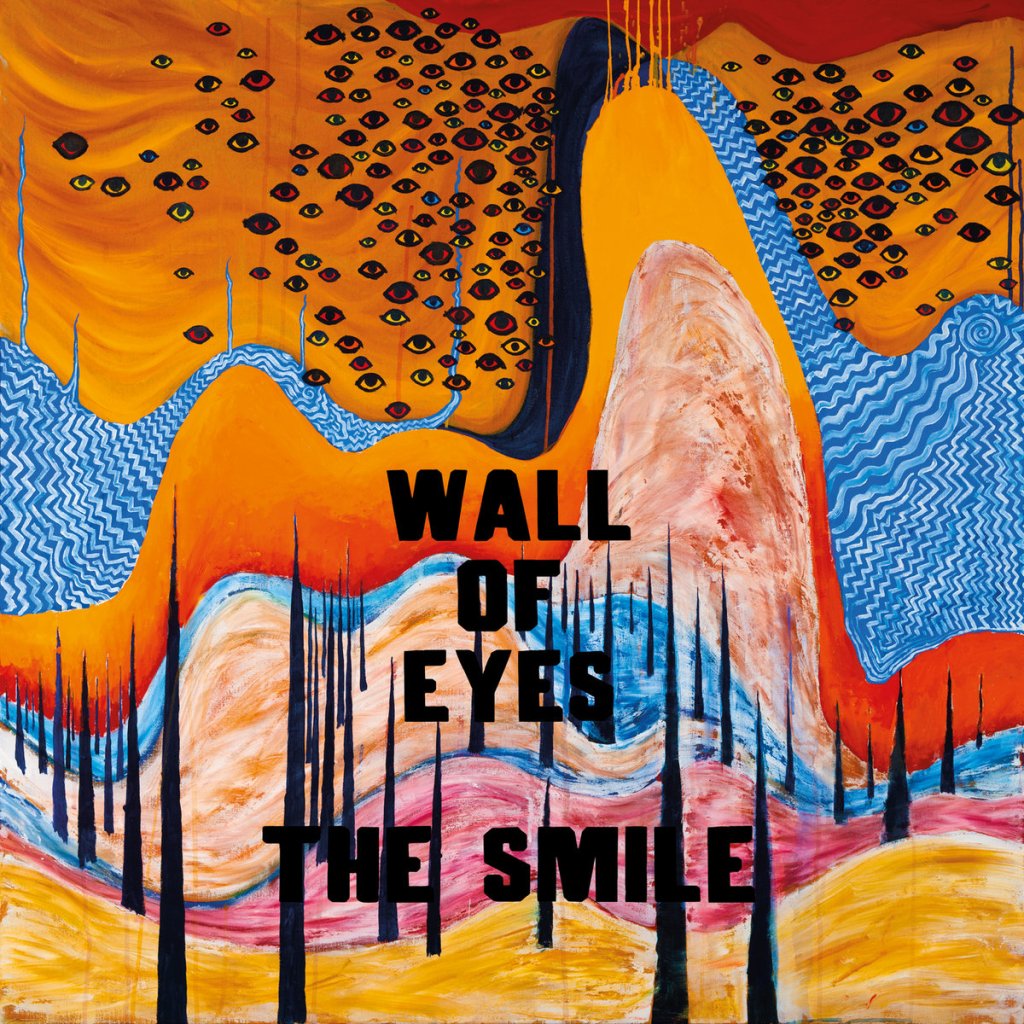
The Smile is like Radiohead if it didn’t have all of its members–and if it released albums more quickly. Which is what it is, with Thom Yorke (vocals, guitar, bass, keys) and Jonny Greenwood (guitar, bass, keys) joined by Tom Skinner (drums). Wall of Eyes (released in January) and Cutouts (same session, released in October) are quirky, dark, strangely fun, often weird, always melodic, and never, ever boring. Yorke’s voice is timeless and Greenwood’s playing, which is always so distinctive, is a revelation. And this album comes across to me as even more jazz influenced than their debut—but never in a direct, obvious way. Great stuff!

One of my favorite country artists, Dwight Yoakam, is back with his first new album in almost a decade. Brighter Days finds the Bakersfield legend firing on all cylinders, apparently reenergized by marriage and a young son. Dwight sounds half his age (68) and his band, no surprise, is tight and razor sharp. Every cut is worth the price, with the deceptively simple “I Spell Love” getting a nod from this fan. 

Speaking of artists aging well, Van Morrison continues his remarkable output, with three albums: Beyond Words, New Arrangements and Duets, and Live at Orangefield. The first is all instrumental and is enjoyable, with some unexpected quirks. The second is a solid collection, featuring collaborations with Kurk Elling, Joss Stone, and Willie Nelson, all to good effect. But the live album, recorded a few years ago, is a revelation, captures a mid-70s Morrison at the top of his powers, featuring (as usual) a crack band and some other-worldly backing vocals. It rewards repeated listens and is a notable testament to Morrison’s brilliance as both a singer and songwriter. 

Brad: Carl, excellent choices.  I, too, like The Smile, and I, too, (thanks to you) listened to a lot of Seal II as well!  I also bought Trevor Horn’s memoir, but I have yet to read it.

Well, folks, this pretty much wraps up 2024 for us.  We have a lot to look forward to in 2025.  It looks like The Cure will be releasing more music, there’s a new and final season of Stranger Things, and we’ll be celebrating the 50th anniversary of The Lamb Lies Down on Broadway by Genesis.  Not only is there a 50th anniversary edition of The Lamb coming out, but the brilliant Dave Kerzner has re-recorded the entire album and is offering it as a 3-cd set plus hi-res download for only $49.99, plus shipping.
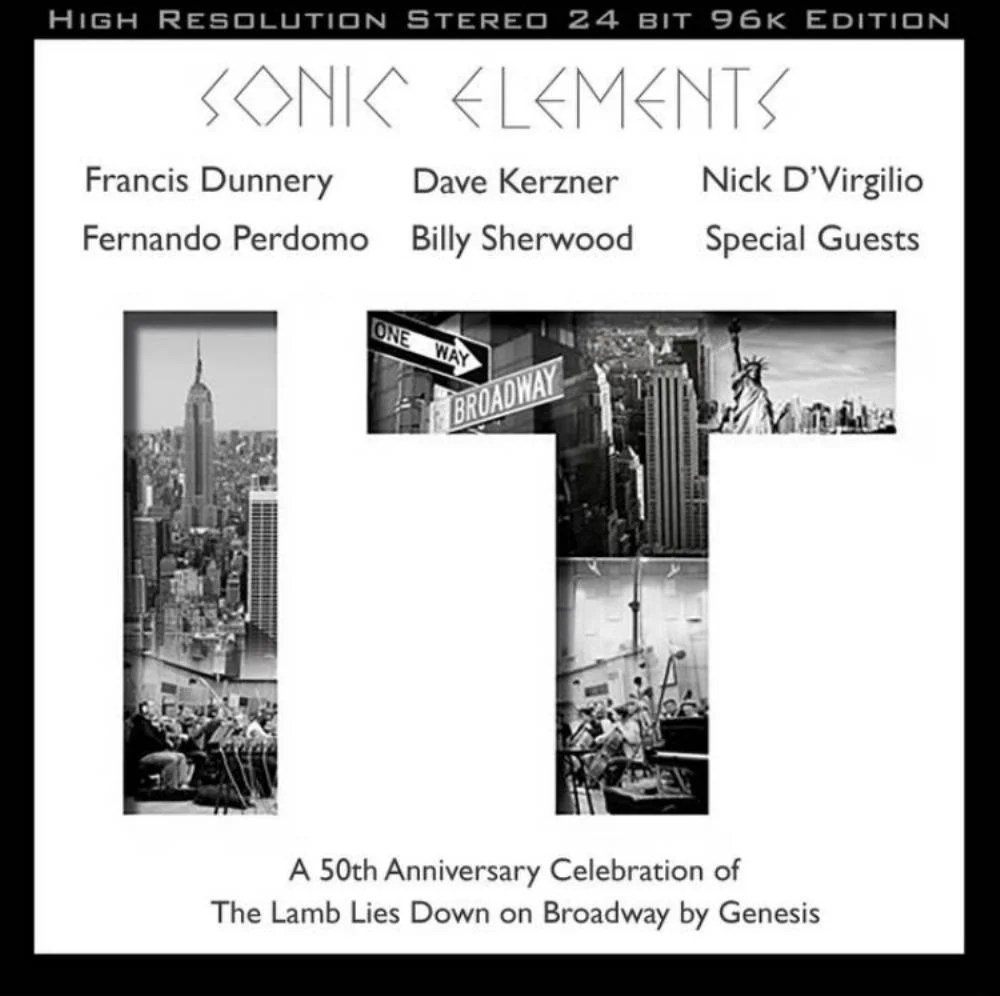
Big Big Train will be touring the U.S, and IZZ will be performing some stripped down shows–maybe even in Hillsdale!

I’m sure we’ll continue to give our hard-earned money to The Burning Shed and Rita Kay Drew’s The Band Wagon USA.  I highly recommend supporting both of these truly excellent business enterprises.  Amazingly enough, each is competitive with Amazon, even with overseas shipping costs.

Tad, Carl, Kevin, Erik, and I wish you all a Merry Christmas (remember, we’re only on day three of twelve), a Happy Hanukkah (remember, we’re also only on day three!), and Happy New Year, everyone!

World Party: Is It Too Late?

Talk about biting the hand that feeds
Sitting there watching as it bleeds
Try your best in the winter light
When it really should be summer night

Is it too late, baby? Too late now
Too late, baby? Too late now
Too late for you to realize
Everything could have been alright

Is it been to long? Yeah
Is it too long now
Is it too long for you to make the change?
Gotta love yourself to make a better day

I hate the way you don’t want to move
What’s the matter?
Money rules the groove now
What we’re doing here today
Won’t make the bad life go away

You gotta grow the beard
Find the doubt
And maybe you’ll work
Something out, hey

Is it too long baby? Too long now yeah
Too long for you to make the change
You got to love yourself
To make a better day, better day

Look out

And recognize your soul
And everything’s alright
You gotta see the whole
And everything’s alright

Come on give yourself a break
Everything’s alright
We’ll be breathing deep
And everything’s alright

Well, come on come on come on
Everything’s alright

In a dream I was crossing African plains
And elephant’s graveyard, a bone dry place
And I was wondering why there was no more rain
And in a pile of bones, I saw your face

Is it too late baby?
Is it too late now? Yeah

It’s aright
It’s alright
It’s alright

Source: Musixmatch

Songwriters: Karl Edmond De Vere Wallinger

Is It Too Late lyrics © Polygram Music Publishing Ltd. Gb

Bill Evans in Norway

ELEMENTAL MUSIC UNEARTHS BILL EVANS IN NORWAY FOR RSD BLACK FRIDAY RELEASE AS EXCLUSIVE
TWO-LP SET ON NOV. 29


Master Pianist’s Energetic 1970 Performance at the Kongsberg Jazz Festival Arrives as a Deluxe CD Version on Dec. 6
 
Comprehensively Annotated Set Includes Interviews with Evans, Bassist Eddie Gomez and Drummer Marty Morell, and Norwegian Pianist Roy Hellvin; Reflections on Evans’ Art by Keyboardists Aaron Parks and Craig Taborn; and Notes by Evans Scholar Marc Myers

Elemental Music will release Bill Evans in Norway, a brilliant 1970 trio concert captured at the Kongsberg Jazz Festival, as an exclusive RSD Black Friday two-LP set on Nov. 29.
 
The 180-gram vinyl package, mastered by Matthew Lutthans at the Mastering Lab and pressed at Memphis Pressing, will be succeeded by a deluxe CD version on Dec. 6.
 
This latest Evans archival find by the team at Elemental Music, produced for release by the award-winning “Jazz Detective” Zev Feldman, is being issued in cooperation with the Bill Evans Estate. The package includes a rare interview with Evans conducted by Norwegian critic and impresario Randi Hultin at the Kongsberg Jazz Festival; new interviews with bassist Eddie Gomez and drummer Marty Morell, members of the pianist’s longest-lived trio, who supported him at the festival; an interview with Norwegian pianist Roy Hellvin, who was in the audience at the performance; reflections on Evans’ art by pianists Aaron Parks, Craig Taborn, and Eliane Elias; and concert photographs by Arthur Sand.
 
“Between Resonance Records and Elemental Music, I’ve had the good fortune of working with Evan Evans of the Bill Evans Estate for the past 14 years, and this will be my 12th production working with the family,” producer Feldman says. “These recordings come from the archives of Norway’s Kongsberg Jazz Festival, which was founded in 1964. It’s been a major breakthrough for us to have established contact with their team in 2023 and we’re very excited about this new relationship.”


Jak Kilby/Arena PAL

The Kongsberg appearance on June 26, 1970, found the Evans trio in especially stirring form. The pianist — who had recently begun to wean himself off a longtime addiction to heroin in a supervised methadone program — was especially sensitive to his audience’s tastes, and brought a fresh energy to his repertoire.
 
Myers notes, “Evans appreciated Norwegians’ reserve, modesty and politeness. He also was aware that their moods tended to be lugubrious in the winter, when there was less sunlight each day, and more gleeful in the summer, when the sun set around 11 p.m. While preparing the Kongsberg set list, he knew Norwegian concertgoers would have a deep connection to wistful songs such as ‘What Are You Doing the Rest of Your Life?,’ ‘Turn Out the Stars,’ and ‘Quiet Now.’ But as you listen, you’ll notice that the Bill Evans Trio took many of these traditionally somber songs at a more spirited clip.”
 
Evans himself said on the day after the date, “This is an excellent audience, and it’s weird to think that a little place like Kongsberg can hire musicians from all over the world just because they like jazz here. I admire the enthusiasm of the organizers, who do all of this without earning a penny for it….These days here in Kongsberg have really meant something to me. It’s a beautiful place, and I’ve been able to relax.”

The pianist’s rhythm section, both experienced hands at European touring, took their cues from the leader’s approach. Gomez says, “When we played in Kongsberg, we had just played at the Montreux Jazz Festival in Switzerland. The recording of that event was called Montreux II. And at that time Montreux was a very high-profile festival. Having passed that hurdle, we went on to Kongsberg, and that was a relief. I felt really relaxed, like, ‘Okay, this is good. It’s not like Montreux, there’s less pressure.’ And I think the outcome is a record that’s quite good.”
 
Adds Morell, “There’s nothing like playing jazz in Europe — Norway, Scandinavia. Bill was loved, and it was always a special treat, and an honor really, to play for those people, because he was appreciated so well. But then you go to Paris and London and other countries, and it was a similar vibe. And South America, too. Bill was revered all over the world.”
 
Hellvin says, “It was a great kick for me to hear the tape of this 1970 Bill Evans concert 54 years after being there. I can still remember the atmosphere created by the trio. The summer in Norway was unusually warm that year, but inside the Kongsberg cinema there was a special mood. I don’t think I’ve ever seen another audience so quiet and concentrated, especially during Bill’s rendition of Leonard Bernstein`s ‘Some Other Time.’ It really left us spellbound! To me, Evans was playing a little harder than usual, and with more attack on his up-tempo numbers.”
 
The players touched by Evans’ influence find the essence of the keyboardist’s genius expressed in a fresh way in the unique Kongsberg performance.
 
“I’ve come to realize that on Bill’s playing there is lyricism and sensitivity,” Parks says, “but also deep intelligence, and above all a great muscularity. There’s a tactile, grippy kind of thing to the way in which he approaches harmony. There’s a real vitality, and a sense of putting skin in the game, rhythmically. All of that can be felt on this Kongsberg concert.”

Taborn says, “The group playing in Kongsberg is really interesting for me, because I think the Marty Morell years are fascinating….With Morell, Bill is really on top a lot. He has a much brighter feel. He’s really pushing stuff. Even bringing the tempos up a little bit. This group is swinging along in a brighter way, which really brings out the more rhythmic side of Bill Evans.”

Summing up the impact of Evans’ enduring music, Elias says, “Bill Evans created his own musical universe in harmony, melody and rhythm and has influenced generations of musicians with his sound and conception of interplay.  I consider him to be one of my important influences.”

Listening to the Music the Machines Make

Music Machines

Book number 48 of 2024

The 80s are my favorite decade for music, when it seemed like all kinds of new styles were being created. In 1983, you could turn on the radio and hear hard rock, roots rock, soul, melodic pop, and electronic music all mixed together. My favorite genre from that era was (and is) synthpop, as epitomized by artists such as Depeche Mode, Gary Numan, Orchestral Maneuvers in the Dark, and Ultravox. Richard Evans has documented the birth and rise of electronic music from 1978 through 1983 in his massive tome (528 pages!), Listening to the Music the Machines Make. It’s a fascinating history of this primarily British musical movement.

Instead of relying exclusively on contemporary interviews of the artists, Evans went back to articles, reviews, and interviews that were published in the music press at the time the music was being released. He does have some recent interviews to support what his research uncovers, but for the most part he unearths reactions and thoughts of the artists when the music was fresh and new. This makes for an honest account that doesn’t rely on the memories of people who were creating this music more than 40 years ago.

Evans begins with describing the effect David Bowie had on British popular music when he unveiled his Ziggy Stardust persona on the BBC television show, Top of the Pops. Bowie’s innovation was to seem to look forward into the future to explain his music. This perspective, along with the availability of inexpensive synthesizers, opened the floodgates for a new wave of music. The short-lived punk movement added its manic energy and DIY aesthetic. All of these elements combined to create the perfect atmosphere in which to create music that was experimental, yet accessible.

Like Evans, I date “The 80s” from about 1977 to 1987. In 1977, I bought the Ramones’ Leave Home album, Talking Heads ’77, The Cars’ debut, Wire’s Pink Flag, as well as many other new wave albums. It was clear to my adolescent ears that drastic changes were happening in music – changes that would challenge the laid-back music of artists like The Eagles or the arena rock of Journey and Foreigner for popularity. Very quickly, the old guard of pop/rock were being supplanted by a host of new, innovative artists.

For me, things didn’t really get interesting until 1980/81. The electronic music produced before then (with the exception of Gary Numan, who, unsurprisingly, was the first big selling synthpop artist) was very experimental and often crude. Cabaret Voltaire, Fad Gadget, and early Ultravox just weren’t very tuneful. However, beginning in 1981, this musical movement began to really shake up the British pop charts. Once Midge Ure joined Ultravox, they became a formidable hit machine. 1981 is also the year Spandau Ballet, Duran Duran, and Depeche Mode released early hits.

Evans obviously did exhaustive research to write this book; it is divided into three main sections: Revolution (1978 & 1979), Transition (1980 & 1981), and Mainstream (1982 & 1983). He also includes a couple of shorter bookend chapters: Inspiration 1977 and Reaction 1984 – 1993. He must have read every issue of New Musical Express, Smash Hits, Record Mirror, Flexidisc, Melody Maker, and ZigZag from 1977 through 1983! I, personally, would have gotten depressed, because one thing that comes across loud and clear from Evans’ comprehensive and meticulous research is the sheer pettiness and shallowness of the British music press. I could cite hundreds of examples, but here are two:

‘Landscape make my flesh crawl, put snakes in my stomach and make my bowels twitch’, wrote Sounds’ Mick Middles. (page 248)

‘The only recognisable feature of Duran Duran is the singer’s voice, otherwise they have no personality, no individuality, no quirks of style. I think this is what is known in some quarters as “good pop”.’ (page 257)

If there’s one common characteristic of practically every reviewer, it’s resentment. As soon as an artist gains popularity, the music media turn on them and try their best to tear them down. Poor Gary Numan, who was the first electronic artist to break big, comes in for a savaging the rest of his career whenever he released a new album. When Blancmange had some chart success, Ian Pye in Melody Maker wrote,

“The K-Tel answer to Simple Minds, the revolting Blancmange have found themselves a mould and of course a shape follows. Pink, soft, and powdery to taste, this will remind you of school dinners and other things too unpleasant to mention here.” (page 361)

Time and time again, the reviewers neglect to actually describe and critique the music, instead going for a clever putdown.

That said, it is entertaining to read what the contemporaneous reactions were to albums that are today considered classics. Duran Duran’s Rio is now counted as one of the essential albums of the 80s, but it was pretty much dismissed in 1981. Ultravox’s Rage In Eden garnered a little more respect, but not much. One group that the consensus seemed to get right was Depeche Mode. Their first album with Vince Clarke, Speak and Spell, was well-crafted but disposable pop, and their album after Clarke left, A Broken Frame, was fairly lightweight. However, by the time Alan Wilder was integrated into the group and they released Construction Time Again, they were recognized as a significant force to be reckoned with.

Even though I am a big fan of this era and style of music, I still learned many new facts about the various artists: for example, the history of The Human League/Heaven 17 personnel, and their beginnings before the Dare and Penthouse and Pavement albums. I also learned that Peter Saville used a color code to include messages on New Order’s Blue Monday‘s and Power, Corruption, and Lies‘ cover art. Fascinating stuff for music nerds like myself!

Evans is a very good writer; he takes what could have been a boring recitation of musical history and turns it into a very entertaining account of some interesting personalities. If you ever wondered what the backstory was to huge hits like The Human League’s Don’t You Want Me or Gary Numan’s Cars, then Listening to the Music the Machines Make is the perfect resource. Evans has spent untold hours revisiting decades-old British music publications and organized the material into an essential reference. This is a book I’ll be returning to often, and I appreciate all of the work he put into it.

If you are interested in actually listening to the music Evans documents in his book, there is a Spotify playlist for each of the book’s main sections. (Hey, this is the 21st century, right?) They contain practically every song mentioned. I had a blast listening to the songs while reading about them. You can access the playlists here.

Frost*: Life In The Wires Is Perfection

Frost* is set to release their fifth studio album on October 18, Life In The Wires, which follows the excellent Day and Age of 2021. Once again, Jem Godfrey is the prime mover, this time handling all of the lead vocals in addition to keyboards and songwriting. John Mitchell returns on guitars, with Nathan King on bass and Craig Blundell on drums. There are nearly ninety(!) minutes of music here, and it is all terrific. Not a single moment is filler.

As Godfrey explains,

“It’s actually a sort of continuation from Day and Age. The first track on the new album starts with the end of the last track from that album “Repeat to Fade,” where the static comes up and a voice says “Can you hear me?” I remember putting that in when we did Day and Age as a possible little hook for the future; a character somewhere out there in Day and Age land trying to be heard. What does he want to say? Can anybody hear him? Day and Age kind of sets up the world that this character lives in and Life in the Wires tells his story”.

The album chronicles the adventures of a young man, Naio, who lives in the near future, in a world dominated by AI. One night, he hears a voice coming out of the static on an old AM radio asking, “Can you hear me?” From that initial contact, Naio goes on a quest to find out who is the person behind the Livewire radio broadcasts. Meanwhile, the AI that runs the world, “The All-Seeing Eye”, is on Naio’s trail, trying to prevent him from connecting with the mysterious man on the radio:

You wanna take me down for hearing voices on my radio
But I have seen your way of life and, thank you, I don’t want to know
You feed the people food and fear to keep them all compliant
But I won’t play your game so now you’ll fight to keep me silent

Interspersed between tracks are nuggets of speech from Livewire Radio broadcaster: “Hey, this is Livewire, voice of the free. And tonight we’re taking calls. Heh! I’m just kidding… Hahahaha!”

That’s the storyline, so what about the music? I have to say, I haven’t been this blown away by an album in years. Day and Age was my favorite album of 2021, and Life In The Wires is even better. Jem Godfrey is the master of crafting attractive and heartfelt songs, and every song on Life In The Wires delivers. Every style is visited here: ballads, straightforward rock, very heavy rock, and, of course, prog. I have listened to the entire album at least two dozen times, and I keep finding new things to delight in.

The boys of Frost* are a mean biker gang in their off-hours. Frost Band photo by Will Ireland

“Evaporator” is an extended, upbeat, almost funky tune with a nice 80s vibe. “Absent Friends” is a gorgeous and delicate piano-based ballad that reminds me of classic Aqualung (the group, not the Tull album). “School (Introducing the All Seeing Eye)” is a blistering instrumental where Mitchell shows off his chops.

Everything reaches a climax with the final three tracks, “Moral and Consequence”, “Life In The Wires (Part 2)”, and “Starting Fires”. “Moral and Consequence” has one of the most irresistible hooks I’ve ever heard. At the end of its more than 8 minutes, I was still begging for more, until the opening chords of “Life In The Wires (Part 2)”. This track is almost 16 minutes of near-perfect prog perfection. It calls to mind the best of Abacab – era Genesis, but, to my ears, it is better produced than that classic album. The closer, “Starting Fires” is simply beautiful – a somber and sweet melody sung to some spare musical backing. It seems as if Naio has connected with Livewire, and they are going to start a resistance to the Eye:

We’re making waves
We’re starting fires
We can’t go back
to Paradise

We’re starting fires

2024 is coming to close, and so far, Life In The Wires is the Album of the Year for me. We’ve been blessed with some great music this year, in particular The Bardic Depths album, What We Really Like In Stories, but my gosh, Frost* has put together an album for the ages.

Here is the official video for “Moral and Consequence”:

Classic Radiohead: Prog, Alt, or Simply Creative Art Rock?

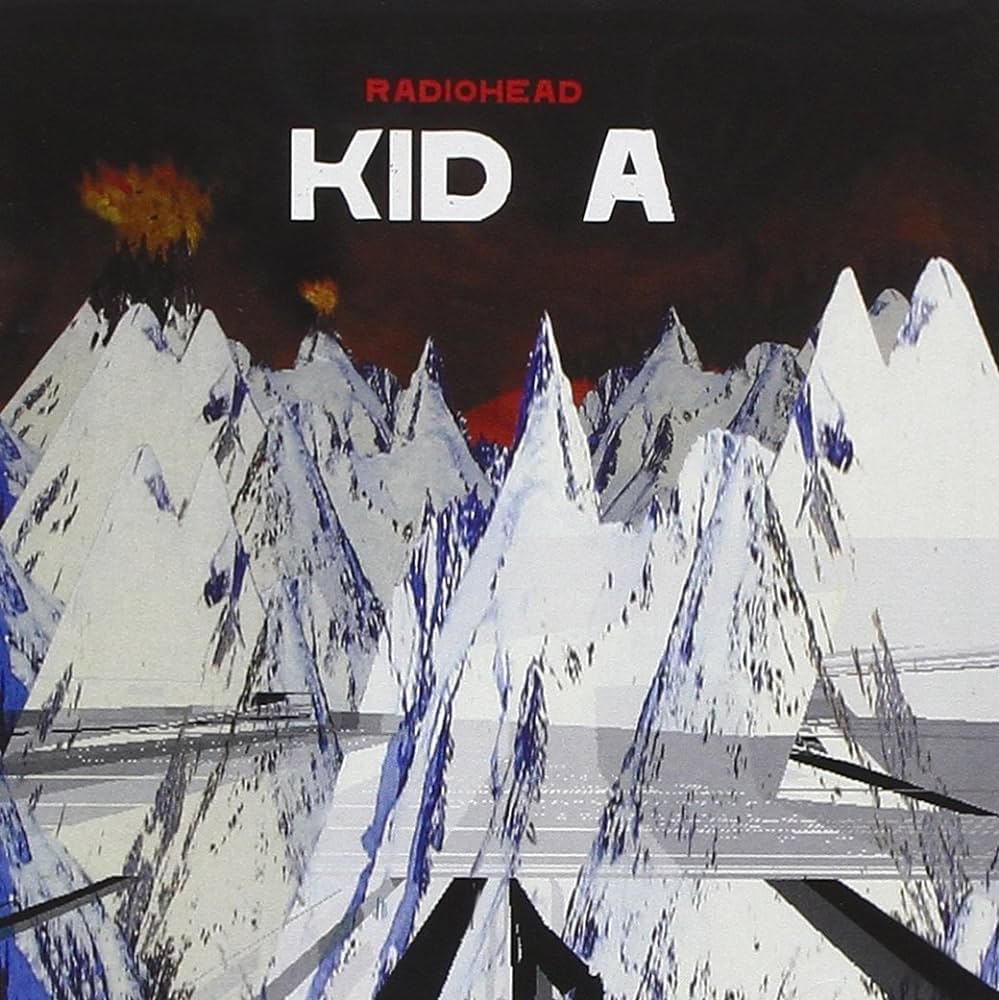
Dear Spirit of Cecilia readers, it’s time to dig into some prog/anti-prog/a-prog.  Is Radiohead prog or not?  I’m sure this question has been debated before.  Let’s just say, Radiohead did something unique and did something unique several times.  First, with Ok, Computer in 1997 and, then, again, in 2000 with Kid A.  The following dialogue reflects our thoughts about such innovation and creativity in the world.

Brad: Well, I’m happy to begin this conversation.  In the mid 1990s, I had heard the single, “Creep.”  Strangely, I was more familiar with the live Tears for Fears cover version than I was with Radiohead’s original, but I still knew the song pretty well.  To this day, I like the song, but I don’t love it.  And, if push comes to shove, I prefer the TFF version.  The unedited, R-rated Radiohead version of the song does nothing for me.

The mid-1990s were kind of wild for me, in terms of my profession as well as in my life.  I didn’t get married until 1998, when I was 30.  For part of the mid 1990s, then (single), I was working in Bloomington, Indiana, while working on my PHD (I loved Bloomington and my job there), and, for part of it, I was working in Helena, Montana (a city I loved, in a job that I hated; well, let me clarify.  I was working at the Montana Historical Society which I hated, but I was also teaching at Carroll College, which I loved).  

One day in Helena, I went to a local alternative shop (comics, music, etc.) to buy the latest issue of The Batman Chronicles.  On display, though, they had OK Computer, advertised as a “neo prog classic.”  Despite money being tight, I bought the album, went back to my apartment, and was suitably blown away by it.  Though I love Kid A more, I still have great fondness for Ok, Computer and always will.  Though “Karma Police” was the big single from the album, it’s the beginning of “Subterranean Homesick Alien” that I love the most.

From there, I went back and bought the first two Radiohead albums–Pablo Honey and The Bends.  I also bought the two eps–by special order–My Iron Lung and Airbag.  For what it’s worth, it was the two non-prog songs from the early albums–”Blowout” and “Street Spirit” that most intrigued me.

Tad: Brad, thanks for kickstarting this conversation about two albums that I like a lot. I got into Radiohead around the time of The Bends. I thought that record was wonderful, because I have always had a soft spot for Beatlesque power pop. I didn’t really enjoy OK Computer, because I felt that they had betrayed their pop roots! Of course, with the passage of time and greater perspective, I love it now (except for Fitter, Happier).

When Kid A was about to be released, I remember they put out Everything In Its Right Place as a teaser on Amazon, I think (this was years before YouTube, remember!). I listened to that one track obsessively – I couldn’t get enough of it! But when the entire album was finally released and I got a chance to listen to it, I was completely turned off. To my ears, they had completely abandoned melody and replaced it with abrasive noise. It was literally years before I would return to it and give it another chance.

I guess I have a love/hate relationship with Radiohead. I spent the past couple of days listening to Kid A and Amnesiac (along with the bonus tracks on their 2009 respective reissued editions). There are moments of incredible beauty on both albums: Everything In Its Right Place, Optimistic, Pyramid Song, Knives Out, come to mind. But Thom Yorke’s vocals grate on me in so many places. He sounds querulous and whiny; it’s as if he can’t find any joy in life at all. “Catch the mouse/crush its head/throw it in the pot”…. Is that a rant against meat eaters? I don’t know, but he sounds so desperate!

Also, Stanley Donwood’s artwork is extremely off putting to me. There is a condescension and disdain for normal people who are just trying to raise a family, earn an honest living, and not make waves. Maybe I’m reading too much into it, though. Tell me where I’m wrong, please!

Brad: Tad, thanks so much for your good thoughts.  You and I almost always agree, so it’s really interesting to me when we diverge from one another.  My views are almost completely opposite of yours, but I suppose timing has a lot to do with it.  I mentioned earlier that I came across OK Computer really by chance – seeing it in a display in an alternative shop in Helena, Montana, of all places.  

I was in my second year at Hillsdale when Kid A came out.  It was the fall semester, and I remember so clearly getting the album.  I not only played Kid A repeatedly, but I poured over the lyrics, the art, the booklet, anything that would offer even a smidgen more information about the band and the album.  I absolutely loved it when I discovered there was a second booklet, locked under the cd tray.

I played Kid A so much–especially in the background during office hours–that it became a conversation piece with my students and me.  So, the album is associated–for me at least–with extremely good memories.

And, I actually like Donwood’s artwork.  I even own two books of his art, one of which I have proudly displayed on our living room bookshelf!

Carl: I know, for a fact, that I cannot be objective at all about either album! And there is some freedom in admitting that.

I can relate quite well, Tad, to two of your remarks: the one about having a “love/hate relationship with Radiohead” and your observation that “there are moments of incredible beauty on both albums…” Amen, amen! 

For me, setting aside “Fitter, Happier,” which is either an act of genius or an act of cynical annoyance, I think OK Computer is one of the most beautiful, gut-wrenching albums ever recorded—regardless of genre. I don’t recall Radiohead being on my radar at all back in 1997, when I walked into CD World (R.I.P.) in Eugene, OR, and heard it on a listening station. 

I was immediately transfixed by the album, which I bought and then listened to hundreds (no exaggerations) of times over the next couple of years. I would listen to it often while driving to and from Portland, from the fall of 1997 to spring of 2000, for MTS classes. 

Oddly enough, the stark—but somewhat hopeful—lyrics seemed to go well with my studies, although I don’t know how to explain it. But, again, it was the sheer gorgeous quality of the album, with its amazing melodies, detailed arrangements, astonishing sonics, and the elastic voice of Thom Yorke. And the guitars! I soon bought both Pablo Honey and The Bends, and while the debut album was “okay,” I thought the sophomore release was a remarkable work, with several songs that rivaled what came along on OK Computer.

I mention the guitars because my first reaction to Kid A was simply, “What the hell is this?! Where are the guitars?!” It threw me for a loop so deep and big that I actually refused to listen to it for quite some time. For whatever reason, it did not connect with me at all. 

Oddly enough, it was through some acoustic/instrumental covers of Radiohead songs—by pianists including Christopher O’Riley, Brad Mehldau, and Eldar Djangirov—that I warmed up to the album. And while it will never, for me, equal its predecessor, I now recognize just how great it is. Once again, it’s the beauty of the music—in songs such as “Morning Bell”, “Everything In Its Right Place”, and “How To Disappear Completely”—that comes to the fore. 

Tad: Carl, you expressed my initial misgivings about Kid A so much better than I did. “Where are the guitars?” Yes!!! I also gained a greater appreciation for the songs on Kid A, composition-wise, through listening to Christopher O’Riley’s classical piano versions. I love the album now. As far as Donwood’s artwork, I just get such negativity from it, but that’s my personal reaction.

Looking back, it’s hard to understand these days just how influential Radiohead was. Everyone was compared to them. I don’t think there would be a Coldplay without Radiohead. Remember the British band Travis? They were a poppy, “safe” version of Radiohead. One of my favorite European groups is Kent, from Sweden. They were obviously heavily influenced by Radiohead. 

What is amazing to me is how Radiohead kept their audience, no matter how left-field and out-there their music got. I also appreciate how innovative they were in marketing themselves. Remember when they released In Rainbows online, for basically free? They anticipated streaming music years before it existed.

Brad, I wish I had the same experience you had of stumbling across OK Computer and incorporating Radiohead’s music into your life. I think I feel the same way about earlier artists such Roxy Music, Depeche Mode, and New Order. I can’t imagine not having them available, and their music means so much to me on an emotional level. Listening to them still transports me to different times of my life.

Kevin: The confluence of artists assembled in the conglomerate called Radiohead is remarkable.  It is rare for a musical group to emerge that gels together. It is yet rarer for one to collectively seek something new and striking, something visionary. It is the rarest of all to have one that can consistently break new territory in a way that feels always new.

In the summer of 1997, having just completed a recital and performer diploma in classical guitar, I began work on my second progressive rock album. I was seeking to break such new ground working on compositions, lyrics, instrumentation, arrangements. It was a joy and yet painful to continually do this work on my own while seeking sympathetic artists to this vision. In particular I was seeking a drummer who could capture the raw talent of my original co-conspiriator, my brother Colin.

Colin and I had literally grown together in our listening, writing, and performer during my latter school days at home. We didn’t need conversation to know when things worked—we just clicked. I didn’t realize just how rare this was until some years later when we did find a chance to regroup and perform again.

In 1997 we were thousands of miles apart and still living in the days when long-distance calls were as rare as they were expensive. But during one such rare call, I remember him mentioning that I had to get the new Radiohead album OK Computer. He knew my tastes. He knew my aversion to new music of the 90s—for the most part I found grunge to be over-blown and entitled. There were exceptions, but it all seemed unjustifiably angry and sulking and focused on screaming in the darkness because they couldn’t be bothered to look for the light switch.

OK Computer, he assured me, was “different. You have to give it a listen!”

The opening distorted guitar line of “Airbag” gripped my attention immediately.  It was melodic but angular, technically adept but rough at the edges, weirdly familiar yet strangely weird. One thing was abundantly clear—these guys had it. The playing was exciting, inventive, and in-the-pocket— except when the haunting character android made its presence felt—and then it was oddly off-kilter, but consistently the band worked its magic together, as a multiple pulsing organism.

The album is brilliant and it set a new standard for creativity in the popular music realm. I could write a book on this album alone. Their use of texture, tone, timing, timbre, text, and contrast appears to flow effortlessly from their collective creative pen. These skills fully come to the fore on OK Computer, where there is a loose narrative (dare I say “Concept”) to the album. But equally on Kid A the stops and starts within and between tracks, the intros and endings, the attentiveness to sonic space. Historically there are moments of brilliance throughout the progressive rock catalog, but here, in Radiohead, was something for a new millennium. Even the contrast between OK Computer and Kid A is extraordinary. 

Then there are the melodic and harmonic moments of sheer genius! The way the melodies weave from one section to another, the shift of harmonic focus from a single altered note, the blurring of lines between keys and major/minor constructions. You all know my fondness for Talk Talk’s latter work, which expresses through minimal chords and melodies and achieves artistic triumphs using very basic musical theorems combined with an incredible musical instinct. Radiohead uses maximalism in their approach and since it is a vision more of a collective than a single artist, the result is almost overwhelming to the senses.  After a good listen to either of the albums of this essay I literally have to give my ears a rest—it’s so intense.

And yet, listening back, while I still love the creativity, the craft, the brilliance, the technical adeptness, I have to agree with Tad. The dark vision and tone and word with no hint of redemption anywhere suffocates. It’s one thing to work with chiaroscuro, the renaissance artistic technique of using darkness to emphasize the light. Radiohead accels at contrast from a sonic standpoint. I just wish the texts and the vision equally offered an understanding of the beauty of life and not only its tensions. I love the experience of Radiohead’s extraordinary works of human imagination, but in the end I crave the light.

Brad: All right, friends and neighbors, this concludes our discussion of Radiohead–and not just Radiohead, but classic Radiohead–OK Computer and Kid A.  As is obvious, we don’t all agree, but we love one another!  Here’s hoping you love us as well.

As always, we recommend you buy from Burning Shed, our go-to online store: https://burningshed.com/product/search&sort=p.viewed&order=DESC&filter_tag=Radiohead

New Wave Prog: The Missing Sub-genre?

Admittedly, I might have given this way too much thought, but I wonder if there’s a historical sub-genre of music that we all mislabeled at the time.  The historical orthodoxy is that we went from prog to punk to new wave and post-punk and, then, by the mid 1990s, into third-wave prog. 

Could there have existed a third way, though, a melding of prog and new wave and post-punk?  As such, I think of albums by traditional prog groups such as Yes (Drama and, to a lesser extent, 90125), Genesis (Abacab), or Rush (Moving PicturesSignalsGrace Under Pressure, and, especially, Power Windows) that all benefitted greatly from new wave and post-punk.  

But, I can also think of a number of new wave bands that employed very serious prog elements such as Modern English (After the Snow), Tears for Fears (The HurtingSongs from the Big Chair), The Fixx (Reach the BeachPhantoms, and Walkabout), Ultravox (ViennaRage in Eden, and Lament), Thomas Dolby (The Flat Earth), New Order (Low-Life), XTC (Skylarking), Echo and the Bunnymen (Over the WallOcean Rain), Simple Minds (Sons and Fascination, Sister Feelings Call, and New Gold Dream), and Talk Talk (Colour of Spring).  One might also think of a band like B-Movie.

Maybe, just maybe, Yes and Thomas Dolby have far more in common than we thought.

And, if there was such a sub-genre of New Wave Prog, it would help us understand shoegaze (Cocteau Twins, My Bloody Valentine, Lush) in the late 1980s and early 1990s as well as bands such as Catherine Wheel and even early No-man and Porcupine Tree.

Just my two cents. . .

Pleasant activities that make one lose track of time.

BY RICHARD K. MUNRO

I think it important to have pastimes and hobbies. I enjoy reading, listening to baseball games on the radio, listening to music and studying languages. My sister has an expression “being lost in grammar land” by what she means doing language study and being completely engrossed in it.

I am currently listening to SPOTIFY (BRAHMS) in a few minutes I will be back in my easy chair reviewing languages and studying new ones. I review GERMAN, PORTUGUESE, SPANISH every day for about 10-15 minutes each then dedicate time to study ITALIAN, MODERN GREEK and SCOTTISH GAELIC. I primarily use DUOLINGO but also have dictionaries and Teach Yourself Books to read and study points of grammar and vocabulary. With Duolingo I am more active than merely reading because I have to LISTEN, to REPEAT, to WRITE and RESPOND. I usually do it after some morning reading. I sip on coffee or tea. I do my oral review first and then I go to my notebooks and I keep track of new vocabulary (often drawing pictures in color). English is always in pencil and the target language in a dark color. I use red for emphasis. Especially for Greek it is important to practice writing. My goal is to advance to read the New Testament and then Homer so I have years ahead of me. I already read Spanish and Portuguese poetry as well as Latin and I enjoy German art songs and Gaelic Orain Mora (big songs). When I am reading and studying languages while listening to classical music I am truly in another world. No commercials. No interruptions. No phone calls. I check any texts afterwards. I find it very satisfying and soothing. And of course if the spirit calls the end of the afternoon I may sing along or recite a poem. Some of the songs and poems I have known for forty or fifty years and of course have fond associations with people and places I have known.

Now I am listening to RESPIGHI. Just gorgeous.

Daily writing prompt
Which activities make you lose track of time?

Political Beats – Yes!!

Our founder, Brad Birzer, recently did a two-part episode of National Review’s music podcast, Political Beats. If you are not familiar, this podcast usually features a guest and a discussion of a particular band.
For this two-parter, Brad and the normal panel discuss the career of progressive rock giants Yes, album-by-album. I’ve conversed with Brad in a group chat about the episode, and he liked my comments enough to ask me to present them here. As such, here they are, unedited save for a few interjections.

First comment, after listening fully to Part 1 and a little bit of Part 2 (in italics, my additional interjections in brackets]:

Hi Brad – I just finished listening to the first Yes episode and have listened up through the discussion on GFTO in the second episode. I loved the discussion on TFTO, and I think “beautiful failure” is an apt description, although I would also add it was a necessary failure. They found their limits on that album because they tested those limits, and I think that allowed them to be more concise and focused with their next two albums. [Tales from Topographic Oceans was Yes’s most ambitious album, and to paraphrase what Jon Anderson said about it, it was the meeting of high ideals and low energy. It certainly has some brilliant music on it but also has a lot of mindless noodling. Most of the panel thought the first and last pieces of the album – The Revealing Science of God and Ritual, respectively – were the best pieces. For my money, it’s actually the second piece, The Remembering, which holds together best (although even it suffers a little from needless padding). On that note, I think the bass playing in that piece is brilliant, often subtle and understated (not often a Chris Squire trademark), and he says as much that he was proud of that in YesStories by Tim Morse]

I also liked the observation that at times on TFTO, they were fitting the art to the format instead of just letting it flow organically. That’s one reason I’m not as down on the digital formats as some are today, because it essentially removes such restraints an allows the artist to just create without having to adapt the art to the format. I think Gazpacho’s Night is a great example of that, as I just don’t think it would flow anywhere near as well if it had to be adapted to (and possibly compromised by) the LP format. [In line with the discussion above, I think a lot of the problem with TFTO was directly related to this observation. Multiple panelists stated this album could have been better with some editing, but such editing within the limitations of the LP format would have been much more difficult.]

I would have been a slightly dissenting voice in the GFTO discussion with regard to Awaken, which I think is pure, magical, utter freakin’ brilliance and even in a catalog that includes Close to the Edge, it’s my favorite Yes composition. The production, the dynamics of the piece, the playing, the shifts in mood … all of that adds up to me as just an incredible musical journey that leaves me satisfied every time I hear it, and yet wanting more of it at the same time. [This was my biggest dissent with the panel. Not that they disrespected Awaken, but they certainly didn’t see it the way I do. Progressive rock (particularly, symphonic progressive rock) was often described as the fusion of rock and classical music, and this piece more than any exemplifies that fusion in its best form to my ears. The tone and timbre of the instrumentation here (especially with the harp and the church organ) really give it a classical feel in a way that exceeds event hat of Close to the Edge. The crescendo that consumes the second half of the piece, beginning with a few quiet plucks of the harp by Anderson is brilliance, slowly, patiently building to a powerful conclusion. Give it another try. On the other hand, I loved that they all showed so much love to Parallels, my second favorite song on this album, which features incredible playing (and interplay) among Howe’s guitar, Squire’s bass, and Wakeman’s keyboards. I had a lot more to say about this album some years ago on Progarchy, that piece can be found here.]

Will let you know what I think of the rest of it when I finished. Really looking forward to the discussions of Drama and 90125.

Second Comment after listening to Part 2:

Finished the second episode now. Definitely enjoyed the discussion and agreed with a majority of the takes. After Magnification, the only Yes album that has interested me is Fly From Here: Return Trip because of the Drama connection. Drama, BTW, might be my favorite Roger Dean cover. I love the album, although I will admit that the overselling of “Yes” on Tempus Fugit wore on my after a while (but instrumentally, it’s an incredible song). [That’s about my only issue at all with Drama, which is a great album in its own right. I share the sentiments with others on the panel that wonder what might have been had that lineup continued.]

Thought the observation that some of the ideas on Tormato were good ideas poorly executed was a good one. My pick for that would by Onward, which I actually liked much better on Keys to Ascension when Howe brought in the nylon string guitar in place of the electric in the studio version. [Onward is one of many pieces by bands I love that seem to come off better live than in the studio, and Howe’s nylon string guitar on the KTA version is the reason why here. Gates of Delirium is another Yes piece l like better live than in the studio due to some production issues (although the Steven Wilson remaster seemed to fix most of those).]

As for Release Release, I’ve always preferred a cover by Shadow Gallery (from the tribute album Tales from Yesterday) to the original studio version, as it has the punch that the original was lacking. [That song just needed to rock more. While Howe was excellently versatile in many styles of guitar, he didn’t seem to have an affinity for the kind of bone-crunching power chords that song needed, or at least he saved that for Machine Messiah on the next album]

Like you and the rest of the panel, I was pretty disappointed with Big Generator, other than Shoot High Aim Low, it was pretty forgettable. Trivia note: I heard a Rabin interview where he stated that Love Will Find a Way was a song he had originally written for Stevie Nicks, but the rest of the band wanted to keep it for themselves. [Yeah, what a disappointment after 90125. On the other hand, I loved the discussion of 90125, and was happy that nobody on the panel was such a prog snob that they dismissed the album as other prog snobs are wont to do. Sure, it was a lot different from their previous work, but it was undoubtedly Yes, and it was the kind of reinvention that only a band like Yes could pull off in such a spectacular fashion.]

If you’re a Yes fan and haven’t listened to these this two-part episode, I strongly recommend you do so. You won’t be sorry!

Collapsing Waves: The Power of IZZ

Spirit of Cecilia loves the prog group IZZ! It’s always a cause for rejoicing when they release a new album, and member John Galgano was kind enough to share an advance copy with us. It’s called Collapse the Wave, and it contains some of the best music they’ve ever recorded. Brad Birzer and Kevin McCormick share their thoughts on this new set of songs.

Brad: I always love doing these with you guys.  Kevin, thanks for being my partner here.

I absolutely love IZZ.  Indeed, the band represents best what we try to do at Spirit of Cecilia.  Art for the sake of intellectual and spiritual edification, understanding the dignity of the human person, and playing like men and women possessed by the muses.  Lyrics that read like T.S. Eliot wrote them based on the theology of John Paul II and the philosophy of C.S. Lewis.  What’s not to love?

Every part of the band is incredible–from John Galgano’s excellent voice and bass to Laura Meade’s rather heavenly vocals.  Tom Galgano (I love that this is a family affair)’s majestic keyboards and vocals, to Paul Bremner’s astounding guitar work, to the two profound drummers, Brian Coralian and Greg Dimideli.  Amazing.  Astounding.  “This is the real thing.”

To be sure, IZZ and Glass Hammer are my two favorite rock bands from the U.S. If anything, I just can’t believe that IZZ isn’t HUGE!  They deserve to be adored and well loved.  Frankly, they should be as loved here in the States as Big Big Train is in the U.K. and Europe.

I also love how the band–though unique in its own sound–reflects the loves of the members of IZZ: Gentle Giant, Genesis, ELP, Yes, Jethro Tull, and others.  In other words, they readily blend tradition with innovation, no mean feat in 2024.

My own history with the band goes back over a dozen years now.  In fact, I was introduced to the band by their 2012 album, Crush of Night.  I’m not sure, now, how I came across it.  It was probably a submission to Progarchy, and I was reviewing for CatholicVote and The Imaginative Conservative, then, too.  Man did I fall in love with that album or what?  To me, it was (and remains) a perfect album.  Composition, lyrics, mood . . . everything rock deserves.  To this day, it remains one of my all-time favorite albums.  And, it was a part of a trilogy of albums, including The Darkened Room from 2009 and Everlasting Instant from 2015.  A trilogy of albums!  Aside from Riverside and Glass Hammer, what band does this anymore?  Dang, I loved it.

And, here’s just a sampling of the lyrics from Crush of Night:

I could run only half the way

Though she loved me more than I can say

How could I falter?

How could I fall?

Though I’d remember I would not call

When I was young she said, “Pick out the toys

That you want

I’ll see what I can do

Did I take care of you?

By the way

A dollar or two can go a very long way

Use it to buy anything you want.”

The droning sound of the rosary

Etched in my heart

More than a memory

In one of my more obnoxious (or daring!) moments, I wrote the band the year I was living in Colorado (2014-2015 academic year), and they responded by sending me several of their CDs!  I still remember opening the mail box in Longmont and discovering such a rich treasure trove.  It meant everything to me.  This act of kindness predisposed me toward the band, of course, and I immediately back ordered everything–going all the way back to album no 1, 1998’s Sliver of the Sun.  If these guys were going to support me, I was most certainly going to support them.

Two other things convinced me of IZZ’s greatness.  First, I bought their live DVD, simply called IZZ LIVE, and I devoured it.  [If amazon.com is to be believed, I ordered it on May 4, 2013] I couldn’t believe how cooly normal (and normally cool) these people looked.  They didn’t look like long-haired metal heads but like normal, professional people.  I would’ve been looking at a video of my history department colleagues.  Yet, what they were doing on stage was definitely beyond normal.  Cool, sure.  But, not normal.  Extraordinary passion and talent manifests itself in that DVD.  It’s still one of my favorite live concerts, and I would’ve given a lot to have been there at the recording of it.  Thank the Good Lord, they preserved the show.

Second, in 2012, I had also listened to and reviewed John Galgano’s gorgeous solo album, Real Life is Meeting.  I thought Galgano was as great alone as he was in his band.  The man simply brims with creativity and integrity. Then, we started corresponding through email and social media.  Again, Galgano stunned me as a truly genuine person.  I know almost as much about Galgano’s love of the Mets as I do about his love of prog!

But, Kevin, I’ll shut up for a minute and let you jump in.

Kevin: Well this is my first exposure to IZZ. What strikes me immediately is the variety of music on this new release, Collapse the Wave. The opening, “We Are 3rd,” is an expansive track that covers a lot of prog ground in its eight and a half minutes running. The keys and drums harken to mid-era Genesis with the guitars and melody lines more-styled on Yes’s similar mid-era work.  The bass lines offer an excellent grounding to the dense textures and carry wonderful counter-melodies. And then about two-thirds of the way into it the tune opens up to expose a piano ostinato and glockenspiel in tandem and highlights the lyric: 

Coming to the brink of change

The past is shifting out of range

The wind is at our back

 It’s a beautiful moment and definitely one my favorite sections on the record.

Musically there is a great deal of variety on the record. “We Are 3rd” and “Brace for Impact” have a relatively heavy guitar leads, but with many contrasting sections.  “Brace for Impact” in particular has moments reminiscent of King Crimson’s angularities, which almost reprises in the final track “And We Will Go.” Elsewhere we hear solo piano accompanying voice in both “So Many Voices” and “Deep Inside.”  The latter piece shifts into a folk-like arrangement with acoustic guitar and bass.

The title track, “Collapse the Wave” shows hints of jazz meeting Kansas at their most jam-bandish, eventually settling into an almost reggae back beat, the drums holding a tight groove. There are moments that even feel like latter-day XTC—a sound heard again later on the album in “Soak Up the Sunlight.”

I really like the acoustic passages used by IZZ on this record. The aforementioned piano echoes later in the guitar intro to “Sometimes Sublime.” They definitely know how to shift between contrasting styles and thus melding them into their own sound.

Brad: You’ve covered the music brilliantly, Kevin.  Thank you!  I love your analysis.  I will admit, I’d not thought of Kansas and being a jam band.  But, relistening to “Collapse the Wave,” I totally agree.  This could be something (updated, of course) off of Leftoverature.  

And, speaking of jam bands, maybe there’s a bit of Phish in here!  Oh, those East Coasters. . .

I already noted this above, but when it comes to IZZ, I especially appreciate the vocals and the lyrics.  That the band has three vocalists gives us a Yes “Leave It” or Yes, “All Good People” vibe.  As much as I love the Galgano voices, I’m especially taken with Laura Meade.  Her solo album from last year, The Most Dangerous Woman in America, remains a favorite, even though it’s a bit poppier than IZZ.  It’s hard not to fall in love with her–arguably one of the greatest vocalists in rock music today.

Well, there is so much more we could say about IZZ and Collapse the Wave.  But, probably the best thing we can do is recommend it.  And, we HIGHLY recommend it.  Yes, I’m shouting at you.  It comes out in a just a few days, and you can pre-order it here: https://izzmusic.bandcamp.com/album/collapse-the-wave

What are you waiting for???  Pre order it!