My favorite Rush album has been, at least going back to April 1984, Grace Under Pressure. I realize that among Rush fans and among prog fans, this might serve as a contentious choice. My praise of GUP is not in any way meant to denigrate any other Rush albums. Frankly, I love them all. Rush has offered us an outrageous wealth of blessings, and I won’t even pretend objectivity.
I love Rush. I love Grace Under Pressure.
I still remember opening Grace Under Pressure for the first time. Gently knifing the cellophane so as not to crease the cardboard, slowly pulling out the vinyl wrapped in a paper sleeve, the hues of gray, pink, blue, and granite and that egg caught in a vicegrip, the distinctive smell of a brand new album. . . . the crackle as the needle hit . . . .
I was sixteen.
From the opening wind-blown notes, sound effects, and men, I was hooked, completely. I had loved Moving Pictures and Signals–each giving me great comfort personally, perhaps even saving my life during some pretty horrific junior high and early high school moments.
But this Grace Under Pressure. This was something else.
If Moving Pictures and Signals taught me to be myself and pursue excellence, Grace Under Pressure taught me that once I knew myself, I had the high duty to go into the world and fight for what’s good and right, no matter the cost. At sixteen, I desperately needed to believe that, and I thank God that Peart provided that lesson. There are so many other lessons a young energetic boy could have picked up from the rather fragile culture of the time and the incredibly dysfunctional home in which I was raised. With Grace Under Pressure, though, I was certainly ready to follow Peart into Hell and back for the right cause. Peart certainly became one of the most foundational influences on my life, along with other authors I was reading at the time, such as Orwell and Bradbury.
Though I’m sure that Peart did not intend for the album to have any kind of overriding story such as the first sides of 2112 or Hemispheres had told, GUP holds together as a concept album brilliantly.
The opening calls to us: beware! Wake up! Shake off your slumbers! The world is near its doom.
Or so it seems.
Geddy’s voice, strong with anxiety, begins: “An ill wind comes arising. . .” In the pressures of chaos, Pearts suggests, we so easily see the world fall apart, ourselves not only caught in the maelstrom, but possibly aggravating it. “Red Alert” ends with possibly the most desperate cry of the Old Testament: “Absalom, Absalom!” Certainly, there is no hope merely in the self. Again, so it seems.
The second song, gut wrenching to the extreme, deals with the loss of a person, his imprint is all that remains after bodily removed from this existence. Yet, despite the topic, there is more hope in this song than in the first. Despite loss, memory allows life to continue, to “feel the way you would.” I had recently lost my maternal grandfather–the finest man I ever knew–before first hearing this album. His image will always be my “Afterimage.”
It seems, though, that more than one have died. The third song takes us to the inside of a prison camp. Whether a Holocaust camp or a Gulag, it’s unclear. Frankly, it’s probably not important if the owners of the camp are Communists or Fascists. Either way, those inside are most likely doomed. Not only had I been reading lots of dystopian literature in 1984 (appropriate, I suppose, given the date), but I was reading everything I could find by and about Solzhenitzyn. This made the Gulag even more real and more terrifying.
Just when the brooding might become unbearable, the three men of Rush seem to offer a Gothic, not quite hellish, smile as the fourth song, “The Enemy Within” begins. Part One of “Fear,” the fourth track offers a psychological insight into the paranoia of a person. Perhaps we should first look at our own problems before we place them whole cloth upon the world.
Pick needle up, turn album over, clean with dust sponge, and drop needle. . . .
Funk. Sci-fi funk emerges after the needle has crackled and founds its groove. A robot has escaped, perhaps yearning for or even having attained sentience. I could never count how many hours of conversation these lyrics prompted, as Kevin McCormick and I discussed the nature of free will. It’s the stuff of Philip K. Dick, the liberal arts, and the best of theology.
More bass funk for track six and a return to psychological introspection, “Kid Gloves.” But, we move out quickly into the larger world again with the seventh track, “Red Lenses,” taking the listener back to the themes of paranoia. When the man emerges for action, will he do so in reaction to the personal pain he has experienced, or will he do so with an objective truth set to enliven the common good?
In the end, this is the choice for those who do not lose themselves to the cathode rays. Is man fighting for what should be or he is reacting merely to what has happened, “to live between a rock and a hardplace.”
Unlike the previous albums which end with narrative certainty, Grace Under Pressure leaves the listener with more questions than it does answers, though tellingly it harkens to Hemingway and to T.S. Eliot.
Given the album as a whole, one might take this as Stoic resignation–merely accepting the flaws of the world. “Can you spare another war? Another waste land?”
Wheels can take you around
Wheels can cut you down. . . .
We’ve all got to try and fill the void.
But, this doesn’t fit Peart. We all know whatever blows life dealt Peart, he stood back up, practiced twenty times harder, and read 20 more books. That man did not go down for long. And, neither should we.
In the spring of 1987, much to my surprise, one of my humanities professors allowed me to write on the ideas of Peart. I can no longer find that essay (swallowed up and now painfully lonely on some primitive MacPlus harddrive or 3.5 floppy disk most likely rotting in a landfill in central Kansas), but it was the kind of writing and thinking that opened up whole new worlds to me. My only quotes were from “Grace Under Pressure,” drawing a distinction between nature of the liberal arts and the loss of humanity through the mechanizing of the human person. It dealt, understandably, with environmental and cultural degradation, the dangers of conformist thinking, and the brutal inhumanity of ideologies. It was probably the smartest thing I’d written up to that point in my life, and even my professor liked it.
Of course, the ideas were all Peart’s, and I once again fondly imagined him as that really great older brother–the one who knows what an annoying pain I am, but who sees promise in me anyway, giving me just enough space to find my own way.
I’m fifty seven, and I still want Neil to have been my older brother.
Greetings, music lovers and readers of Spirit of Cecilia! 2024 is fast coming to a close, and the SoC crew would like to share their favorite albums of the year. There was a lot of great new music, terrific deluxe reissues, and releases from old favorites. Hopefully, our lists will lead to some albums you will love as well.
Brad: Tad, thanks for starting us off and inviting everyone to participate. Always great to write with you! I’ll just start with an alphabetical listing of my favorite releases of 2024:
“Dogs” by Pink Floyd, as done by Tim Bowness and Giancarlo Erra
Airbag, The Century of the Self
BBT, Flare on the Lens
BBT, The Likes of Us
Bruce Soord, Caught in the Hum
David Gilmour, Luck and Strange
Frost*, Life in the Wires
IZZ, Collapse the Wave
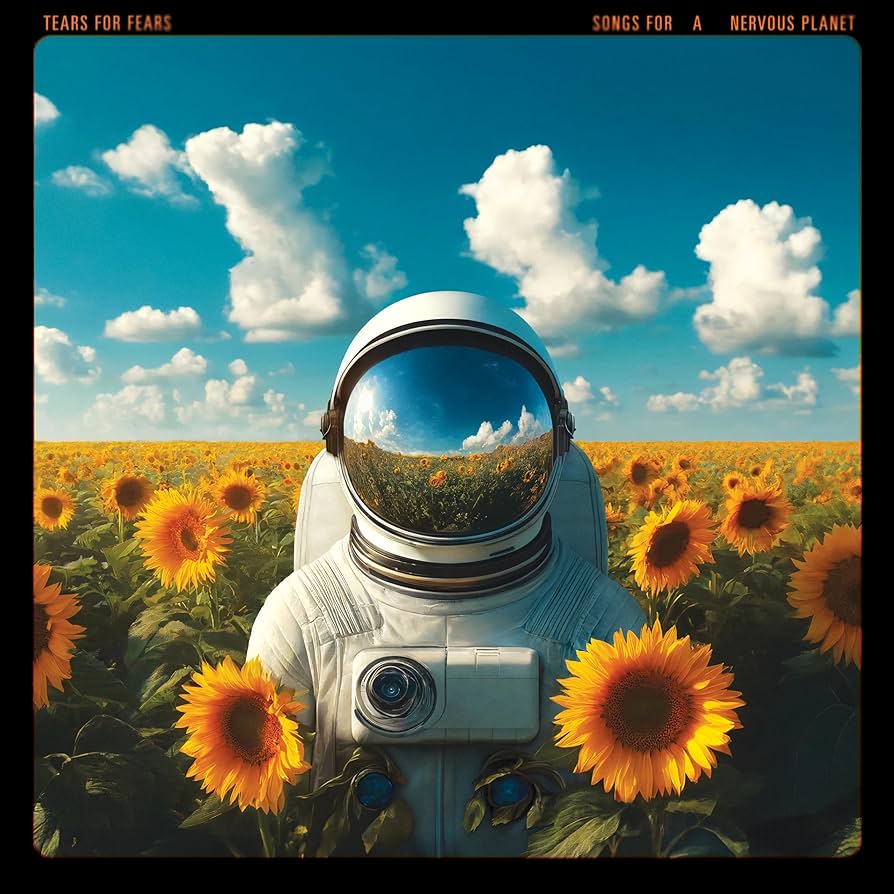
Tears for Fears, Songs for a Nervous Planet
The Bardic Depths, What We Really Like in Stories
The Cure, Songs of a Lost World
The Pineapple Thief, It Leads to This
The Pineapple Thief, Last to Run EP
The Tangent, To Follow Polaris
Tim Bowness, Powder Dry
And, I’m not even including vital re-releases such as the deluxe edition of Synchronicity by the Police; Fear of a Blank Planet by Porcupine Tree; Spectrum ‘97 by Phish; Lament by Ultravox; Bursting Out by Jethro Tull; or This Strange Engine by Marillion.
If I go just by my playlist numbers, I’d have to list “Dogs”, Frost*, IZZ, and, especially, The Cure. In fact, since The Cure first arrived, I’ve listened to almost nothing else. But, I went through such phases with Frost* and IZZ, too. And, really, I can’t recommend the single of “Dogs” highly enough. Bowness and Erra give it just the right beauty and creepiness that a proper Pink Floyd remake so desperately needs.
I must admit, though, I’m totally against the lyrical content of “Dogs.” I can’t believe our entrepreneurs are so bloodthirsty as this. Like or despise Elon Musk, for example, as you will, but he’s not bloodthirsty. In fact, if anything, I think he’d hate to “be dragged down by the stone.” And, he would hate to drag anyone else down by the stone. He definitely wants to win, but he wants to win fairly, by the rules established by society (unless all of society is corrupt, but let’s hope that Pink Floyd isn’t so Marxian as this). Maybe I’m wrong, however. Perhaps, I’m deaf, dumb, and blind, and that I keep pretending. . . Is this how Roger Waters saw his friendship/adversarial relationship with David Gilmour? If so, so very sad. For my money, give me Phish’s “Bouncing Around the Room” as the touchstone song dealing with entrepreneurship.
To be certain, though, I’m also a bit biased on the whole The Bardic Depths release. Given that I wrote the lyrics for it, I’m quite taken with it. Dave Bandanna did an amazing job in composing the music. So brilliant, so beautiful, so mystical, so joyful. Dave brings every song to life, and I’m always stunned to hear my own words given form and made manifest.
And, then, what’s not to love about the new David Gilmour? In fact, when he sings with his daughter, Romany, I’m completely taken. So much better than Dogs, co-written with Roger Waters.. Especially if you listen to something as glorious as “Between Two Points.” I would give anything to have such a relationship with my daughter that I could write something so gorgeous with her. Romany over Roger any day.
And, seriously, this brings me to all the incredible re-releases of 2024. Oh, to be “Prince Caspian” and float upon the waves. Oh, to be Prince Caspian. Dang, Phish was simply brilliant when they were.
I also want to single out Airbag. I don’t know their politics, but it strikes me that with this release, especially, they’re trying to combat conformism and cancel culture. I could be wrong, but I’m willing to take a chance that this is a brilliant counter-cultural masterpiece. One that shakes the conformists of the world to their very foundations. And, who wouldn’t love that bass playing and interplay with the drums? Genius. Thank God for the non-conformists of the world. Airbag sounds like Pink Floyd, in terms of legacy, but they are completely their own band.
If Airbag sounds anti-political, Robert Smith on the new Cure album, sounds confessional. Bless me, Father, I, Robert Smith, have sinned, and something wicked this way comes. Truly, the latest The Cure album is a masterpiece, a true sequel to Pornography and Disintegration. My love and respect for Smith only grows with age.
If Airbag is countering the world and Smith is confessing for us all, then IZZ is proclaiming the inherent goodness of each one of us. I’m not sure what the lyrics are all about on Collapse the Wave, but I feel that John Galgano and Laura Meade are asking us to look at our best selves. Rather than be dour, they find wonder. As far as I can tell, IZZ has been reading a lot of T.S. Eliot and a lot of John Paul II.
Tad: What a great list, Brad! Yours and mine overlap quite a bit, since we are often of like mind when it comes to music. Here is mine, based on how often I listened to each album:
8. Kyros – Mannequin
7. IZZ – Collapse the Wave
6. Jeff Johnson/Phil Keaggy – Spinning On a Cosmic Dime
5. Tears For Fears – Songs For a Nervous Planet
4. Airbag – The Century of the Self
3. Bardic Depths – What We Really Like In Stories
2. The Cure – Songs of a Lost World
1. Frost* – Life In the Wires
I’ve been a fan of Kyros’ music for several years now. They wed 80s sensibilities to 2020s expertise. Mannequin is another great collection of pop/prog.
Like you, I admire IZZ enormously. As far as I can tell, the lyrics to the title track are about quantum physics and faith. Who else but the Galgano brothers could pull off such an ambitious song? They definitely succeed.
Jeff Johnson and Phil Keaggy have collaborated several times before, and Spinning On a Cosmic Dime is the most lighthearted and fun of their albums. Johnson is a master of all keyboards – acoustic and electronic, while Keaggy is one of the finest guitarists alive today. When they get together, magic happens.
The Tears For Fears is primarily a live album, but the five new studio tracks are some of the best songs they’ve ever recorded.
You’ve already said everything I could want to say about the Airbag album. They continue to impress me with their social commentary, and their instrumental chops are outstanding. Their previous album, A Day At the Beach, is still my favorite, but The Century of Self is really, really satisfying.
The Bardic Depths’ new one is also a great album. Listening to it is like having a beer with C.S. Lewis, Tolkien, and the other Inklings. To my ears, it’s the most musically ambitious set of songs from TBD, and I have thoroughly enjoyed listening to it throughout 2024.
The Cure’s album came out of nowhere as far as I was concerned, and I approached it with some trepidation – there’s nothing worse than an old favorite trying to recapture the spark and failing miserably. Robert Smith et al. came up with a fantastic album that easily holds its own with their previous best. Amazing!
Frost*’s Life In the Wires is far and away the most-played album of 2024 for me. I have yet to tire of it, and every time I listen to it I find some new and delightful detail. Jem Godfrey sings all of the vocals on this one, and he is terrific. The beautiful melodies pouring out of my speakers are such a bountiful feast for my ears. The story is fascinating as well – a young man rebels against a world run by AI when he hears a pirate radio broadcast. After tracking it down to its source, it turns out to be an automated program. But then things get weird – he seems to sacrifice himself to become the new source of the radio broadcasts and spark an awakening of humanity. At least that’s how I read it.
So that’s what I spent my time listening to this past year. I also loved the Ultravox Lament box set and the Talk box set by Yes. It’s nice to have this often overlooked album get the treatment it deserves.
Brad: Yes, Tad, thanks for the reminder about Yes’s 30th anniversary edition of Talk. The last of the Trevor Rabin-Yes era albums, it’s simply beautiful. Clearly, the band was going for a progressive AOR sound at the time, but the production is so very clean. I love the packaging as well for it. Not overblown, but a solid release in terms of presentation. Don’t get me wrong, I love big box sets like Lament by Ultravox, but sometimes the smaller packaging works just as well. For me, Marillion’s and Jethro Tull’s releases–in terms of packaging–hit the sweet spot. Basically small books that fit perfectly on a book shelf.
Thanks, too, for the story about the new Frost*. I’ve listened to it numerous times, but I’d not figured out the lyrics. What a great story! Now, I’ll listen to it with different ears.
I’m so glad we agree on The Cure, on Airbag, and on Frost*. Three essentials of the year.
As it turns out, The Cure also released their brand new album as a live release–Songs from a Live World–as well. Gorgeous. Seriously, what else can Robert Smith do? He simply captures the mood of every era in which he finds himself. And, I, for one, am so fortunate to be alive when Robert Smith is alive.
I would also note that 2024 is an important anniversary date. Kevin McCormick’s gorgeous Squall came out in 1999, a mere 25 years ago! Even the rather snobbish All-Music recognized the brilliance of Squall. As far as I understand it, McCormick is working on a follow-up CD.
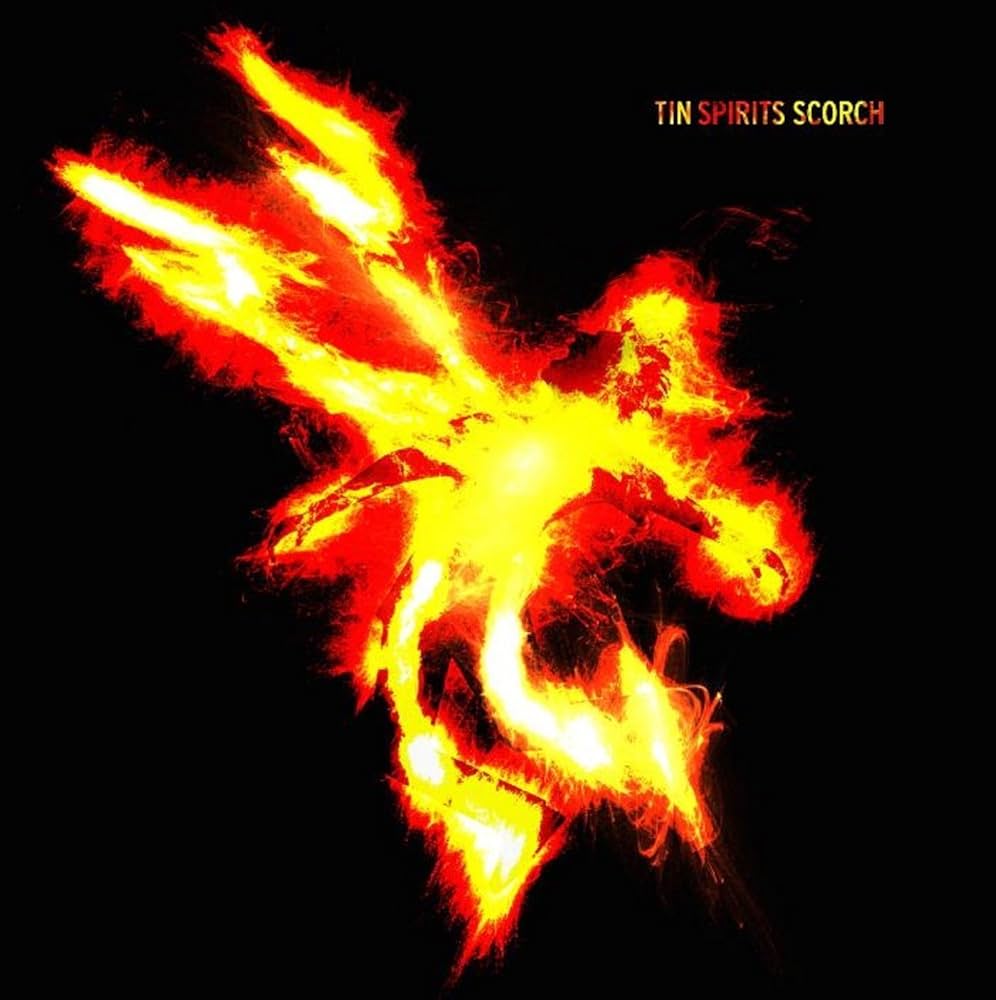
It’s also the ten-year anniversary of the genius Scorch by the Tin Spirits. A favorite album. Also, ten years ago, appeared the brilliant Demon by Gazpacho and Anathema’s mediocre to good Distant Satellites.
But, Holy Moses, it’s not just about Tin Spirits. If we go back to the twentieth anniversary of releases, 2004, we get to The Pineapple Thief, Variations on a Dream; Glass Hammer’s Shadowlands; Proto-Kaw, Before Came After; The Tangent, The World We Drive Through; Ayreon, The Human Equation; and Marillion, Marbles. Sheesh, what else do you want?
Carl: Full and necessary confession: 2024 turned out to be year in which I listened to little new prog rock, or rock of any kind. Not for any lack of new and worthy rock music, but 2024 also turned out to be the year in which I fell quite a ways down The Vinyl Rabbit Hole. I’ll likely say more about that in a separate post on my favorite jazz of 2024, but suffice to say that I’ve been haunting various thrift and record stores.
My most listened album of the year was released 30 years ago: Seal’s second album (1994), titled, inconveniently enough, Seal—just like his 1991 debut. A deluxe edition was released, with a remastered version of the album (fantastic), as well as alternative versions of the songs (also wonderful). I listened to this album countless times when it first came out, and I have never tired of it (or of his first or third, titled Human Being). Why has it resonated so strongly with me? I’m not entirely sure, but for me it is a perfect pop/rock album, and it sits squarely in the middle of a trio of albums that I continue to think is one of the finest three-in-a-row rock/pop album families you’ll ever hear.
I enjoyed the new albums by Frost* and Pineapple Thief and if I listened more closely, I’m confident that I would really like them. Both bands have consistently produced accessible, intelligent prog rock of the highest order, so I plan to revisit them in the weeks to come.
Caligula’s Horse’s Charcoal Grace is mysteriously but aptly titled, as the music has a dusky, burnt quality that also shines with many moments of delicate beauty. This Aussie band has been a longtime favorite, and this album adds to a discography rich with ridiculous chops and vocals at the service of exquisitely crafted songs. A keeper.
Keep Me Fed by The Warning, the talented sister trio out of Mexico, is (as they say) a banger. Or a series of bangers, the sort of swaggering, catchy hard rock—with sublime harmonies—that has been sorely missed in recent years. For my money, I prefer their live versions a bit more; they are dynamic performers whose young ages (20 to 25) defy (even bely) the band’s evident maturity and exuberant zest.
Speaking of all female bands, a somewhat guilty pleasure this year has been watching videos of the mind-melting Japanese metal band Lovebites. They have been compared to Iron Maiden and similar metal bands, which makes it all the more strange as I have never cared that particular genre. All five of these ladies are virtuosos, and Miyako Watanabe, one of the two guitarists, was a classical pianist until her late teens, when she picked up electric guitar for the first time. The live album Memorial For The Warrior Souls (2024) and the studio album Judgment Day (2023) are unrelentingly fast, in-your-face, melodic, and—yes—tremendous fun. Check them out live on YouTube and prepare to be amazed.
Myles Kennedy might just be the hardest working and (by all accounts) nicest rocker out there today, and his third solo album The Art of Letting Go is classic Kennedy—powerful, assured, dynamic, moving—with some nice little twists. His is one of the finest rock voices of the past couple of decades, but his guitar playing and song writing are just as polished, varied, and inviting.
The Smile is like Radiohead if it didn’t have all of its members–and if it released albums more quickly. Which is what it is, with Thom Yorke (vocals, guitar, bass, keys) and Jonny Greenwood (guitar, bass, keys) joined by Tom Skinner (drums). Wall of Eyes (released in January) and Cutouts (same session, released in October) are quirky, dark, strangely fun, often weird, always melodic, and never, ever boring. Yorke’s voice is timeless and Greenwood’s playing, which is always so distinctive, is a revelation. And this album comes across to me as even more jazz influenced than their debut—but never in a direct, obvious way. Great stuff!
One of my favorite country artists, Dwight Yoakam, is back with his first new album in almost a decade. Brighter Days finds the Bakersfield legend firing on all cylinders, apparently reenergized by marriage and a young son. Dwight sounds half his age (68) and his band, no surprise, is tight and razor sharp. Every cut is worth the price, with the deceptively simple “I Spell Love” getting a nod from this fan.
Speaking of artists aging well, Van Morrison continues his remarkable output, with three albums: Beyond Words, New Arrangements and Duets, and Live at Orangefield. The first is all instrumental and is enjoyable, with some unexpected quirks. The second is a solid collection, featuring collaborations with Kurk Elling, Joss Stone, and Willie Nelson, all to good effect. But the live album, recorded a few years ago, is a revelation, captures a mid-70s Morrison at the top of his powers, featuring (as usual) a crack band and some other-worldly backing vocals. It rewards repeated listens and is a notable testament to Morrison’s brilliance as both a singer and songwriter.
Brad: Carl, excellent choices. I, too, like The Smile, and I, too, (thanks to you) listened to a lot of Seal II as well! I also bought Trevor Horn’s memoir, but I have yet to read it.
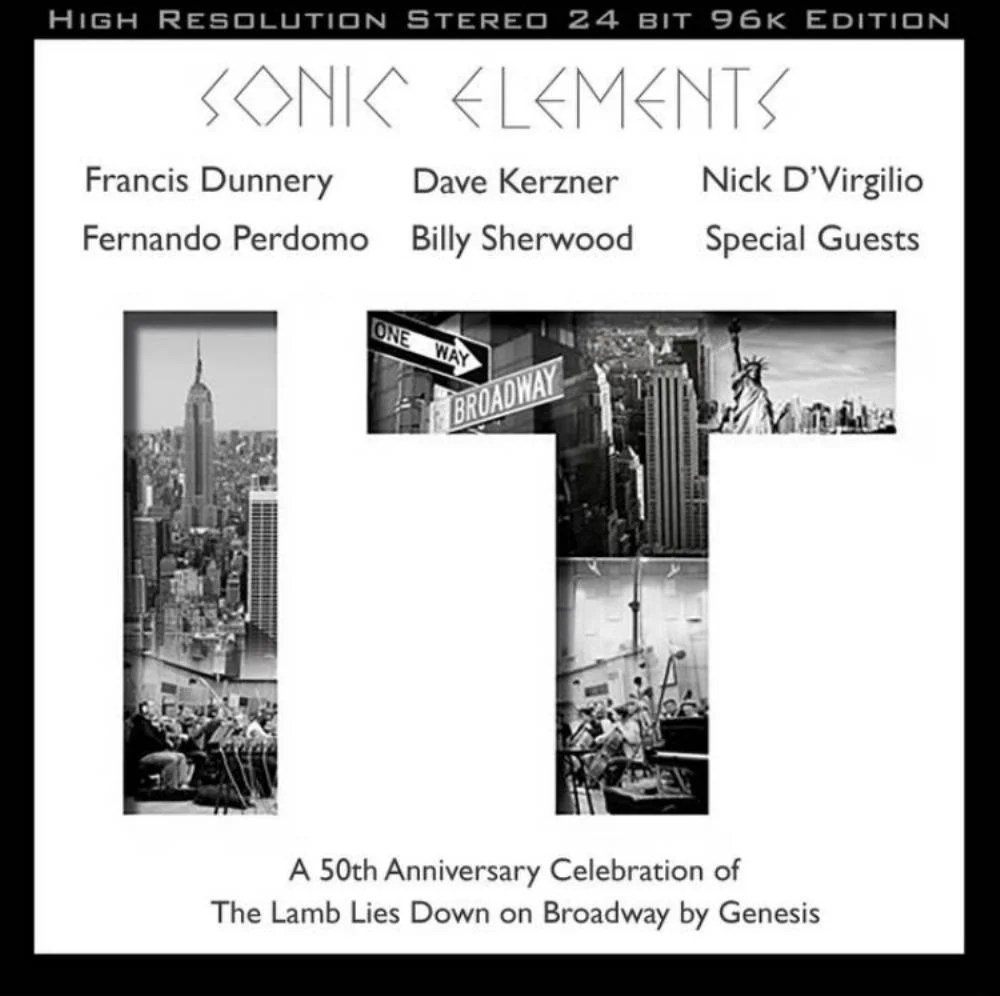
Well, folks, this pretty much wraps up 2024 for us. We have a lot to look forward to in 2025. It looks like The Cure will be releasing more music, there’s a new and final season of Stranger Things, and we’ll be celebrating the 50th anniversary of The Lamb Lies Down on Broadway by Genesis. Not only is there a 50th anniversary edition of The Lamb coming out, but the brilliant Dave Kerzner has re-recorded the entire album and is offering it as a 3-cd set plus hi-res download for only $49.99, plus shipping.
Big Big Train will be touring the U.S, and IZZ will be performing some stripped down shows–maybe even in Hillsdale!
I’m sure we’ll continue to give our hard-earned money to The Burning Shed and Rita Kay Drew’s The Band Wagon USA. I highly recommend supporting both of these truly excellent business enterprises. Amazingly enough, each is competitive with Amazon, even with overseas shipping costs.
Tad, Carl, Kevin, Erik, and I wish you all a Merry Christmas (remember, we’re only on day three of twelve), a Happy Hanukkah (remember, we’re also only on day three!), and Happy New Year, everyone!
Many years ago He looked out through a glassless window All that he could see was Babylon Beautiful green fields and dreams And learn to measure the stars But there was a worry in his heart
He said How could it come to this? I’m really worried about living How could it come to this? Yeah, I really wanna know about this
Is it like today? Uh, uh-uh
Then there came a day Moved out ‘cross the Mediterranean Came to rest on isles and the Greek young men And with their silver beards they laughed At the unknown of the universe They could just sit and guess God’s name
But they said How could it come to this? We’re really worried about living How could it come to this? Yeah, we really want to know about this
Is it like today? Oh, oh-oh
Then there followed days of kings Empires and revolution Blood just looks the same When you open the veins But sometimes it was faith, power or reason as the cornerstone But the furrowed brow has never left his face
He said How could it come to this? We’re really living in a landslide How could it come to this? Yeah we really wanna know about this
Is it like today? Oh, oh-oh
Then there came a day Man packed up, flew off from the planet He went to the moon (to the moon) To the moon (to the moon) Now he’s out in space, hey, fixing all the problems He comes face to face with God
He says How could it come to this I’m really worried ’bout my creation How did it come to this You’re really killing me you know
It isn’t just today Oh, oh-oh Is it like today? Eh? Ah Is it like today? Oh, bang Ooh
Many years ago He looked out through a glassless window Didn’t understand much what he saw
I wish I had profound things to write after the untimely death (he was only 66) of World Party’s Karl Wallinger. Though I’ve listened to Goodbye Jumbo too many times to count, I’ve never written about Wallinger or World Party. This seems bizarre to me, especially as I regard Goodbye Jumbo as one of the finest pop statements ever conceived.
My great friend, Kevin McCormick, first discovered World Party and turned them on to me back in 1989 or 1990. While I don’t think that Wallinger ever quite topped Goodbye Jumbo, I do very much like everything he recorded
From the opening notes of the album, Goodbye Jumbo, Wallinger invites us into his basement for a private concert. At least that’s how the album feels to me.
.
Wallinger somehow mixed anxiety with hope, turning us onto the larger world and finding our humanity within it.
Though it came on a later album, Bang, my favorite Wallinger song is his ode to western civilization, “Is it Like Today?” I always encourage my western heritage students to listen to it.
Again, I have nothing profound to say, except thank you, Karl. You’ve definitely made my world brighter over the past thirty-four years. May you rest in peace.
Over at my substack (just a few months old now), I posted my top 100 albums. I got some great responses there and on Facebook as to what I was missing (and some kind words about my choices as well). As such, I decided it would be best to expand my list to my favorite albums of all time–so I went for 200! I know a few things are missing, such as the Beatles. I was a huge fan of the Beatles back in college, but my enthusiasm for them died after reading a few biographies of the band. I realize that Sgt. Pepper’s and Magical Mystery Tour are both extraordinary, but I won’t go back to those album unless I’m preparing for something academic.
So, this list, is obviously deeply personal. But, these are the 200 albums I go back to, over and over again. I’ve tried to be faithful to my life as a 55-year old, recognizing what I’ve loved continuously. So, for example, I was a huge ELO fan as a kid, but that’s not stuck with me, even though I recognize the brilliance of Jeff Lynne.
So, I’m not trying to dismiss anything by their absences, only praise what I love. Another caveat–I’m leaving off surf bands (The Madeira and Lords of Atlantis) and jazz acts (Dave Brubeck and Miles Davis). I’m also leaving out The Shadows–of whom I’ve only recently become a fan.
One last note, I typed these out in Microsoft Word, and, for some reason, Word failed to alphabetize them or align them perfectly. I’m not sure how to fix the latter problem. The former problem just sort of cracks me up–so I’m leaving as is.
The List:
ABC, Lexicon of Love
Airbag, All Rights Removed
Airbag, Disconnected
Anathema, We’re Here Because We’re Here
Anathema, Weather Systems
Astra, The Black Chord
Ayreon, The Human Equation
Ayreon, Universal Migrator
Beach Boys, Pet Sounds
Big Big Train, English Electric
Big Big Train, Grimspound
Big Big Train, Second Brightest Star
Big Big Train, The Difference Machine
Big Big Train, The Grand Tour
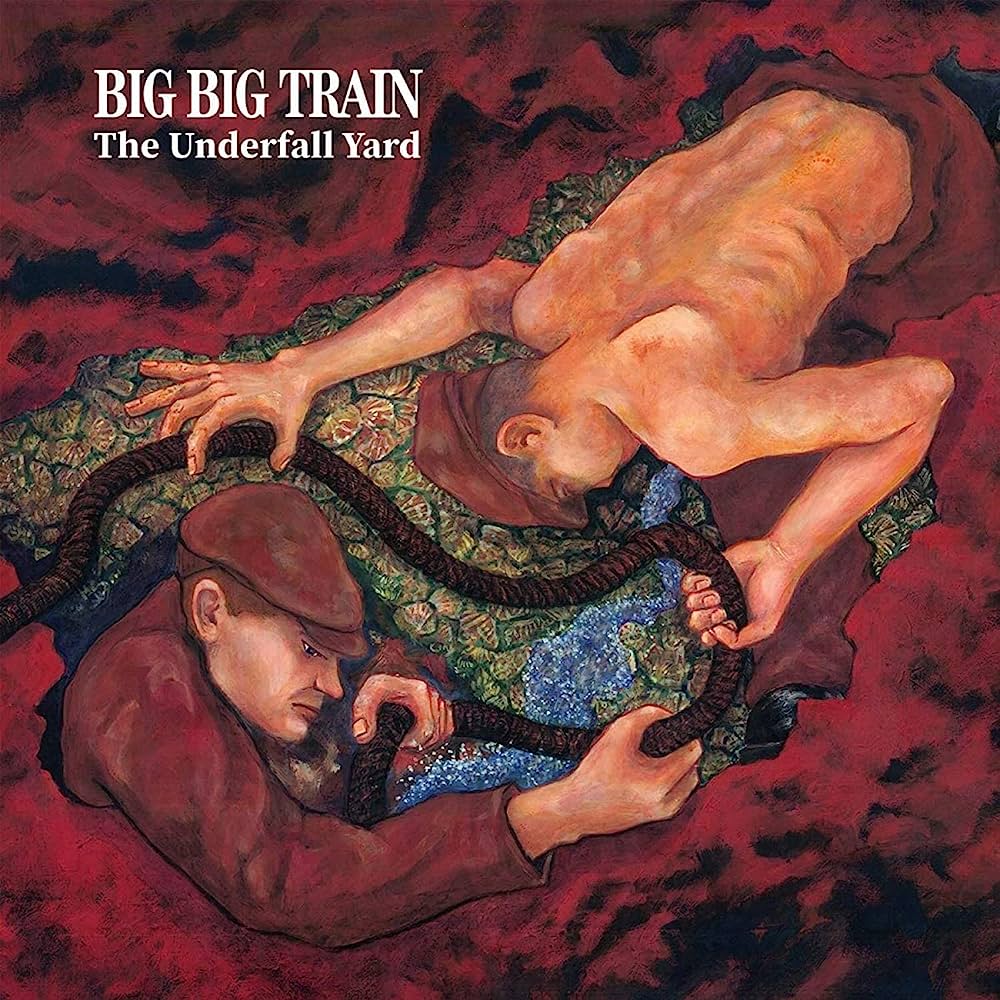
Big Big Train, The Underfall Yard
Blackfield
Blackfield II
Bryan Ferry, Boys and Girls
Catherine Wheel, Happy Days
Chicago, Chicago Transit Authority
Chris Squire, Fish Out of Water
Cosmograf, Capacitor
Cosmograf, Man Left in Space
Dave Kerzner, New World
Dave Kerzner, Static
Dave Matthews Band, Before These Crowded Streets
Dave Matthews Band, Crush
Days Between Stations, In Extremis
Echo and the Bunnymen, Heaven Up Here
Echo and the Bunnymen, Ocean Rain
Enochian Theory, Life and All it Entails
Flower Kings, Flower Power
Flower Kings, Paradox Hotel
Flower Kings, Space Revolver
Frost*, Day and Age
Frost*, Experiments in Mass Appeal
Frost*, Milliontown
Galahad, Beyond the Realms of Euphoria
Galahad, Empires Never Last
Gazpacho, Fireworker
Gazpacho, Night
Gazpacho, Tick Tock
Genesis, A Trick of the Tail
Genesis, Duke
Genesis, Foxtrot
Genesis, Lamb Lies Down on Broadway
Genesis, Selling England by the Pound
Glass Hammer, At the Gate
Glass Hammer, Dreaming City
Glass Hammer, Inconsolable Secret
Glass Hammer, Valkyrie
Haken, The Mountain
Iamthemorning, Lighthouse
Icehouse, Measure for Measure
INXS, The Swing
IZZ, Crush of Night
IZZ, Everlasting Instant
IZZ, I Move Laura Meade, Most Dangerous Woman in America
IZZ, The Darkened Room
Jethro Tull, Benefit
Jethro Tull, Minstrel in the Gallery
Jethro Tull, Thick as a Brick
John Galgano, Real Life is Meeting
Kansas, Leftoverature
Kansas, Point of No Return
Kansas, Song for America
Kate Bush, Aerial
Kate Bush, Hounds of Love
Kevin McCormick, Squall
Kevin McCormick, With the Coming of Evening
King Bathmat, Overcoming the Monster
Led Zeppelin I
Led Zeppelin II
Led Zeppelin IV
Led Zeppelin, Houses of the Holy
Love Spit Love
Lush, Spooky
Marillion, Afraid of Sunlight
Marillion, Brave
Marillion, FEAR
Marillion, Marbles
Mew, And the Glass Handed Kites
Moody Blues, Days of Future Passed
Muse, Origin of Symmetry
My Bloody Valentine, Loveless
NAO, Fog Electric
NAO, Grappling Hooks
NAO, Grind Show
NAO, The Third Day NAO, United Wire
Natalie Merchant, Leave Your Sleep
Neal Morse, Testimony
Neal Morse, Testimony II No-Man, Love You to Bits
New Order, Low-life
No-man, Schoolyard Ghosts
Nosound, Lightdark
OAK, False Memory Archive
Oceansize, Effloresce
Oceansize, Everyone Into Position
Oceansize, Frames
Ordinary Psycho, The New Gothick Ordinary Psycho, Volume II
Pearl Jam, Vs.
Peter Gabriel III
Peter Gabriel, Security
Peter Gabriel, SO
Phish, Billy Breathes
Pink Floyd, Animals
Pink Floyd, Dark Side of the Moon
Pink Floyd, Meddle
Pink Floyd, Wish You Were Here
Porcupine Tree, Fear of a Blank Planet
Porcupine Tree, Lightbulb Sun
Porcupine Tree, Sky Moves Sideways
Pure Reason Revolution, The Dark Third
Queen II
Queen, A Night at the Opera
Radiohead, Kid A
Rhys Marsh, October After All
Riverside, Love, Fear, and the Time Machine
Riverside, Out of Myself
Riverside, Second Life Syndrome
Riverside, Wasteland
Roxy Music, Avalon
Rush, 2112
Rush, A Farewell to Kings
Rush, Clockwork Angels
Rush, Grace Under Pressure
Rush, Hemispheres
Rush, Moving Pictures
Rush, Permanent Waves
Rush, Power Windows
Rush, Snakes and Arrows
Sanguine Hum, Diving Bell
Sarah McLachlin, Fumbling Towards Ecstasy
Simon and Garfunkel, Bookends
Simple Minds, New Gold Dream
Simple Minds, Sons and Fascination
Simple Minds, Sparkle in the Rain
Sixpence None the Richer
Smashing Pumpkins, Siamese Dream
Sound of Contact, Dimensionaut
Steven Wilson, Grace for Drowning
Steven Wilson, Hand Cannot Erase
Steven Wilson, Insurgentes
Steven Wilson, Raven That Refused to Sing
Stone Temple Pilots, Tiny Music
Talk Talk, Laughing Stock
Talk Talk, Spirit of Eden
Talk Talk, The Colour of Spring
Tears for Fears, Elemental
Tears for Fears, Everybody Loves a Happy Ending
Tears for Fears, Songs from the Big Chair
Tears for Fears, The Hurting
The Connells, Boylan Heights
The Cure, Blood Flowers
The Cure, Disintegration
The Cure, Head on the Door
The Cure, P-ography
The Cure, Wish
The Fierce and the Dead, Spooky Action
The Fierce and the Dead, If It Carries On Like This
Recently I had to replace the motorcycle tires, as they were well past their tread life. These off road Duro tires are made in Taiwan, in fact they are commonly used on the lesser-known Russian Ural motorcycles. These tires are known to be puncture resistant — not insignificantly — they look pretty good on a Triumph. My side-mirrors are from CRG, handlebars from British Customs, and engine/crash guard from SW-MOTECH. All this illustrates freedom of choice.
Making choices for customizing motorcycles is not so different from general life decisions. We pick vendors, and parts which are most suitable for our purposes and aesthetic preferences. Just as we pick our grocery stores, restaurants, or investment plans. We build life and systems around us based on our choices; those who make better decisions build better systems. That freedom deserves a bit of appreciation.
Last week I was watching this TV series called “The Man in the High Castle”. It details an alternate reality where Axis powers won the war. And the US is split in half between the Reich and Imperial Japan. The series also brings in the concept of multiverse, where there exist parallel realities with different outcomes. In certain universes Axis powers rule, in others it’s the Allied forces. In the story, Nazis in one universe realize this and decide to build a machine to travel to alternate realities, obviously to conquer them! More than scary, it felt foolhardy.
Even if by some random stroke of luck Hitler had won the war in a universe, it’s highly unlikely they can hold a candle to the Allied forces from a parallel universe. So, one of the most likely outcomes of such an invasion would be going head-to-head with a more efficient alternate universe – not because of morality or divine verdicts, but simply because of basic science and their ability to make productive choices.
German Reich is forced to make decisions based on criteria that do not prioritize efficiency, while Americans make choices to build productive systems. While Reich must live within the constraints of their ideology, Americans have incentives to make choices which deliver results. Nazis artificially limit their resource pool, while Americans allow winners to emerge from anywhere. Such systems can produce exceptional results simply because they are not structurally constrained. Over a period, it allows the best ideas to emerge, and inefficient practices to be discarded; this selection process eventually benefits the group. So, one way to evaluate legislation is by its impact on broadening choices; that may indicate whether it’s closer to the Reich or to Americana.
One of the scenes in the series also involves the Reich attempting to copy tech from the alternate universes. Even here, there is a loss of context which also traces back to the structure of available choices within the system. The utility of ideas is embedded in the systems where they emerge and operate. Their maximum utilization, maintenance, and evolution demand a complementary ecosystem. When taken into a new context without the presence of dependent assumptions, the power of these same ideas will diminish. Examples of dependent assumptions include the human capital – the inventor, maintainer, engineer who handles the tech; the material capital which supports safe usage and execution; the laws, institutions, and systemic processes which enable all this. Basically, ideas applied out of context fail due to basic principles of science. Essentially, the Reich stealing hydrogen bombs will likely nuke themselves, because they are artificially restricted from making safe, rational choices.
Another conceivable possibility is the Reich successfully adapting borrowed ideas into their own context. Assuming the ideas remain as effective in such a new environment, they have at best achieved a short-term parity with the Americans. But such a transient unearned parity will soon be lost without that original process which enables its creation – ability to make open-ended choices. Choices determine not just system capabilities and outcomes, but even their trajectory of evolution.
Freedom of choice enables uniquely creative contextual adaptations to emerge. This happens within all layers of the system. Building motorcycles is a localized instance within a broader social and technological framework. These on-demand adaptations involve a process of reasoning, implicit and explicit assumptions, and the broader context in which they are executed. Successful creation, execution, and maintenance require that favorable environment. We can safely say — an idea, its manifestation, and the surrounding environment evolve together in lockstep. So, someone borrowing an idea from one context into another will usually learn the hard way. It’s not karma — it’s simply the reality of system constraints.
Before our own time, the customs of our ancestors produced excellent men, and eminent men preserved our ancient customs and the institutions of their forefathers. But though the republic, when it came to us, was like a beautiful painting, whose colours, however, were already fading with age, our own time not only has neglected to freshen it by renewing the original colours, but has not even taken the trouble to preserve its configuration and, so to speak, its general outlines. For what is now left of the ‘ancient customs’ one which he said ‘the commonwealth of Rome’ was ‘founded firm’? They have been, as we see, so completely buried in oblivion that they are not only no longer practiced, but are already unknown. And what shall I say of the men? For the loss of our customs is due to our lack of men, and for this great evil we must not only give an account, but must even defend ourselves in every way possible, as if we were accused of capital crime. For it is through our own faults, not by any accident, that we retain only the form of the commonwealth, but have long since lost its substance.
“First, the Christian is one who, in faith, becomes aware of the reality of the triune God. Second: the Christian strives, in hope, for the total fulfillment of his being in eternal life. Third: the Christian directs himself, in the divine virtue of love, to an affirmation of God and neighbor that surpasses the power of any natural love. Fourth: the Christian is prudent; namely, he does not allow his view on reality to be controlled by the Yes or No of his will, but rather he makes this Yes or No of the will dependent upon the truth of things. Fifth: the Christian is just; that is, he is able to live “with the other” in truth; he sees himself as a member among members of the Church, of the people, and of any community. Sixth: the Christian is brave, that is, he is prepared to suffer injury and, if need be, death for the truth and for the realization of justice. Seventh: the Christian is temperate; namely, he does not permit his desire to possess and his desire for pleasure to become destructive and inimical to his being.”
–Josef Pieper, A Brief Reader on the Virtues of the Human Heart (San Francisco, Calif.: Ignatius, 1991), 10-11.
A years ago, while on a panel with that extraordinary radio personality, Mike Church, and a few folks from another website, I think I caused a bit of a stir by arguing that a real man’s existence was about protecting one’s family from the world, conserving what little order could be found in the family against the shattering disorders of the modern and post-modern abyss.
While I’ve always favored a republic and have been a republican as far back as I can remember, my republic would be a Harringtonian one of extremely well-armed small families and associations of friends and like-minded persons. In my Harringtonian vision, admittedly somewhat idyllic and medieval, communities would come together for cultural celebrations, book festivals, commerce, and a celebration of the sacraments.
It would also, to my mind, uphold the essence of the American founding as understood through the Northwest Ordinance.
And, in the just preservation of rights and property, it is understood and declared, that no law ought ever to be made, or have force in the said territory, that shall, in any manner whatever, interfere with or affect private contracts or engagements, bona fide, and without fraud, previously formed.
While I very much agree with our own John Willson that no “founding” ever existed, only foundings, I would not look askance at any one who claimed the above, taken from Article III of the profound 1787 law, serves as the “mission statement” of the founding of this republic. For those of us who love ordered liberty, we might speak in terms of commerce and business, but the right to associate applies as much to families, churches, and schools as it does businesses. If we do not have the right to form a family as we chose, the right to open a business means nothing. The right of association is all-encompassing. We have the right to form families, businesses, universities, and, even, websites dedicated to Russell Kirk’s vision of the good, the true, and the beautiful.
Just a little over a year ago, I came out of the closet. I admitted it to the world and without reservations.
I was and remain a Batman devotee. Much to my surprise, a lot of The Imaginative Conservative readers are also rather fond of Batman. So, in my weirdness (at least in this particular one), I’m not alone.
Even more, I’m a Batman snob. No “pows”or “ka-pows,” no silly side kicks in Disney-lite costumes, no Bat dances, and no Bat “shark repellants.” I don’t want Adam West, Michael Keaton, or George Clooney as Batman. I don’t want the Batmobile driving up to the Burger King drive thru window to order something.
I want my Batman dark, serious, dedicated, persevering, swift, and, when necessary, brutal.
Happy 75th Birthday, Batman!
As you might very well know, today is Batman’s 75th birthday. On this day, three quarters of a century ago, Batman first appeared in Detective Comics 27 (cover date: May 1939). Here’s the official write up from the company, DC (Time-Warner) that owns the Batman name:
In celebration of Batman’s 75th anniversary, DC Entertainment is partnering with thousands of comic book retailers and bookstores across the nation to celebrate “Batman Day” on Wednesday, July 23. As part of the festivities, fans who visit participating retailers receive a free, special edition of DETECTIVE COMICS #27, featuring a reimagining of Batman’s 1939 comic book debut, designed by Chip Kidd with a script by The New York Times #1 bestselling author Brad Meltzer.
In addition to the comic book, DC Entertainment is providing retailers access to an assortment of other collectibles to help in the celebration of “Batman Day” including a Batman 75th anniversary cape, bookmarks featuring essential Batman graphic novels and four Batman masks designed by comic book artist Ryan Sook spotlighting a variety of the character’s iconic looks from his 75-year history.










 Spirit of Cecilia
You must be logged in to post a comment.