Wind-Blown Notes: Rush’s Grace Under Pressure

My favorite Rush album has been, at least going back to April 1984, Grace Under Pressure.  I realize that among Rush fans and among prog fans, this might serve as a contentious choice.  My praise of GUP is not in any way meant to denigrate any other Rush albums.  Frankly, I love them all.  Rush has offered us an outrageous wealth of blessings, and I won’t even pretend objectivity.

I love Rush.  I love Grace Under Pressure.

extrait_rush-grace-under-pressure-tour-1984_0

I still remember opening Grace Under Pressure for the first time.  Gently knifing the cellophane so as not to crease the cardboard, slowly pulling out the vinyl wrapped in a paper sleeve, the hues of gray, pink, blue, and granite and that egg caught in a vicegrip, the distinctive smell of a brand new album. . . . the crackle as the needle hit . . . .

I was sixteen.

From the opening wind-blown notes, sound effects, and men, I was hooked, completely.  I had loved Moving Pictures and Signals–each giving me great comfort personally, perhaps even saving my life during some pretty horrific junior high and early high school moments.

But this Grace Under Pressure.  This was something else.

If Moving Pictures and Signals taught me to be myself and pursue excellence, Grace Under Pressure taught me that once I knew myself, I had the high duty to go into the world and fight for what’s good and right, no matter the cost.  At sixteen, I desperately needed to believe that, and I thank God that Peart provided that lesson.  There are so many other lessons a young energetic boy could have picked up from the rather fragile culture of the time and the incredibly dysfunctional home in which I was raised.  With Grace Under Pressure, though, I was certainly ready to follow Peart into Hell and back for the right cause.  Peart certainly became one of the most foundational influences on my life, along with other authors I was reading at the time, such as Orwell and Bradbury.

Though I’m sure that Peart did not intend for the album to have any kind of overriding story such as the first sides of  2112 or Hemispheres had told, GUP holds together as a concept album brilliantly.

The opening calls to us: beware!  Wake up!  Shake off your slumbers!  The world is near its doom.

Or so it seems.

Geddy’s voice, strong with anxiety, begins: “An ill wind comes arising. . .”  In the pressures of chaos, Pearts suggests, we so easily see the world fall apart, ourselves not only caught in the maelstrom, but possibly aggravating it.  “Red Alert” ends with possibly the most desperate cry of the Old Testament: “Absalom, Absalom!”  Certainly, there is no hope merely in the self.  Again, so it seems.

The second song, gut wrenching to the extreme, deals with the loss of a person, his imprint is all that remains after bodily removed from this existence.  Yet, despite the topic, there is more hope in this song than in the first.  Despite loss, memory allows life to continue, to “feel the way you would.”  I had recently lost my maternal grandfather–the finest man  I ever knew–before first hearing this album.  His image will always be my “Afterimage.”

It seems, though, that more than one have died.  The third song takes us to the inside of a prison camp.  Whether a Holocaust camp or a Gulag, it’s unclear.  Frankly, it’s probably not important if the owners of the camp are Communists or Fascists.  Either way, those inside are most likely doomed.  Not only had I been reading lots of dystopian literature in 1984 (appropriate, I suppose, given the date), but I was reading everything I could find by and about Solzhenitzyn.  This made the Gulag even more real and more terrifying.

Just when the brooding might become unbearable, the three men of Rush seem to offer a Gothic, not quite hellish, smile as the fourth song, “The Enemy Within” begins.  Part One of “Fear,” the fourth track offers a psychological insight into the paranoia of a person.  Perhaps we should first look at our own problems before we place them whole cloth upon the world.

Pick needle up, turn album over, clean with dust sponge, and drop needle. . . .

Funk.  Sci-fi funk emerges after the needle has crackled and founds its groove.  A robot has escaped, perhaps yearning for or even having attained sentience.  I could never count how many hours of conversation these lyrics prompted, as Kevin McCormick and I discussed the nature of free will.  It’s the stuff of Philip K. Dick, the liberal arts, and the best of theology.

More bass funk for track six and a return to psychological introspection, “Kid Gloves.”  But, we move out quickly into the larger world again with the seventh track, “Red Lenses,” taking the listener back to the themes of paranoia.  When the man emerges for action, will he do so in reaction to the personal pain he has experienced, or will he do so with an objective truth set to enliven the common good?

grace_under_pressure_0

In the end, this is the choice for those who do not lose themselves to the cathode rays.  Is man fighting for what should be or he is reacting merely to what has happened, “to live between a rock and a hardplace.”

Unlike the previous albums which end with narrative certainty, Grace Under Pressure leaves the listener with more questions than it does answers, though tellingly it harkens to Hemingway and to T.S. Eliot.

Given the album as a whole, one might take this as Stoic resignation–merely accepting the flaws of the world.  “Can you spare another war?  Another waste land?”

Wheels can take you around

Wheels can cut you down. . . .

We’ve all got to try and fill the void.

But, this doesn’t fit Peart.  We all know whatever blows life dealt Peart, he stood back up, practiced twenty times harder, and read 20 more books.  That man did not go down for long.  And, neither should we.

In the spring of 1987, much to my surprise, one of my humanities professors allowed me to write on the ideas of Peart.  I can no longer find that essay (swallowed up and now painfully lonely on some primitive MacPlus harddrive or 3.5 floppy disk most likely rotting in a landfill in central Kansas), but it was the kind of writing and thinking that opened up whole new worlds to me.  My only quotes were from “Grace Under Pressure,” drawing a distinction between nature of the liberal arts and the loss of humanity through the mechanizing of the human person.  It dealt, understandably, with environmental and cultural degradation, the dangers of conformist thinking, and the brutal inhumanity of ideologies.  It was probably the smartest thing I’d written up to that point in my life, and even my professor liked it.

Of course, the ideas were all Peart’s, and I once again fondly imagined him as that really great older brother–the one who knows what an annoying pain I am, but who sees promise in me anyway, giving me just enough space to find my own way.

I’m fifty seven, and I still want Neil to have been my older brother.

And, if you want more on Rush, here’s my book on Neil Peart at amazon.com.

Trollope’s Can You Forgive Her? Another Victorian Classic

Ever since I read Charles Dickens’ first novel, The Pickwick Papers, I have been a fan of Victorian literature. Anthony Trollope was a contemporary of Dickens, and an incredibly prolific writer. Can You Forgive Her? is the first novel in his Palliser series. It begins with the dilemma facing Alice Vavasor: “What should a woman do with her life?” For an upper-class woman in Victorian England, the options were limited to marrying or living with relatives the rest of your life.

Alice is engaged to a man everyone (including her) acknowledges is a perfect catch. John Grey has a substantial estate in Cambridgeshire, he is definitely in love with her, he is intelligent, handsome, and doting. Yet, Alice looks upon a future with him with apprehension – she only sees herself trapped in a boring country estate with no intellectual or social stimulation. As she explains to her aunt McLeod,

People always do seem to think it so terrible that a girl should have her own way in anything. She mustn’t like any one at first; and then, when she does like some one, she must marry him directly she’s bidden. I haven’t much of my own way at present; but you see, when I’m married I shan’t have it at all.

ANTHONY TROLLOPE. Can You Forgive Her? (Kindle Locations 564-566). Delphi Classics. Kindle Edition.

It doesn’t help that she previously was in love with her cousin, George Vavasor, who cheated on her. He fancies himself a bohemian who is above such mundane institutions as marriage, and he and his sister, Kate, waste no time convincing Alice to break off her engagement with Grey.

Alice convinces herself she is unworthy of being John Grey’s wife, but to her consternation, he refuses to accept her rejection of him and insists she is still betrothed to him. He isn’t ugly or forceful in any way, he is simply confident that, given time, she will come to her senses and return to him.

Kate Vavasor is also unmarried, and she has an extended visit with her aunt, Arabella Greenow. Mrs. Greenow has recently lost her fabulously wealthy older husband, and Trollope’s account of how she flirts with two men – the boring but well-off farmer Mr. Cheesacre and the dashing but penniless Mr. Bellfield – while observing the proper mourning rituals is hilarious.

Yet another cousin of Alice, Lady Glencora Palliser, invites Alice up to her estate to spend a few weeks. Lady Glencora is very rich, very young, and recently married to Plantagenet Palliser, a very dull man who greatest ambition is to be Chancellor of the Exchequer. She once loved a dissolute young man, Burgo Fitzgerald, but her family intervened and made her marry the much more suitable Palliser. He doesn’t give her much attention, and she is fairly miserable.

Burgo is friends with George Vavasor, and he hopes to elope with Glencora to Italy. George doesn’t encourage him to do this, but he doesn’t discourage him, either. George is basically amoral, and he pursues whatever path will give him the most pleasure. He breaks up Alice and John Grey’s engagement, because he gets a kick out of it, not because he is in love with Alice. So the stage is set for all kinds of social intrigue and shenanigans; in other words, a perfect setting for a Victorian novel!

This is the first novel by Trollope I’ve read, and I’m impressed. He is very different from Dickens, though. Where it was always clear from his works that Dickens had a heart for the poor and downtrodden in Victorian England, Trollope obviously moved in a higher social setting. He chronicles the issues and conflicts facing the British governing class in the mid-nineteenth century.

Can You Forgive Her? is primarily concerned with the limited options available to upper class women of that time. Alice is principled (to a fault) and wants to make a difference in English society. Her only option, since she can’t vote – let alone run for Parliament – is to ally herself to someone who can run for office. That is a major reason why she breaks off her engagement to John Grey; he is quite happy to live a quiet and prosperous life in Cambridgeshire, taking no interest at all in politics.

Lady Glencora is forced into a marriage with the up and coming Plantagenet Palliser, and even though it is her fortune that makes possible his political career, she has no interest. She is the most interesting character in the novel. She yearns to be free of stuffy Victorian conventions, and she delights in tweaking her poor husband’s sensibilities. She’s never in danger of getting into any scandal, but she is very funny whenever she decides to do what she wants.

More serious is George Vavasor. Initially, he is a somewhat sympathetic character, in that he wants his former love, Alice, to renew their relationship. He is very clever in the ways he manipulates her and his sister, Kate, to get what he wants. As the novel progresses, he becomes more and more trapped in a downward spiral of greed, deceit, and fury. By the end of the book, he is truly evil.

Plantagenet undergoes character growth in a positive way, learning how to be a good husband to Lady Glencora restoring proper perspective to his life. He and Cora will return in later Palliser novels, and I look forward to seeing their marriage mature.

Aunt Greenow also develops into a worthy character. At first, she is comical in her flirtations with Mr. Cheesacre and Captain Bellfield, but when her niece Kate needs her, she is there with excellent advice and moral support.

The main negative of the novel is the indecision of Alice when it comes to accepting John Grey’s standing offer to resume their engagement. She drags her feet for increasingly poor reasons, and it gets tiresome to read of her inner struggles when there really isn’t much reason for them. However, as a portrait of upper class Victorian England, Can You Forgive Her? is a detailed and fascinating glimpse into a long gone era. I will definitely read the next novel in the series, Phineas Finn.

Glass Hammer’s Rogue: Joy in the Midst of Regret

Glass Hammer has returned with a new album, Rogue – due out April 11, 2025. Not surprisingly, given the history of this group, it is a stark departure from their previous several albums. Where the Skallagrim Trilogy rocked very hard, and their most recent work, Arise, was an exercise in space rock jamming, Rogue is jumps out of the gate with a burst of pure melodic bliss.

After listening to Rogue nonstop for four days, I am put in mind of some of Glass Hammer’s most enjoyable musical moments, such as Life By Light (Culture of Ascent), Having Caught a Glimpse (The Inconsolable Secret), and The Curse We Weave (Three Cheers for the Broken Hearted), among many, many others. I am tempted to say Rogue represents a return to form, except Glass Hammer has never fallen out of form – each release of theirs is a self-contained gem of excellence. Instead, let’s just say Rogue is a joyful celebration of beautiful melody.

What If, the first track, sets the stage as the protagonist decides to leave his cold and gray home in the north and head south to find a long-lost love – he is hoping to reignite an old romance that he ended years ago. It is a bouncy song that conveys the hopefulness of our hero as he sets out.

Summer! He’s weary of sleet and snow
Summer! Come now and do not go
He’s heading south to the land of his dreams

The Road South is where reality begins to set in. Has he made a mistake leaving his home? Is that a storm ahead? Musically, this song is reminiscent of classic Alan Parsons Project to me. Oliver Day’s lap steel guitar is outstanding – graceful and fluid without sounding shrill.

Tomorrow  is one of the most beautiful songs on the album. As our hero wrestles with the memories of all the wrongs he has committed in the past, a voice reassures him,

All will be fine
God is watching over all you do
His eye is on the sparrow and on you

The accompanying melody is appropriately soothing and calming.

Pretty Ghost and Sunshine feature the gorgeous vocals of Olivia Tharpe,  along with another pair of winning melodies. On Sunshine, Fred Schendel gives an outstanding performance on lap steel guitar.

Next up is my favorite track on the album, I Will Follow. This is a driving, upbeat, infectious song with an unshakeable earworm for a melody. It’s one of the best songs in the entire Glass Hammer catalog, featuring layered harmonies that should be listened to on headphones to be fully appreciated.

The Wonder Of It All has a synth-driven opening that I find very appealing. One thing I’ve enjoyed over the past few albums has been Glass Hammer’s incorporation of Tangerine Dream-like interludes that feature very cool rhythmic elements. Lyrically, this song seems to be a turning point for our hero:

Oh, I’m weary, yet I’m blessed
For all you’ve given me
The wonder of it all, I’d have to say
That I was here at all
I’ve done so little to deserve
This life you gave me

One Last Sunrise is a terrific instrumental, and Babb really shines on bass and Taurus pedals. I’ve said it before, and I’ll say it again: Steve Babb is one of the most inventive bassists working in music today.

Terminal Lucidity, at 10:19, is the longest track, and it is primarily instrumental. Synths, electric piano, and electric guitar weave a seductive web of melody that draw the listener in before an energetic jam gets going. Eventually, it becomes clear that our hero is on his deathbed: “Ashes to ashes, dust to dust/I can hear them calling me”. It was a stark and chilling moment when I first realized the true journey being taken!

Rogue closes with the triumphant and joyful All Good Things. Another uplifting melody (underpinned by Babb’s terrific bass work) brings the story to an emotionally satisfying ending:

This life you gave me
I’ll bring it home, you know
Sunshine in the morning sky
Descending from on high

It seems that, for all intents and purposes, Glass Hammer is now primarily a Steve Babb project. He handles some lead and backing vocals, bass, keyboards, Taurus pedals, guitars, and percussion. Longtime musical partner Fred Schendel plays guitar on Tomorrow and lap steel guitar on Sunshine. Babb has collected a stellar cast of supporting musicians: Thomas Jakob and Olivia Tharpe on vocals, Reese Boyd, David Walliman, and Atillio Calabrese all take a turn on lead guitar, and Oliver Day does a phenomenal job on guitar and lap steel throughout. Ariel Perchuk contributes some excellent synth solos, while Randall Williams and Evgeni Obruchkov provide drum work.

Rogue is one of the most ambitious albums Glass Hammer has attempted, and they pull it off with ease – it is an unalloyed triumph in all respects: conceptually, lyrically, and musically. Taken as a whole, this set of songs is the most satisfying Glass Hammer has provided in many years. I can’t stop listening to it! Meanwhile, the concept of a man wrestling with the demons of his past as he faces death would be daunting for anyone to tackle, but Glass Hammer does it with grace and hope. I can’t recommend Rogue enough to listeners who appreciate and are looking for melodic rock that has depth. It’s my favorite album of 2025, and I don’t see that changing any time soon.

The Citadel of Fear – Classic Dark Fantasy

Francis Stevens is the pen name of Gertrude Barrows Bennett. The Citadel of Fear  was her first and most famous novel, published in 1918. It features a “lost city” in Central America, along the lines of Conan Doyle’s The Lost World. However, where the main threats in Doyle’s adventure were dinosaurs, Stevens’ tale features a lost civilization – the ancient city of Tlapallan – which is inhabited by peoples who still practice human sacrifice and worship the ancient Aztec gods.

You can read the rest of my review here.

Dave Kerzner’s New Lamb/IT

I’ve been into music—mostly progressive rock and jazz—for as long as I can remember.  As I’ve mentioned before, my first love was YESSONGS—owned by two older brothers.  I loved everything about it—the music, the lyrics, the art.  It also just seemed like a super science-fiction project to my very young mind.  I would’ve been six when YESSONGS came out.

After Yes, my second loves were Kansas and then Genesis.  I encountered Kansas in 1975, sometime around age 8.  In fact, living in Kansas, there was no escaping Kansas.  Americans don’t often realize it, but Kansans are as proud of being Kansans and their fellow Kansans as Texans are about being Texan; they’re just not loud about it.  So, yes, we lived and breathed LEFTOVERTURE and POINT OF NO RETURN.

Genesis, though, didn’t come to me until about 1978, me aged 10, when I fell in love with “Follow You, Follow Me” and purchased AND THEN THERE WERE THREE.  That was one of the first albums I ever bought.  Followed by DUKE, by ABACAB, by GENESIS.  From there, worked backward to TRICK OF THE TALE and WIND AND WUTHERING and, especially, SECONDS OUT.  I loved SECONDS OUT.  I even had video recorded—through the USA Network—a concert from the SECONDS OUT period with Bill Bruford on drums.

I also really liked Peter Gabriel—especially SECURITY—but for some reason I was reluctant to take a deep dive into Gabriel-era Genesis.  Honestly, I have no idea why, except that I so admired the Phil Collins period—especially TRICK and WIND.  

I love the Peter Gabrel era of Genesis so much now, however, that I can barely remember a time when I didn’t love them.  

So, right before I went to college (fall of 1986), I bought LAMB LIES DOWN ON BROADWAY.  To state that my mind was boggled, would be an understatement.  I knew “Carpet Crawlers” of course, but to listen to it in context truly floored me.  At the time (remember, I was 18), I thought Lamb was either the greatest statement of prog ever written or a statement of chaos and madness.  Either way, I wasn’t surprised that Gabriel chose to leave after making the album.  Clearly, the album means something profound and deep in the history of prog.

It’s a strange album lyrically, as a young Puerto Rican male wants to escape from the corporate conformity imposed at every level of his life.  Ah, you “progressive hypocrites.”

When Kevin McCormick—one of my all-time closest friends, a professional classical guitarist, a key contributor to this website—and I first talked Genesis (this would’ve been the fall of 1986), I expressed my love of Lamb, and he thought I was crazy.  Only a true Genesis weirdo would like LAMB, just as only a true Yes weirdo would like TALES FROM TOPOGRAPHIC OCEANS.  It was a funny conversation.  Kevin, it should be noted, was the first friend I had who could talk music as much as I could.  A high school friend, Joel, came close, but Joel was mostly into college rock and alternative music, not rock or prog.  So, his opinion (or, given LAMB, his anti-opinion) really meant a great deal to me.  Still, I continued to love LAMB as an act of mad genius.

Jump forward fifty years. . . and the mighty and awesome Dave Kerzner has recreated and recorded a brand new version of LAMB simply called IT.  If you don’t know the work of Kerzner, you really should.  He’s the great touchstone or fountainhead of our era’s (third wave or beyond) progressive rock.  From Sound of Contact, through his solo work (NEW WORLD DELUXE and STATIC), through his work with In Continuum, Kerzner is a genius.  He knows how to write the best lyrics, and he also knows how to write the best hooks.  But, there’s one thing about Kerzner that often doesn’t get recognized.  He’s a perfectionist, an audiophile at the level of Steven Wilson.  Don’t get me wrong, Steven Wilson has one of the best ears out there.  But, Kerzner’s is equally good.  

He just gets sound.

As far as I knew there’s nothing that Kerzner has released that I don’t proudly own.  So, when I heard he was remaking LAMB, I was absolutely thrilled.  And, there’s nothing about Kerzner’s version that doesn’t satisfy me.  From his production to its use of real strings, it’s a glorious masterpiece, so very worthy of its now-fifty-year old original.  Kerzner is exactly a year younger than me, and while I don’t know him, I wouldn’t be shocked if he and I encountered the album in much the same way.

In every way, Kerzner has done justice to LAMB.  For 1975, it was immaculately produced, but that simply can’t compare to the immaculate production of 2025.  IT—Kerzner’s version—replicates the entire album, again always advancing the production, especially with live orchestration.  Additionally, Kerzner offers a third disc with alternative versions of the classic tracks.

Even the band of IT is an all-star cast of current prog royalty: Kerzner, Francis Dunnery, Nick D’Virgilio, Fernando Perdomo, Billy Sherwood, and special guests.

Spirit of Cecilia readers, it just doesn’t get better than this.  Whether it’s genius or madness, who can say?  Except to note, there’s always a bit of madness in all genius, and a bit of genius in all madness.  LAMB/IT is smack-dab in the center.  Since Kerzner first sent me the tracks via Bandcamp, I’ve been listening obsessively.  That obsession—part madness and part genius—will continue for sometime, especially as we approach the end of the semester and with finals starting to loom larger. . . .

To order IT, please click here.

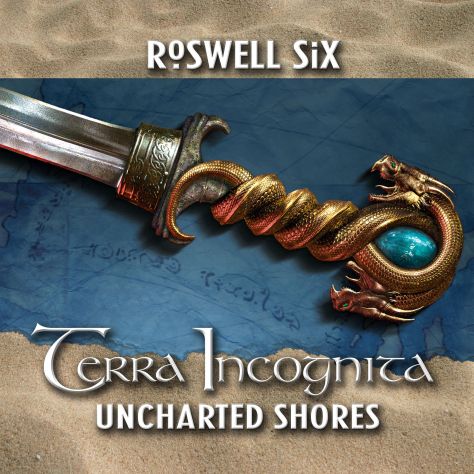
The Fantastical Prog of Terra Incognita (Uncharted Shores)

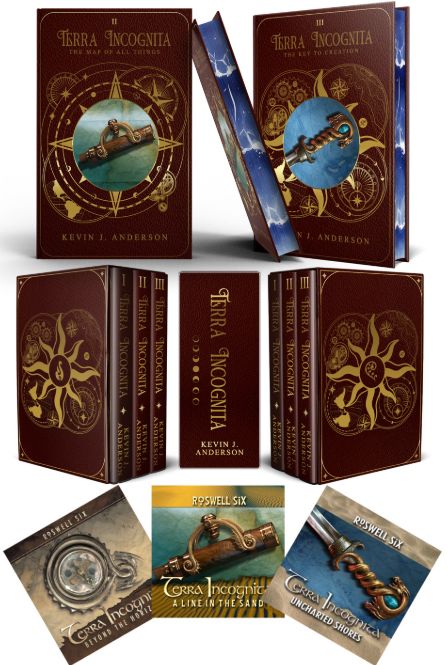
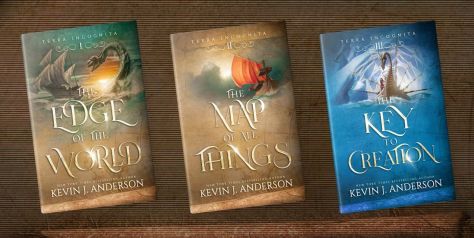
Hello, Spirit of Cecilia readers! Kevin J. Anderson has a Kickstarter campaign up and running for a gorgeous reissue of his Terra Incognita trilogy of fantasy novels and accompanying music that includes a new album from Roswell Six – Terra Incognita: Uncharted Shores.  Brad Birzer, Rick Krueger, and Tad Wert share their thoughts on it.

Tad: Brad and Rick, I understand this is the third Terra Incognita album, but they haven’t been on my radar. What’s the story behind this group, and how are they connected to author Kevin Anderson?

Rick: Tad and Brad, it’s great to join you two for a roundtable at long last!  I’m sure Brad knows a lot more about this project than I do.  But I first came across Kevin Anderson when he and Neil Peart wrote a novel based on the Rush album Clockwork Angels.  That one led to two more novels in the CA universe over the years, Clockwork Lives and Clockwork Destiny; all three of them were delightfully true to Peart’s concepts, with lots of clever Easter eggs from the Rush canon and enjoyable plot twists.  The only other novel of Anderson’s I previously read is The Dark Between the Stars, the first part of a science fiction trilogy that was nominated for a Hugo award back in 2015 – solid, sprawling space opera fun.   I’ve just downloaded his latest, Nether Station and am racing through it; he’s got that ever so slightly pulpy, lickety-split writing style down.  it’s about a deep space expedition that, little by little, gets kinda eldritch . . .

But that really just scratches the surface of what Anderson has done.  He’s most famous for continuing Frank Herbert’s Dune saga with Herbert’s son Brian; he’s also produced tie-in novels in the Star Wars, X-Files and DC universes; he’s an extremely prolific writer overall, whether it’s sci-fi, fantasy, horror or any combination of those genres – by his count, about 180 novels to date.  On top of all that, he and his wife Rebecca Moeste run their own publishing company, WordFire Press.

Through Brad’s connections with Anderson, I’m on WordFire’s mailing list, so I’ve noticed that he’s run a few Kickstarter campaigns over the years.  His latest campaign is a reissue of Terra Incognita, a fantasy trilogy originally published in 2009-2011. The thing that’s different about these books, though, is that the first two had soundtracks; apparently, Anderson has had a lot of contact with the music world over the years.  And maybe that’s where I should let Brad take over.

Brad: My dear friends, Tad and Rick, so great to do this with you guys!  And, to talk about one of my all-time favorite human beings, Kevin J. Anderson.  I’ve been reading Kevin’s works for years, but I only got to know him for the first time about 11 years ago.  I had a one-year position at the University of Colorado-Boulder (2014-2015 academic year), and that position came with some funding to bring speakers in.  As soon as I arrived in Longmont (where we lived for the year), I contacted Kevin (whom I had never met) and Dan Simmons.  I never heard back from Simmons, but Kevin immediately agreed to come speak for me.  He and his lovely (and equally talented) wife, Rebecca, came to Boulder, and Kevin gave an excellent speech on the art of writing fiction.  He called it his “pop-corn theory,” explaining that ideas happen all over the place.  I loved the speech.

And, I also loved Kevin and Rebecca.  We hit it off at dinner at an Indian restaurant right before Kevin’s talk.  He then invited us to his famous New Year’s Eve party for 2015.  Dedra and I happily drove to Monument to see Kevin’s impressive and rather Arthurian house!  Crazily enough, my car slid down his steep driveway and almost crushed the natural gas vein!  Thank the good Lord that disaster was averted and New Year’s Eve was a different kind of blast.  One of the great things about Kevin is he knows how to form communities.  He’s a natural leader.

We also really bonded over his friendship with Neil Peart.  In fact, it was Kevin who suggested I write the book about Peart’s lyrics, Cultural Repercussions, for his WordFire Press.  I was deeply honored to do so not just because of my love of Rush, but also because of my respect for Kevin.

And, Kevin has deep roots in the prog rock community.  Indeed, I can’t imagine a current writer who has greater or more legitimate ties to prog than does Kevin.  Rush’s Grace Under Pressure inspired Kevin’s first novel, Resurrection, Inc., and Kevin’s never been shy about his inspirations: Rush, Kansas, Styx . . . .

Rick, you brought up Clockwork Angels and its surrounding universe.  Admittedly, I love the Clockwork trilogy–the novels, the audiobooks, the graphic novels–and I think that Kevin really offered new insights into Rush and, frankly, into music.  To me, Clockwork Angels is Chestertonian, and I don’t understand why it’s not been made a Netflix series!

When I first encountered Kevin’s music project, Roswell Six, I was understandably impressed by the scope as well as the execution of the vast project.  Kevin has a great entrepreneurial spirit, but always with the artistic soul.  Roswell Six perfectly blends Kevin’s many loves and expertises.  I’ve been proudly listening to the first two CDs since they were first released, and I happily include them among my all-time favorite albums.  I’m especially taken with the first CD, 2009’s Beyond the Horizon.

When Kevin first announced this Kickstarter project–hardback editions of Terra Incognita as well as a re-release of the first two Roswell Six CDs, AND a brand-new third CD, I was absolutely thrilled.  I pledged during the second hour of the campaign.  And, that campaign has done exceedingly well.  Initially hoping to hit the $10,000 mark, the Kickstarter project, as of this writing, is at the $51,000 mark with 399 backers!  Incredible.  And, so well deserved.

So, what do you guys think of the music?

Tad: Okay, both of you have much more experience with Anderson’s work than I. When I saw that there was a companion novel to Rush’s Clockwork Angels, I immediately read it and enjoyed it very much. The Roswell Six albums slipped under my radar, though.

That said, I really like this third album, Terra Incognita (Uncharted Shores). To my ears, it’s pretty much straightforward, classic progrock. Fans of Kansas, Styx, Spock’s Beard, Threshold, Arena, et al. will love it. The fact that there are so many different vocalists brings to mind an Arjen Lucassen project – especially when the beautiful voice of Anneke van Geirsbergen appears in track 3, “A Sense of Wonder”. 

I like the acoustic, Celtic sounding “Haunted and Hunted” a lot. “Lighthouse” is another highlight for me, with its chugging rock riffing and excellent guitar soloing. “The Ballet of the Storm” is an instrumental that has a very nice intro played on violin that transforms into a warm piano/electric guitar duet underpinned by some excellent bass. 

“The Key to Creation” features the return of Anneke, and it has a fun 80s vibe to it – it’s got a relentless beat with a wall of synthesized sound. As a matter of fact, I think this is my favorite track on the album. It has a nice hook in the chorus that sticks in my ear. 

“Unexpected” keeps the musical quality high with, I believe, Dan Reed handling the vocals. I feel like these songs will take on more meaning when I have the chance to read the accompanying novels. They obviously follow a storyline. In many of the tracks, I can hear sounds of the sea, which makes sense, given the Uncharted Shores title!

Rick: Brad, what you said about Anderson’s connections in the music world helped me get my bearings for listening to Uncharted Shores; it definitely has that American heartland prog vibe with some nifty touches of funk (but also touches of European theatricality, as Tad pointed out).  KJA gave an interview this week with Michael Citro of Michael’s Record Collection where they go into the background behind the music; the basic tracks are written and performed by Bob Madsen (bass), Billy Connolly (guitar), Jerry Merrill (keys) and Gregg Bissonette (drums) – all artists working under the umbrella of The Highlander Company Records.  (Madsen’s band The Grafenberg Disciples announced themselves to the world a few years back with a tribute to Peart, “No Words”, that caught Anderson’s attention.)  And all that excellent violin work is by Jonathan Dinklage – he led the Clockwork Angels string section on those 2012 & 2013 tours.  Rush connections aplenty!

The guest vocalists take the whole thing up a notch as well.  Michael Sadler from Saga sings on the title song. “Hunted and Haunted” and “Lighthouse”; he’s played one of the “lead roles” for all three albums. Like you said, Tad, Ted Leonard and Anneke give it their all on their feature tracks.  But the big surprise for me was Dan Reed, who takes the villain role on “Mortal Enemies” and “Unexpected”; for a minute, I thought Steve Walsh had emerged from retirement!  Reed has this grizzled timbre, but a real purity of tone and expression underneath, and he absolutely sells the part.  And The Grafenberg Disciples vocalist Hans Eberbach brings it all home on “Not In My Name” –  gutsy and soulful by turns, and consistently dramatic (with Tull’s Doane Perry contributing a spoken-word cameo as a capper)!  I think that’s the track that’s my favorite so far.

But there isn’t a duff song on the new album, and it definitely grew on me the second time through.  I agree with you, Tad, that knowing the Terra Incognita storyline better will probably help, but the core emotions and throughline of the story come across loud and clear.  According to the Anderson/Citro interview, all the albums are being released through Sony (on InsideOut?) in the fall, but I decided not to wait; I’ve pledged for the ebooks and the digital albums, so my summer reading and listening are already lined up.  And when the CDs go to broad release – who knows?  It’d be far from the first time I’ve bought music twice!

Brad: Tad and Rick, so well stated!  And, yes, I pledged to buy all three albums as well, even though I already own the first two.  If you’ve not listened yet, I especially recommend the first track on Beyond the Horizon: Ishalem.  Incredible prog metal.  Very much in line with Ayreon or Dream Theater.

For those out there not totally familiar with Kevin, he has, as noted above, written extensively in the Star Wars, Dune, and X-Files franchises.  My favorite of his own books (that is, those not set in another mega genre/universe) are Nether Station (a sequel to H.P. Lovecraft’s Mountains of Madness) and Stake (a completely original novel questioning the existence of the supernatural).

Again, all praise to Kevin for bringing together so many beloved things: fantasy, science fiction, and prog rock!

Tad: Kevin Anderson’s Kickstarter link is here, for those interested!

SciFi/Fantasy Meets Prog (and the result is glorious)

Acclaimed author Kevin J. Anderson, is beginning a Kickstarter campaign tomorrow (March 11, 2025) to reissue his three-volume Terra Incognita project. The books have been previously published in paperback, but have been out of print. Anderson plans to rerelease them as a deluxe set of hardcovers in a slipcase.

Accompanying the books is a trio of albums featuring the cream of progressive rock. Just check out the lineup for the soon-to-be released third album, Uncharted Shores:

• Michael Sadler (SAGA)
• Dan Reed (Dan Reed Network)
• Doane Perry (Jethro Tull)
• Ed Toth (Doobie Brothers, Vertical Horizon)
• Jonathan Dinklage (Rush Clockwork Angels, Lady Gaga, Barbra Streisand)
• Greg Bissonette (David Lee Roth, Ringo Starr All Stars)
• Anneke van Giersbergen (European vocalist)
• Ted Leonard (Spock’s Beard, Pattern-Seeking Animals)

Be on the lookout for an in-depth review of this album soon. Meanwhile, check out the Kickstarter campaign – it will be the only means of acquiring this historic literary/musical project, and it only runs from March 11 through April 4!

[This post was updated to reflect the fact that all three novels have been published in paperback, and the personnel for the third Terra Incognita album was incorrect. The post now has the correct lineup.]

BARD OF SCOTLAND ; poet for all Mankind

By Richard K. Munro

BURNS COTTAGE Ayr

Yes, there was a lad born in Ayr: Robert Burns.

To go to that rude cottage of Ayr the birthplace of Burns so near the Brig o’ Doon, is to experience a secular epiphany as to the essential equality of all humanity.

It is to experience awe at the true mystery of talent and genius. It is an affirmation at what secret treasures can be found hidden anywhere among any class, gender or race IF individuals are given a proper upbringing and decent education and chance to develop, discover and explore their God-given gifts.

As Burns’ father knew it is hard to be poor . At the age of 19 Burns’ father was a homeless migrant farm laborer but he was proud he could read, write and cipher and always carried the Old Book with him.

But Agnes Brown (Mrs. Burns) and her husband kept their entire family of seven under one roof and surrounded the children’s lives with care and tender love. Both mother and father displayed a piety that was neither excessive nor harsh, unlike the extreme Calvinism that was the mode of the established clergy of his time. In Burn’s house, physical labor was incessant, food and fuel were scarce. However, education and religion were not neglected; they were held rather by the Burns family as an essential, sacred duty.

And Mrs Burns “sang so sweet” Rab oft “couldna” sleep as she crooned “the Auld Scots sangs” to him.

Burns had no shame of his very humble origin:

From scenes like these old Scotia’s grandeur springs

That makes her loved at home, revered abroad

Princes and lords are but the breath of kings

An honest man’s the noblest work of God.

WORD STUDY EDUCATION

WORD ORIGIN
ETYMOLOGY –CIRCLE or ??? if UNKNOWN
Anglo-Saxon Or Germanic Or Other (unknown)Latin (French or Romance)Greek
Put word in correct category then list SYNONYMS if possible School “lore”* house (originally Lat/Gr) (Grammar school/primary school) Or elementary school –k-6) SYNONYMCollege       SYNONYM#1Academy*       SYNONYM
DEFINITIONS/nuances Translations below (optional)k-12 education escuela1)a school for special instruction such as the military academies. academia
 2)all colleges and universities in general2) in France or Spain an secondary school NOT supported by the state. Public schools are called lycée “ lyceum” could be a place where public lectures are presented2) secondary school esp. a private one
 3)a group of people, esp. writers,philosophers,artists Whose thought,work or style demonstrates a common origin,belief or influence.politics/religion;

Electoral College /College of Cardinals
3) can mean  university life or higher education in general “academe”*
 ***4) a shoal or large group of aquatic animals swimming together : *“a school of fish” GRUPO/BANCOThe Lyceum of AristotlePlato’s Academy
IDIOMSThere are several schools of thought on this issue Sobre este tema hay varias Corrientes de opinión  
Spelling problem , USUAGE QUESTION or FALSE COGNATE?Often translated as ‘colegio’ Escuela primariaLiceo/instituto=high school escuela secundaria 

Music, Books, Poetry, Film