Tonight: Federalist Society 2112


![]() |
The Flower Kings share new single “The Great Pretender” from upcoming album ‘By Royal Decree’ Photo: Lillian ForsbergProg icons The Flower Kings recently announced the release of their 15th studio album ‘By Royal Decree’, set for March 4th, 2022. Now, the band are pleased to share the first single from the album “The Great Pretender.” The album is now available for pre-order.Check out the new track here: https://youtu.be/3IyGvwYhvTY‘By Royal Decree’ Tracklisting 1.The Great Pretender (6:55) 2.World Gone Crazy (5:04) 3.Blinded (7:45) 4.A Million Stars (7:11) 5.The Soldier (5:23) 6.The Darkness In You (5:13) 7.We Can Make It Work (2:48) 8.Peacock On Parade (5:15) 9.Revolution (5:59) 10.Time The Great Healer (6:12) 11.Letter (2:25) 12.Evolution (4:47) 13.Silent Ways (5:01) 14.Moth (4:31) 15.The Big Funk (4:39) 16.Open Your Heart (5:17) 17.Shrine (1:08) 18.Funeral Pyres (7:14) ‘By Royal Decree’ will be available as Ltd. 2CD Digipak, as Ltd. 180g 3LP+2CD Box Set as well as Digital Album. You can pre-order the album now here: https://theflowerkings.lnk.to/ByRoyalDecree The band are back at their most creative, flowery and playful – mirroring the 70’s melting pot of folk, symphonic, electronic, jazz, blues, funk & prog. On the new album they have looked for more organic and vintage sounds, still centered around the foundation of drums, bass, guitars and the iconic Hammond, grand piano, mellotron & Moog synthesizers.The album also sees the return of founding member Michael Stolt, who takes up bass guitar and vocals, alongside the line-up of Mirko DeMaio on drums, Zach Kamins on keyboards, Hasse Fröberg on vocal & guitar and Roine Stolt on vocal & guitars and Jonas Reingold on bass. The band convened in the middle of 2021 at Fenix Studios in Sweden to record through the fully analogue Rupert Neve mixing desk. The album also features beautiful cover art, once again created by Denver-based artist Kevin Sloan. Next year’s tour will also see the band revisiting their early years, performing tracks from ‘Retropolis’, ‘Stardust We Are’, ‘Flower Power’, ‘Space Revolver’ and ‘Back In The World Of Adventures’. This will coincide with the release of newly remastered editions of The Flower Kings albums on CD & Vinyl later in 2022. The first confirmed live dates are as follows: 30th March 2022 – Katalin, Uppsala, Sweden 31st March 2022 – Musikens Hus, Gothenburg, Sweden 1st April 2022 – Södra Teatern, Stockholm, Sweden 1-7th May 2022 – Cruise To The Edge, USA 11th May 2022 – TBA, Quebec City, Canada 12th May 2022 – TBA, Montreal, Canada 14th July 2022 – Rootsfestival, Notodden, Norway 4th Sept 2022 – HRH Festival , UK THE FLOWER KINGS online: https://www.roinestolt.com/ http://www.facebook.com/TheFlowerKings https://www.instagram.com/roinestolt8112/ https://www.facebook.com/pale.rider.127 INSIDEOUT MUSIC online: www.insideoutmusic.com www.insideoutmusic.store www.youtube.com/InsideOutMusicTV www.facebook.com/InsideOutMusic www.twitter.com/InsideOutUSA http://spotify.com/progrockessentials |
![]() Nick D’Virgilio, Neal Morse & Ross Jennings share first single and video for “Julia” from debut album Nick D’Virgilio (Big Big Train, ex-Spock’s Beard), Neal Morse (Transatlantic, NMB, ex-Spock’s Beard), and Ross Jennings (Haken, Novena) are pleased to announce their debut album titled ‘Troika’ will be released on Feb 25th, 2022. The album is now available for pre-order here:https://dvirgiliomorsejennings.lnk.to/Troika Today, the band is also sharing the album’s first single “Julia”. You can watch the video by Christian Rios here: https://youtu.be/Y31eVTnMIxIRoss had this to say about the track: “With my original demo clocking in at around the 8-minute mark and possibly leaning too close to ‘prog epic’ than the singer/songwriter vibe we were attempting to present on this record, Neal arranged my lengthy ballad into something more concise, in-keeping with the album’s essence and writing in a powerful new chorus in the process! “This one was all about the 3-part vocal harmony interplay and ‘pull-at-the-heartstring’ lyrics which deals with themes of regret and forgiveness in the context of a broken father-daughter relationship.” – Ross Jennings Tracklisting:1.Everything I Am (5:43) 2. Julia (6:07) 3. You Set My Soul On Fire (3:22) 4. One Time Less (4:53) 5. Another Trip Around The Sun (4:39) 6. A Change Is Gonna Come (4:24) 7. If I Could (4:02) 8. King For A Day (5:47) 9. Second Hand Sons (4:43) 10. My Guardian (3:43) 11. What You Leave Behind (4:16) ‘Troika’ will be available as Ltd. CD Edition / Gatefold 2LP+CD / Digital Album. Each format includes a bonus alternative version of the track ‘Julia’ and is available for pre-order here: https://dvirgiliomorsejennings.lnk.to/TroikaRecorded during lockdown, the process began with Neal Morse writing some acoustic songs that he thought would be enhanced by strong vocal harmonies. He already knew how well his voice blended with former Spock’s Beard band-mate and Big Big Train drummer/ vocalist, Nick D’Virgilio who came on board and, considering a third man, the Americans sought out Haken’s Ross Jennings from the UK to complete the trio. All three found they had songs that would benefit from the three part harmonic blend, and so they pooled their resources, inputting creatively into each others compositions. Neal comments: “What a great pleasure it’s been to work on this album with these amazing artists! It was kind of funny… We had been working on the songs remotely for several months before I finally heard all of us singing together at the same time. The first time I brought the faders up, I knew we had the magic!“ Nick adds: “I’ve known and worked with Neal for over 30 years and I’ve been a big fan of Ross and the music he makes for a long time. I felt confident right away that this would be a fun project to be a part of. I was so right.” Ross comments: “Receiving ‘The Call’ from Neal to participate in this project was somewhat of a prayer answered… As a long time fan of their work, I’ve been singing along to Neal’s & Nick’s records for years, so it felt really natural for my voice to slot right in.” The tracks took shape with the musicians recording all of the music and vocals separately, yet the eclectic performances burst with the energy and excitement of the collaboration. Acoustic anthems, charged rockers and sensitive ballads are all part of the mix, and the unique blend of Ross, Neal and Nick’s voices and styles have created an album in which you will encounter these musicians in a way you’ve never heard before.D’Virgilio, Morse & Jennings ONLINE: https://www.facebook.com/ndvofficial/ https://www.nickdvirgilio.com/ https://www.instagram.com/ndvirgilio/ https://twitter.com/NDVmusic https://www.facebook.com/nealmorse/ https://twitter.com/nealmorse https://www.instagram.com/neal_morse_official/ www.rossjennings.co.uk https://www.instagram.com/rossjenningsofficial/ https://www.facebook.com/rossjenningsofficial https://twitter.com/RossWJennings INSIDEOUT MUSIC online: www.insideoutmusic.com www.youtube.com/InsideOutMusicTV www.facebook.com/InsideOutMusic www.twitter.com/InsideOutUSA www.insideoutmusic.store Spotify Prog Rock Playlist |
A few months ago, I went riding in Eastern Washington, then just hopped over to Idaho and Montana for a full day exploration. I did this loop via Hwy 2 – Troy – Bull Lake, and finally back to Washington via Hwy 200/2. Needless to say, Montana is gorgeous. Had stopped more than a few times for breathtaking views and fuel. Exquisite views to fuel the weary senses and Chevron for the motorcycle. Like many other journeys, this also involved riding through stretches of rustic towns. Even though the area was novel to me, I was just another motorcyclist for the curious onlookers at the gas stations! Just another nameless rider, looking jaded from the journey, but still exhibiting frequent unexplained bursts of enthusiasm to navigate those winding roads, often at uncomfortable speeds.
Unlike cars, there is a degree of anonymity to motorcycles – a real yet romantic anonymity. It doesn’t matter where you live or what you do; during those long journeys, your identity turns into that of a rider. It’s sort of like John Rawls’ famous veil of ignorance, the unique life circumstances of a motorcyclist hidden beneath the protective gear. There is also a degree of comfort in that anonymity. It’s like you’re admired or derided or just ignored, mostly for your riding, and maybe a bit for the riding gear, but not for other factors like class, ethnicity, etc. There is a relative sense of justice in that evaluation. The essence of such an objective evaluation has larger consequences when it’s institutionalized.
The two main motivations for the larger inquiry in this essay are lived experience and curiosity. Together, they led to analytical hymns of motorcycling woven into several things uniquely American. My dad and great-grandfather also rode motorcycles, so that obsession I’d attribute to inherited tendencies. But curiosity about Americana and, in general, Western civilization is acquired. That curiosity led to a cross-disciplinary inquiry involving history, economics, sociology, and philosophy. This helped connect all the relevant theories and causes for prosperity into a coherent system of ideas. One such identified critical cause of that prosperity is the objective evaluation of individuals.
If it isn’t already obvious, most parts of the world are in a constant state of tension. It varies in degree, but people are, in general, deadlocked in various forms of bickering. Often, these inter-group disputes are hundreds of years old and may even have been inflicted by unknown individuals. Generations are continually born into baggage and their minds shaped by these artifacts of the past. Without reconciling these disputes, there is no peace or path to prosperity. Even if someone manages a truce, it is often fleeting, and the mischief inevitably reemerges.
Thanks to some fortunate accidents in history, the reconciling cultural strand from England survived, and often thrived. From common law jurisprudence and related institutions to its more evolved American Federalism, for hundreds of years, there has been a recurring theme of attempting to reconcile divergent views. This framework is designed to resolve disputes without taking sides or enforcing collective goals. An exceptionally strong 1st Amendment right is a perfect illustration of this tendency. Even when many countries emulated Constitutionalism and its surrounding institutions, they often adopted a variant devoid of that impartial reconciliatory strand.
Impartial justice demands applying the law to factual circumstances, without being unduly biased by broader historical context. Consistent application of this impartial principle to disputes leads to harmony – it shapes social processes where peaceful coexistence becomes the path of least resistance. Strong protection of free speech did not change human nature, but it created conditions where peaceful persuasion was the path of least resistance. Societies burdened by historical baggage will find this harder to execute. To paraphrase F. A. Hayek, civilization advanced when we invented an unbiased justice based on the rule of law, rather than the rule of status derived from historical context like class, occupation, ethnicity, race, tribe, etc.
Not just in individual dispute resolution, peace through reconciliation is evident in all the functioning layers of the English political system. Whether it’s reconciling the majority views with minority opinions, the legislature with the judiciary, pure democracy with Constitutional law, or states’ rights with Federal government — English tradition constantly steered towards that simple goal of reconciliation.
The process evolved over a few centuries, from reconciling the goals of nobles with those of royalty through Magna Carta, to a sophisticated adaptive common law jurisprudence. Consistently reinforcing an institutional pattern of conflict resolution through trade-offs – justice through discovering the acceptable social truth and norms. These institutions evolved in lockstep with larger society and culture, so the specifics changed across time, but the goal of peace through reconciliation remained.
But the mere goal of peaceful coexistence led to lofty outcomes of stability and prosperity. This happened because peace allowed channeling individual energies to higher goals. In short, while simple goals lead to elevated outcomes, numerous political systems striving for explicitly high ideals often collapse into disarray. So, for the next Thanksgiving, we have one more idea to be thankful for — the rarely acknowledged reconciling institutional strand. One critical consequence of impartial rule of law, peace, and general freedom is entrepreneurship – the driver of social architecture through inventions.
Republished at ridersmodel.com

It’s finally hitting me that we live in a world without David Longdon. What a tragedy, what a loss. I first received the news of his death during lunch. Uncharacteristically for me, I was eating lunch while checking things on my iPad. Two things happened at once–I saw the notice from Louder.com and my phone rang. It was my awesome friend, Tom Woods, making sure that I knew the news. Seriously, the phone rang within seconds of me reading the Louder.com post.
A few years ago, Tom and I had the great fortune of interviewing David for Tom’s rather famous podcast. Tom and I have bonded over many things, but few as precious as the hour we spent with David. David was, to be sure, a master craftsman, an original, and a true-to-life gentleman. While Tom and I were barely concealing our fanboy excitement, David offered us nothing but gratitude and clarity.
When I was at Progarchy.Com, I had the pleasure of “talking” with David over email, and I’ll never forget when I first heard the magisterial song, “A Boy in Darkness”–about child abuse. I emailed David, asking him (and hoping against hope that my suspicions were wrong) if the song was autobiographical. No, he assured me, it was not! Thank, God.
To be sure, Longdon and Spawton were the greatest rock musical writing duo since McCartney and Lennon. Their loss will be felt for a generation or more.
I first heard David Longdon’s excellence in 2009, receiving a mix from the mighty Carl Olson with a Big Big Train song on it. I was, from the first moment, hooked. I still consider The Underfall Yard one of the best rock albums of all time. It ranks up there with Selling England by the Pound, Close to the Edge, and Spirit of Eden. I would also–and, yes, I’m throwing the gauntlet down–argue that Longdon had the single best voice in all of rock.
So, David, thank you for everything. A life beautifully lived. There’s so much more to be said, but my brain and soul are still processing a world without you.
Devastating news at Big Big Train’s website:
David Longdon
17th June 1965 – 20th November 2021
Big Big Train are extremely saddened to announce the death of David Longdon this afternoon in hospital in Nottingham, UK at the age of 56 following an accident in the early hours of Friday morning. He is survived by his two daughters Amelia and Eloise, his mother Vera and his partner Sarah Ewing.
Sarah Ewing comments: “David and I were best friends, partners and soul mates and I am utterly devastated by his loss. He was a beautiful person and I feel so lucky to have known and loved him.”
Greg Spawton comments: “We are absolutely stunned to lose David. It is unspeakably cruel that a quirk of fate in the early hours of yesterday morning has deprived him and his loved ones of a happy future together and all of the opportunities, both personal and musical, that awaited him next year and beyond.”
David joined Big Big Train in 2009, immediately making a significant impact with that year’s The Underfall Yard album. He proceeded to record a further eight studio albums with the band, including the forthcoming Welcome To The Planet, as well as fronting the band for a series of highly acclaimed concerts from 2015 onwards. In addition last year he released an album with the late Judy Dyble under the name Dyble Longdon. On the day before his accident he had been in the studio working on a new solo album.
“David made a huge impact on my life both musically and personally,” Spawton continues. “I loved him like a brother and already feel his loss very deeply. He was a true creative visionary with extraordinary depth of talent. But above all he was a first rate and very kind man. His family, friends, BBT bandmates and crew will miss him terribly.”
The band’s Welcome To The Planet album remains scheduled for release on 28th January 2022. A further statement regarding the band’s 2022 concerts and other activities will follow in due course.
The band and their management request privacy for David’s family and friends at this extremely difficult time.
— Rick Krueger

Hot on the heels of BBT’s magnificent Common Ground album comes this announcement of another new album! In the case of Big Big Train, you really can’t have too much of a good thing, so this is welcome news:

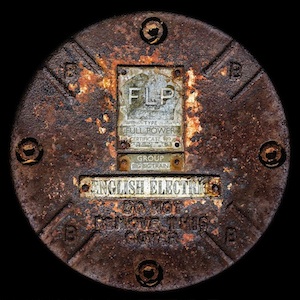
Six months after the release of the critically acclaimed album ‘COMMON GROUND‘, Big Big Train are pleased to announce a new album ‘WELCOME TO THE PLANET’, due out on January 28th, 2022 on their own label, English Electric Recordings.
Big Big Train founder Gregory Spawton explains the short time between albums: “The experience of the pandemic has shown us that we need to make the best use of our time on Earth. With that in mind and with new band members on board giving us a fresh head of steam, we decided on a speedy return to the studio to write and record Welcome To The Planet.”
As with ‘COMMON GROUND’, ‘WELCOME TO THE PLANET’ sees Big Big Train retain their progressive roots but also take influence from all spheres of music. The album’s opener ‘Made From Sunshine’, co-written by guitarist Dave Foster and singer David Longdon, has guitar lines redolent of Johnny Marr and vocal harmonies reminiscent of the Finn Brothers/Crowded House, with violinist Clare Lindley sharing lead vocals with Longdon.
Elsewhere on the album, keyboard player Carly Bryant gets her first Big Big Train writing credit and lead vocal on the captivating title track. The two recent singles ‘The Connection Plan’ and ‘Lanterna’ are included along with a winter themed song ‘Proper Jack Froster’, a bittersweet tale of childhood. The album is completed by the delicate acoustic ‘Capitoline Venus’, the beautiful ‘Oak And Stone’ and a pair of dazzling instrumentals, ‘A Room With No Ceiling’ and ‘Bats In The Belfry’, written by guitarist/keyboardist Rikard Sjöblom and drummer Nick D’Virgilio respectively.
You can listen to “Made From Sunshine” here:
Here is the track listing:
BIG BIG TRAIN ‘WELCOME TO THE PLANET’
Part One
Made From Sunshine
The Connection Plan
Lanterna
Capitoline Venus
A Room With No Ceiling
Part Two
Proper Jack Froster
Bats In The Belfry
Oak And Stone
Welcome To The Planet
For their March 2022 UK tour, which will be their most extensive to date and which will culminate with a show at the prestigious London Palladium, David Longdon (lead vocals, flute), Nick D’Virgilio (drums, vocals), Rikard Sjöblom (guitars, keyboards, vocals), Greg Spawton (bass), Carly Bryant (keyboards, guitars, vocals), Dave Foster (guitars) and Clare Lindley (violin, vocals) will be joined by a five piece brass ensemble. In addition to two further UK shows in September, the band expects to announce North American and continental European tour dates shortly.
UK TOUR MARCH 2022 TICKETS ON SALE NOW AT
https://myticket.co.uk/artists/big-big-train
Pictures can bring back vivid and specific memories, and the same can happen when listening to music – for that matter, any sensory input can trigger this. Spend enough years listening to heavy metal, and overlap those same years with motorcycle riding, and the odds of them converging increase. Certain riffs have now become time machines to relive specific motorcycling experiences.
Listening to the opening riffs of Opeth’s Bleak rewinds to that 2:00 AM lonely highway ride, to this small college town to see them live. Jazz-fusion-like bass lines in Beyond Creation’s Surface’s Echoes bring back late autumn rides and glimpses of Olympic Peninsula sunsets. Deafheaven’s Honeycomb recreates early summers spent exploring the backroads and forts around Port Townsend. Frankly, it’s not an exhaustive list; somehow, these experiences got overlaid in memory. One begets the other. But this is not intentional, and it doesn’t happen all the time.
Often, such recurring patterns motivate the study of the underlying causes. In the past, we were satisfied with merely discovering that correlation. Just like how animals keep returning to a spot where they got food, but without knowing the underlying reason. Similarly, primitive men were satisfied with different degrees of correlation. For example, natural medicines associate certain herbs with symptoms and cures, or certain actions like freezing food or using spices as preservation mechanisms. But they never investigate the structural properties of herbs or the underlying mechanisms causing that effect.
The modern scientific mentality was not satisfied with those mere correlations. It sought to discover causes, theorize, and apply those mechanisms in multiple diverse contexts. For instance, insights from discovering the causal mechanism for overlapping memories may lead to other insights. An understanding of the underlying structure that causes this may lead to new theories — how certain neural pathways can be intentionally activated. That may have unrelated applications, such as motivational tools or strategies for mitigating depression. Transforming it into a generic theory that finds relevance in diverse psychological contexts.
If we abstract further, then the concurrent activation of neural signals may have applications in computing circuit designs. The logic embedded in such circuits is driven by changes in their internal state triggered by external stimuli, similar to how the mind itself operates. If we abstract further, a neural layout may provide inputs to design efficient factory workflows. They both process input stimuli through a series of dependent steps to produce an output.
Eventually, a complex system will have encapsulated layers and substructures. Studying and isolating those structures generates abstract, reusable information. In short, if we iteratively examine and identify an intelligible structure in overlapping memories, then its utility might extend beyond motorcycling metalheads. To paraphrase Louis Rougier, it’s a mentality that moves from specific to the abstract.
“Rising from the concrete to the abstract, Greek geometry disengaged the intelligible essence from the particular observable details, or accidents, as such particulars were later to be called. In this it exercised the proper function of intelligence: the faculty of abstracting, of grasping the unity of a concept in a number of particular cases, the constancy of relationships and permanence of structures amid the diversity of sensible patterns; in a word, finding unity in multiplicity and harmony in discord. With the Greek language was born the language of abstraction.”— Louis Rougier
That Greek language of abstraction can be applied across disciplines and structural layers – from theoretical psychology to institutional economics. That means, the same process scales beyond individual reasoning into the design of institutions themselves. For instance, moving from specific rules to the abstract Rule of Law illustrates the same concept. Instead of directing everyone to specific duties, we created laws that satisfied certain properties, leading to an efficient social order. An obvious example would be — the vehicles on the road are never directed to destinations, instead the expectation is to just follow the rules of the road. We basically abstracted the essence of efficient navigation into the impersonal Rule of Law.
Movement from Magna Carta to American federalism is sort of that steady evolution from specific to the abstract. In fact, Federalism adds one more layer to that dispersed rule-of-law framework. Sort of a higher-level instrument to institutionalize the development of good laws. An attempt to automate the generation of efficient laws itself. As James Madison explained, all the checks and balances should lead to good legislation. The results of this experiment can be debated, but there is an interesting scientific argument for an approach like Federalism. We can see parallels to that in modern scientific methods.
In fact, Federalism is structurally very similar to scientific frameworks such as ISO 21434, ISO 26262, etc. Just as in Federalism, these standards enforce internal consistency of information against a set of goals by subjecting the system to diverse external pressures. The V-model refines engineering details, while federalism refines legislation. ISO26262 may have a narrow goal, but it still does not dictate the nature of the vehicle to be engineered; following it just enforces systemic consistency of whatever the engineers want to design. Federalism has a relatively more open-ended goal and, as a result, introduces greater personnel and role dependencies in the outcome. But they are both structured approaches to stress test epistemological foundations. They both abstracted the properties of the process of reasoning that leads to truth, then designed an impersonal framework to enforce it.
Instinctive exploration and abstraction enable the development of reusable cognitive tools and functions. They allow the development of higher-level mental models to deduce meaningful information from complex life experiences. But improving their explanatory power requires repeated application in real-world encounters, followed by refinement through feedback. This process is illustrated in the next chapter.
Republished at ridersmodel.com

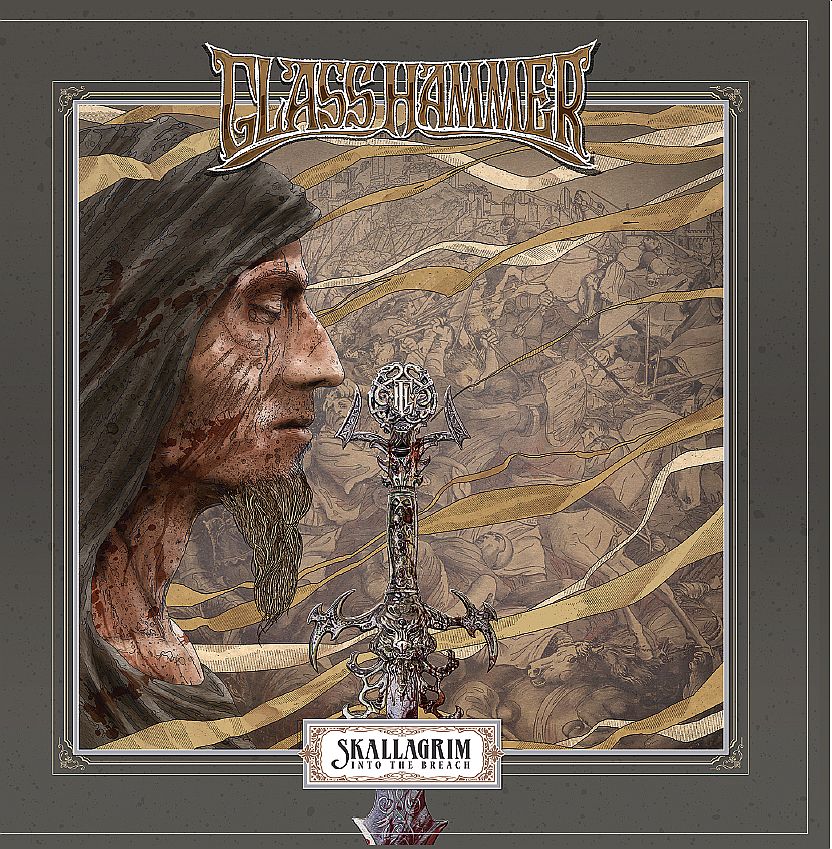
Chattanooga, TN proggers Glass Hammer are set to release the second installment of the Skallagrim Trilogy: Into the Breach. It is an eagerly awaited work, and I am happy to report that it exceeds expectations. If you thought last year’s Dreaming City was a departure from their typical sound, Into the Breach further develops their new, heavier approach to their music.
Besides the obvious elements like super heavy, crunchy guitars, new lead vocalist Hannah Pryor rocks like a …. well, you can fill in the blank. Suffice it to say that Ms. Pryor can belt out a song with the best of them, while maintaining a purity of tone that is never grating.
The lyrics continue the adventures of the jewel thief Skallagrim, this time focusing on his mercenary adventuring as he battles to lift a curse and restore his memory. He is accompanied by his comrade in arms, Hartbert, and they are financed by a mysterious powerbroker, Erling. However, you don’t need to know the story to enjoy the music.
And what glorious music Into the Breach is! It begins with the short acoustic ballad, “He’s Got A Girl”, that segues directly into the roaring “Anthem to Andorath”. This one took my breath away when I first heard it (check out the official video below). Pryor’s vocals intertwine effortlessly with Babb’s and Schendel’s to an exhilarating climax.
The musical pummeling doesn’t let up with “Sellsword” which opens with the dirtiest guitar riff Glass Hammer has ever put to tape. Maybe they’re unleashing pandemic-spawned frustrations, but Steve Babb, Fred Schendel, and Aaron Raulston have never played with this much ferocity.

“Steel” alternates between crushing riffs and bouncy flights of Rundgrenesque popcraft. Pryor’s powerful vocals are the glue that hold all the disparate parts together.
The next two tracks, “Moon Pool” and “The Dark” are instrumentals. “Moon Pool” recalls classic Tangerine Dream, continuing the trend Glass Hammer began in Dreaming City.
“The Ogre of Archon” is another winning hard rock song, which goes directly into the blistering title track. There is an excellent section where Babb’s bass and Schendel’s organ play off of each other as Reese Boyd (or Brian Brewer, it’s not credited) plays terrific solos worthy of Alex Lifeson.
To my mind, the next three songs form a mini-trilogy. “The Forlorn Hope” is one of the best songs on the album, and it offers a bit of a respite from the heavy atmosphere of the rest of the album. “The Writing On The Wall” combines Crimsonesque melodic runs with some more spacey sections that allow Babb’s always inventive bass playing to shine. “Hyperborea” is an almost ten-minute long tour de force that is the finest track on the album, and one of the best songs Glass Hammer has ever done. It is a loving tribute to classic Rush, which in true Glass Hammer fashion, deftly pays their respects without descending into mere imitation.
The album closes with the brief “Bright Sword” which sets the scene for the conclusion of the Skallagrim Trilogy, and leaves the listener begging for more. Into the Breach clocks in at a hefty 70+ minutes, but I’ve listened to it in its entirety a dozen times, and it never feels labored or long. Every note counts, and every second is an aural pleasure.
After nearly 30 years and more than 20 albums, most artists would be exhausted. With Into the Breach, Glass Hammer are playing as if someone has lit a fire under them; this music is some of the most passionate they’ve ever put together. Their ability to constantly challenge themselves and revitalize their sound makes them the most fascinating and satisfying rock band in America. Meanwhile, Skallagrim – Into the Breach consolidates the great leap forward Glass Hammer took with Dreaming City. It is the heaviest yet most graceful music they have recorded in their long career. It is an unalloyed triumph that leaves the listener eagerly awaiting Chapter Three.
You must be logged in to post a comment.